





Access to Work – What Support Is Available and How Does It Work?
What this resource is for
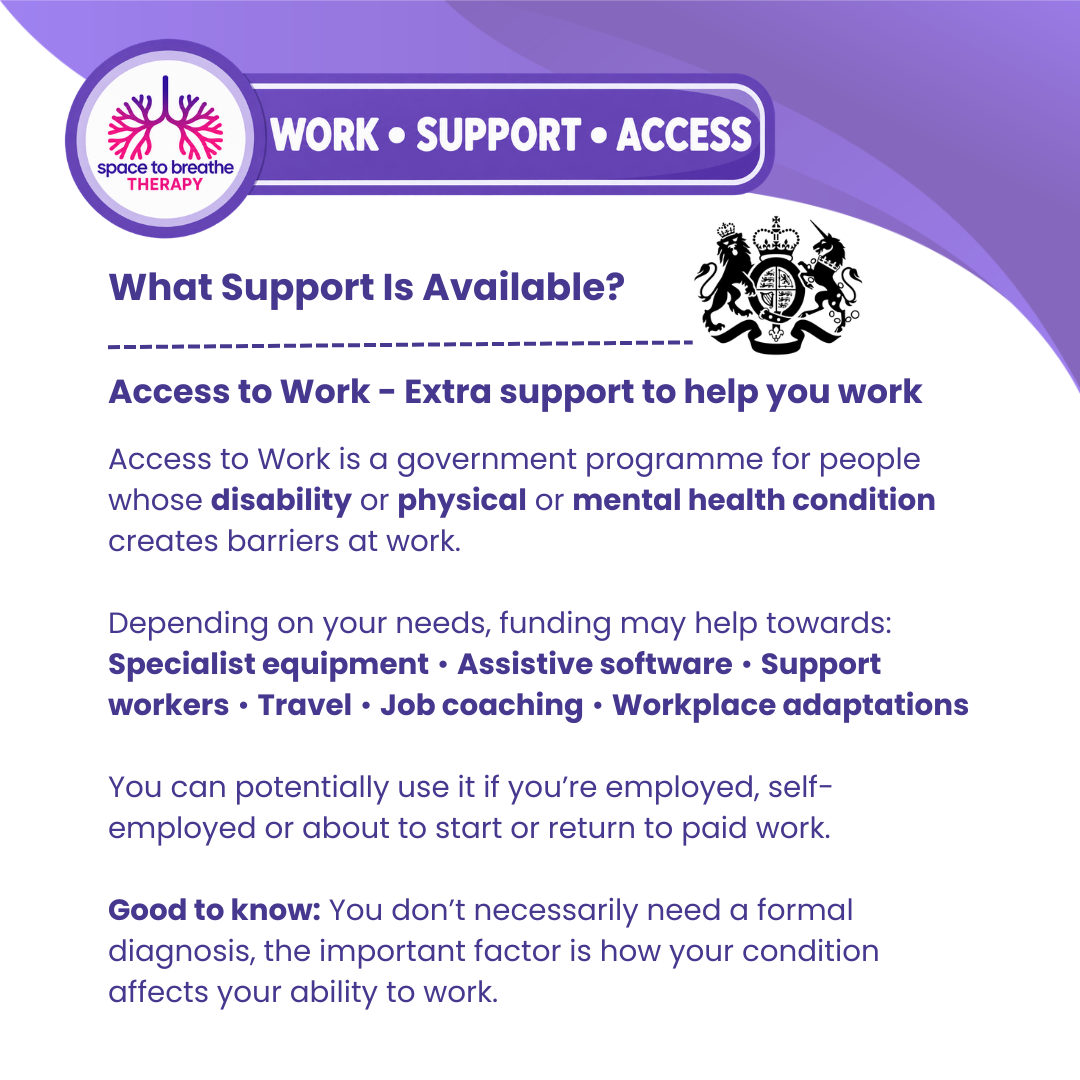
Access to Work is a government programme designed to support people who have a disability, physical health condition or mental health condition that creates barriers at work.
This resource explains what Access to Work is, the different types of practical support that may be available, how to think about your individual workplace needs and what you may experience during the application process.
Support at work is not limited to changing someone's job role. Depending on individual circumstances and eligibility, support may include specialist equipment, assistive software, practical human support, coaching, help with travel or workplace adaptations.
You do not necessarily need a formal diagnosis to apply. The important consideration is how your disability or health condition affects your ability to do your job or travel to work.
Understanding your workplace barriers
Before thinking about a particular piece of equipment or type of support, it can be useful to think about what actually happens during your working day.
Rather than beginning only with:
“What is my diagnosis?”
try asking:
“What barriers am I experiencing because of my disability or health condition?”
For example, you might experience difficulties with:
- communication or processing information
- organisation and executive functioning
- concentration and maintaining focus
- managing or prioritising tasks
- physical access or mobility
- fatigue or energy management
- sensory aspects of the working environment
- travelling to and from work
- completing particular practical or administrative tasks
- needing another person to provide practical support.
Two people with the same diagnosis can have very different experiences at work. This is why it is important to explain your individual functional difficulties rather than relying on the diagnosis alone to explain your needs.
A useful way to think about this is:
Barrier → Impact → Support needed
For example:
Barrier: I find it difficult to process verbal information quickly.
Impact: I may miss or forget important information, need information repeated or require additional time to process instructions.
Support: Written information or appropriate practical support could reduce this barrier.
This approach can help you explain not only what you find difficult, but why support could make a meaningful difference to your ability to work.
What support could Access to Work provide?
Support is individual. Access to Work does not provide everybody with the same package simply because they share a diagnosis or condition.
Depending on your individual circumstances, support can potentially include:
- specialist equipment
- assistive software and technology
- support workers
- job coaches
- BSL interpreters
- travel buddies
- help with additional travel-to-work costs where public transport cannot be used
- vehicle adaptations
- physical workplace adaptations
- specific mental-health support.
For a neurodivergent person, for example, workplace barriers might involve organisation, executive functioning, communication, processing information, managing workload, task switching or navigating the sensory environment.
The question therefore becomes less about:
“What support do people with my diagnosis receive?”
and more about:
“What happens for me at work, and what support could reduce that particular barrier?”
How to prepare before applying
Before making an application, spend some time thinking about your actual working day.
You may find it useful to write down:
What do I struggle with?
↓
How does it affect my ability to work?
↓
What am I currently doing to manage or compensate for it?
↓
What support could reduce that barrier?
Try to use real examples wherever possible.
For example, rather than simply writing:
“I struggle with organisation.”
you could explain what this means in practice:
“I find it difficult to organise and prioritise several administrative tasks at the same time. I can become overwhelmed deciding which task needs completing first, which means administrative work takes significantly longer and uses a large amount of my working energy.”
This gives a much clearer picture of the functional impact.
What Happens When I Apply?
Once you have begun identifying your workplace barriers and the support that might help, the next stage is the Access to Work application process.
1. You make an application
You can currently apply online or by telephone.
You will be asked for information about your job, your workplace and how your disability or health condition affects you at work.
If you are self-employed, you will also need to provide information relating to your self-employment, such as your Unique Taxpayer Reference.
2. Access to Work contacts you
Someone from Access to Work will normally contact you to discuss your application.
They may ask for more information about your job, the difficulties you experience and the support you believe would help.
If telephone communication itself creates a barrier, current GOV.UK guidance says you can ask for communication by email instead.
This conversation is an opportunity to explain your working reality, rather than simply listing diagnoses.
3. Your individual needs are explored
This is where the preparation you have already done can be particularly useful.
Try to give specific examples:
“I struggle to process verbal information quickly, which means…”
“Without support with administration, I experience…”
“Travelling independently to my workplace is difficult because…”
Then explain the consequence.
What happens to your work?
Does the task take considerably longer?
Do you need help from somebody else?
Does it affect your ability to complete another part of your role?
Does it cause significant fatigue or additional difficulty?
Keep returning to:
Barrier → Impact → Support needed
This helps connect the difficulty you experience directly to the support you are requesting.
4. You may have a workplace assessment
Not everyone will require a workplace assessment.
If Access to Work needs further information about how your disability or health condition affects you in your job, an independent workplace assessment may be arranged.
Depending on the circumstances, this may take place by telephone, video or in person.
The assessment can help explore your workplace barriers and identify appropriate forms of support.
5. Your support needs are considered
Access to Work will consider the information provided about your condition, the impact it has on your work and the support that may help.
This is where the earlier parts of this resource connect directly with the application process.
You have identified:
the barrier → its impact on your work → the support that could help.
Access to Work then considers the support that may be appropriate within the scheme.
This could include support workers, specialist equipment, assistive technology, travel support, workplace adaptations or other appropriate assistance, depending on your individual circumstances.
6. You receive a decision
You will receive a decision explaining whether support has been awarded, what has been agreed, the amount of the grant and what the funding can be used for.
Read the decision carefully.
Make sure you understand what has been approved and whether it reflects the support you discussed during the application process.
7. You arrange the agreed support and claim funding
Once support has been approved, it can be arranged in accordance with the terms of your award.
Depending on the type of support, you or your employer may need to pay some costs first and then claim the agreed amount back.
Claims can currently be made online or by post and may require information such as dates when support was provided, invoices or receipts and payment details.
It is important to follow the instructions provided with your individual award and keep appropriate records relating to the support being claimed.
What if I disagree with the decision?
Receiving a decision does not necessarily mean that you cannot question it.
If you disagree with the Access to Work decision, GOV.UK guidance says you can contact Access to Work and ask for your application to be reconsidered.
When explaining why you disagree, it can again be useful to return to:
Barrier → Impact → Support needed
Be clear about what you believe has not been fully understood or considered and explain the practical impact on your ability to work.
If your concern is about how your case has been handled, rather than the decision itself, there is also a complaints process.
What if my needs or circumstances change?
Your workplace needs may change over time.
You should tell Access to Work about relevant changes, for example if:
- you change jobs
- your workplace changes
- your role or working arrangements change
- your disability, illness or health condition changes
- the support you require changes.
Access to Work grants can also have an end date and may need to be renewed. Current guidance states that renewal can be started 12 weeks before an existing grant ends.
Remember
Needing workplace support does not mean that someone is unable to work.
A person may be extremely skilled and capable in their role while using significantly more time, energy and personal resources to overcome barriers that other employees do not experience.
The purpose of support is to reduce those barriers and help someone use their skills, knowledge, experience and abilities more effectively and sustainably at work.
If you are thinking about applying, start with four questions:
What is difficult?
How does it affect my work?
What am I currently doing to manage it?
What support could reduce that barrier?
Those answers can become the foundation for explaining your individual needs throughout the Access to Work process.
This resource provides general information about Access to Work. Eligibility, processes, funding and available support can change and depend on individual circumstances, so current official Access to Work guidance should always be checked when applying.




