

FACTS — ORGANISATIONAL CULTURE & WORKPLACE WELLBEING
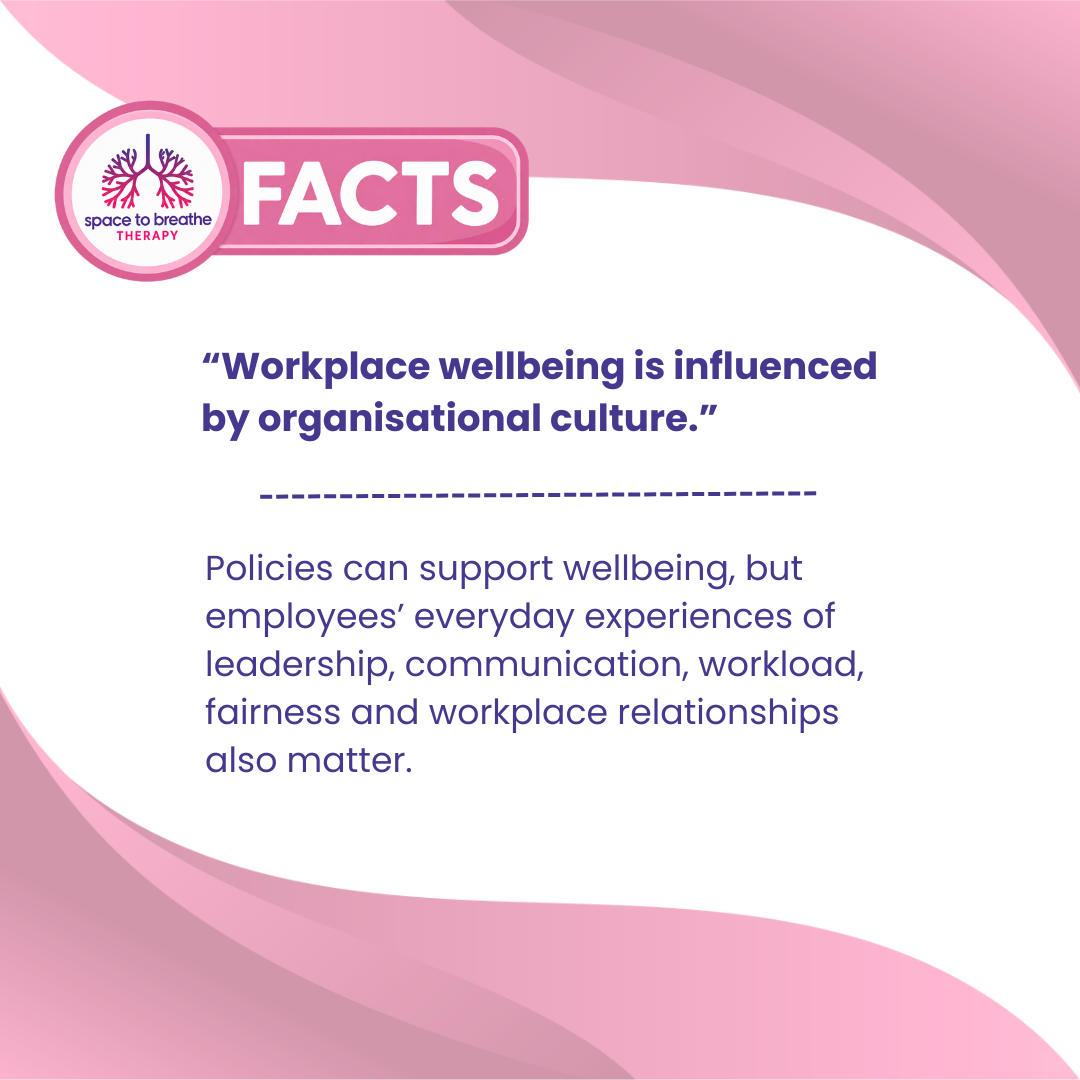
“Workplace wellbeing is influenced by organisational culture.”
Workplace wellbeing is not simply the responsibility of the individual employee. The culture created around them can have a significant influence on how safe, supported, respected and able to cope they feel at work.
Policies are important, but wellbeing is also shaped by what employees actually experience every day.
Organisational culture can include:
- How managers communicate with employees.
- Whether people feel listened to and respected.
- How mistakes and difficulties are responded to.
- Whether workloads and deadlines are realistic.
- How conflict, bullying or discrimination are managed.
- Whether employees feel comfortable asking for help.
- How disability and neurodivergence are understood.
- Whether workplace adjustments are genuinely supported.
- How fairly opportunities and responsibilities are distributed.
- Whether rest, breaks and boundaries are respected.
- Whether employees feel valued for their contribution.
What does a healthy workplace culture look like?
A supportive culture does not mean that there are no pressures, disagreements or difficult periods.
It means employees can raise concerns, ask questions, communicate their needs and make mistakes without automatically fearing judgement, humiliation or negative consequences.
Good leadership encourages open communication, clarity, fairness and psychological safety.
Policies alone are not enough
An organisation may have excellent wellbeing, equality and inclusion policies on paper, but employees need to experience those values in practice.
For example, a workplace may encourage employees to discuss mental health while simultaneously creating a culture where people feel guilty for taking breaks, requesting adjustments or admitting they are struggling.
There can be a significant difference between:
“Our door is always open.”
and
employees genuinely feeling safe enough to walk through it.
Managers play an important role
Managers do not need to be therapists, but their behaviour can influence workplace wellbeing.
Listening, communicating expectations clearly, checking understanding, responding compassionately to difficulties and addressing concerns early can help create a healthier working environment.
Inclusion is part of workplace culture
Different employees may need different things to work effectively.
Creating an inclusive culture means recognising that fairness does not always mean treating everybody identically.
Flexibility, reasonable adjustments, different communication methods and individualised support can help remove unnecessary barriers.
A useful question for organisations
Rather than only asking:
“What wellbeing initiatives do we offer?”
it can be useful to ask:
“What is it actually like for our employees to work here every day?”
Because workplace wellbeing is influenced not only by what an organisation says it values, but by what employees experience in practice.
Space to Breathe Therapy