





Returning to work after a period of absence can be a big transition, and I think it’s important that we stop viewing a successful return as somebody immediately being able to pick up exactly where they left off.
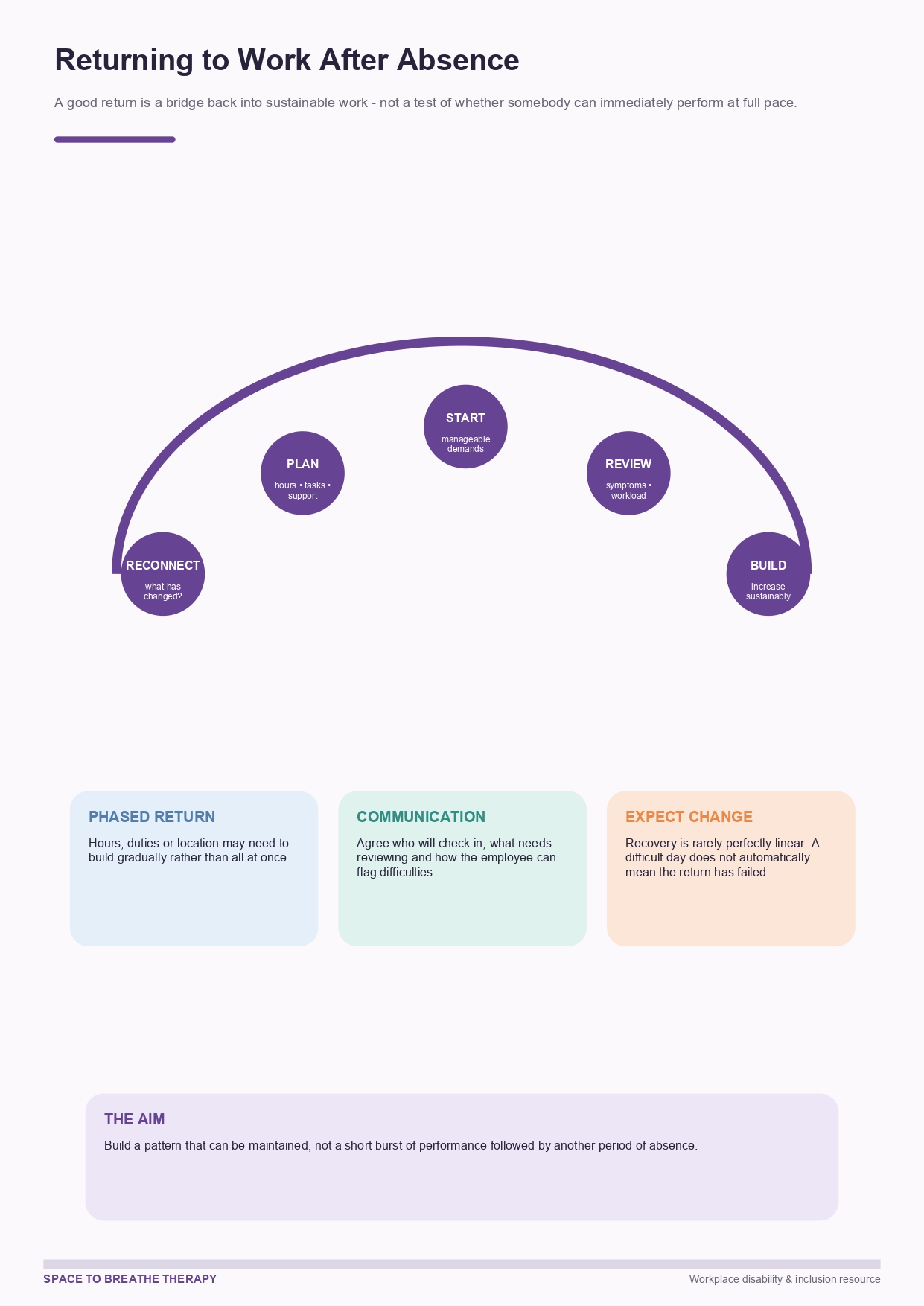
This resource describes returning to work as a bridge back into sustainable employment, rather than a test of whether someone can perform at full pace straight away. It encourages us to reconnect, plan, start with manageable demands, review how things are going and gradually build from there.
A phased return might involve gradually increasing hours, changing duties or considering where somebody works. Good communication matters too — agreeing who will check in, what will be reviewed and, importantly, how the employee can say “I'm finding this difficult” before things become overwhelming.
I particularly wanted to include the reminder that recovery is rarely a perfectly straight line. Having a difficult day does not mean somebody has failed or that their return to work isn't working.
For me, the aim shouldn’t be to get someone back to full capacity as quickly as possible.
The aim is to help them build a way of working that they can actually maintain.
A slower, supported return that lasts is far more valuable than a short burst of pushing through that leads to somebody becoming unwell or needing another period away from work.
Maggie
Space to Breathe Therapy