





Sensory overload in the workplace is something I think we need to talk about much more, because an environment that feels perfectly manageable to one person can be completely overwhelming to another.
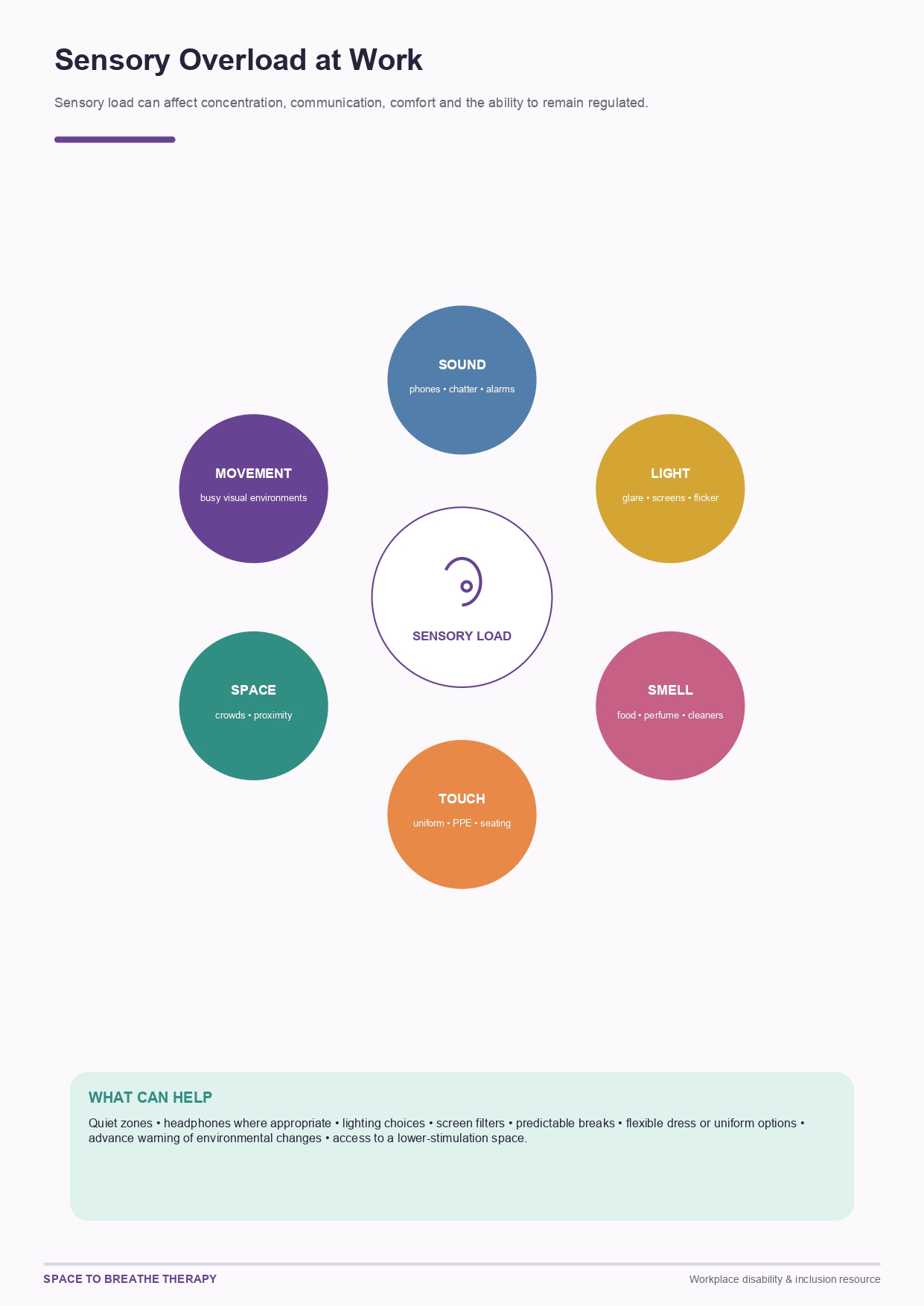
This resource looks at some of the everyday sensory demands we may barely notice — phones ringing, conversations, alarms, bright or flickering lights, screens, perfumes, cleaning products, uniforms, PPE, uncomfortable seating, crowded spaces and busy visual environments.
When these things build up, sensory load can affect a person's concentration, communication, comfort and ability to stay regulated.
What is important is that there are often practical things we can do. Quiet spaces, appropriate headphones, different lighting, screen filters, predictable breaks, flexible clothing options and somewhere with lower stimulation can all be considered. Even giving somebody advance warning that their environment is going to change can help.
For me, this is about moving away from:
“Everyone else manages with it.”
and instead asking:
“What does this environment feel like for you, and what would help?”
Sensory needs aren't about being difficult or asking for special treatment. Sometimes changing something that seems very small to us can make an enormous difference to somebody else's ability to work comfortably and effectively.
Maggie
Space to Breathe Therapy