





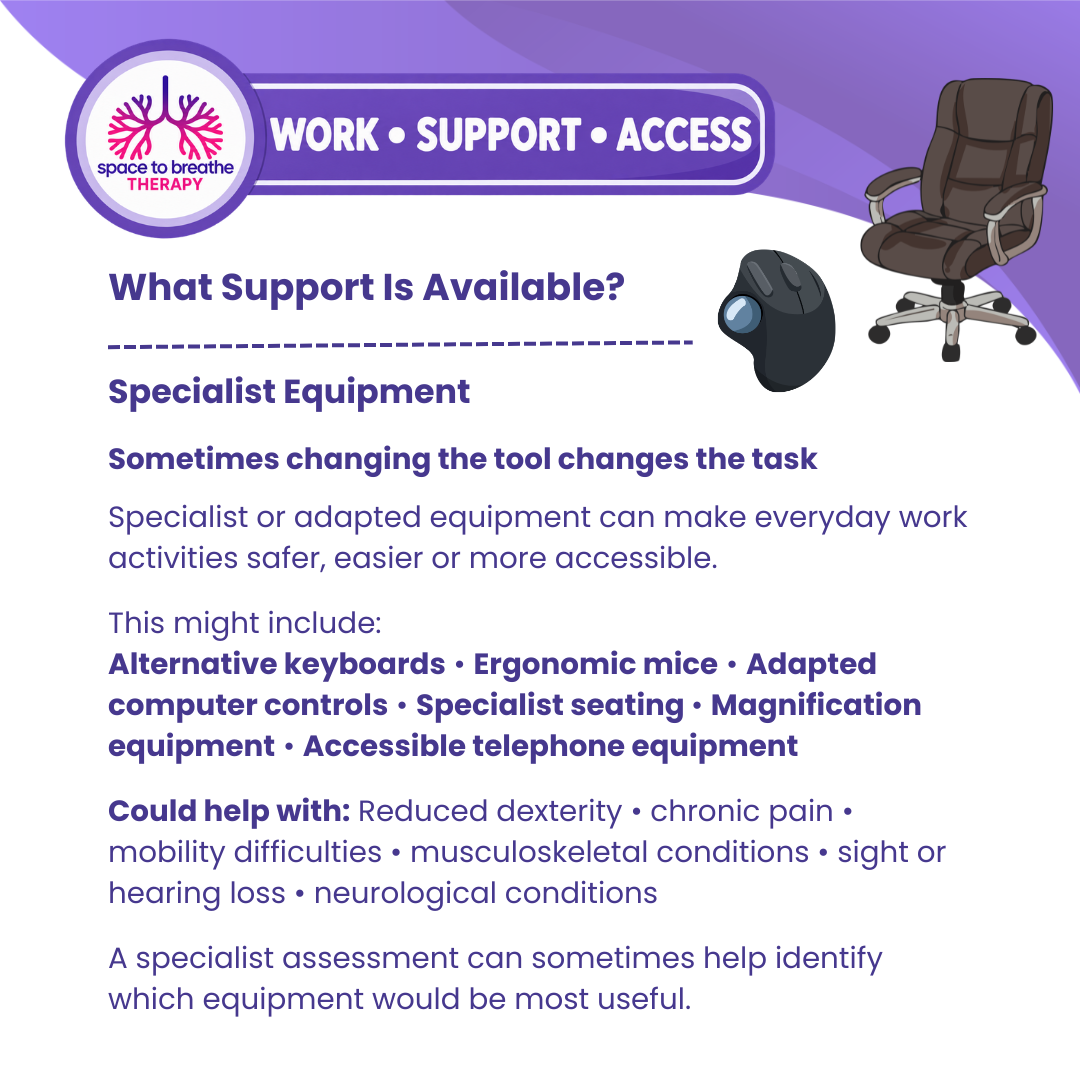
Specialist Equipment – When the Right Tool Removes a Barrier
What this resource is for
Sometimes a relatively small change in equipment can make a significant difference to how someone experiences their working day.
Specialist or adapted equipment is designed to reduce barriers that make everyday work activities difficult, uncomfortable, tiring or inaccessible because of a disability or health condition.
The aim isn't simply to provide different equipment. It is to find something that addresses the particular barrier the person is experiencing in their actual job.
What could specialist equipment include?
Depending on someone's needs and working environment, this could include:
Ergonomic keyboards and mice • Alternative computer controls • Specialist seating • Height-adjustable equipment • Magnification equipment • Accessible telephone equipment • Adapted desks or workstations • Alternative input devices • Equipment to reduce physical strain
What is appropriate will vary enormously from person to person.
Two people with the same condition may need completely different equipment because their jobs, bodies, environments and individual barriers are different.
Looking beyond the diagnosis
Rather than beginning with:
“What equipment is available for my condition?”
it can be more helpful to think:
“What am I struggling to do?”
For example:
Barrier: Using a standard mouse causes pain or is difficult to control.
Impact: Computer work becomes slower, painful or difficult to sustain.
Possible support: An alternative ergonomic mouse or computer-control system.
Or:
Barrier: Sitting in a standard office chair increases pain and fatigue.
Impact: Concentration and the amount of time someone can comfortably work are affected.
Possible support: Specialist seating or changes to the workstation.
This is another example of:
Barrier → Impact → Support
A Personal Reflection from Maggie
One thing I have learned through my own working life, and through supporting people at Space to Breathe Therapy, is that we can become incredibly good at working around things that aren't actually working for us.
We compensate. We push through. We change how we sit, work longer because something takes us more time, avoid certain tasks or simply accept that work leaves us exhausted.
Sometimes we don't even recognise something as a barrier because we've been managing it for so long.
I've learned that asking for equipment isn't about wanting something extra. It's about asking:
“Is there another way of doing this that would make it more accessible for me?”
The right chair, mouse, keyboard, desk, software or other piece of equipment might seem like a small thing, but if you're using it for hours every day, that small change can have a very real impact.
I always encourage people not to choose something simply because it is labelled as suitable for ADHD, autism, dyslexia, chronic pain or another condition.
Start with the person. Start with the barrier. Then find the tool.
— Maggie, Space to Breathe Therapy
Getting the right equipment matters
Specialist equipment isn't always something you should simply choose from a catalogue.
Where appropriate, an assessment can help explore how you work, the tasks you complete, your physical or sensory needs and the environment you're working within.
It may also allow different options to be considered before deciding what is most appropriate.
This can be particularly important with specialist seating, ergonomic equipment and more complex assistive technology.
Specialist equipment and Access to Work
For eligible people, Access to Work may contribute towards specialist equipment where disability or a health condition creates additional workplace barriers.
What is recommended or funded will depend on the individual's circumstances, their job, existing workplace provision and the outcome of the Access to Work process.
Remember
You don't necessarily need to change yourself to make a task possible.
Sometimes you can change the tool, the environment or the way the task is done.
And sometimes, that is the adjustment that makes work work for you.




