




FACTS — Neurodivergent Strengths at Work
This one could definitely have more information underneath it so it feels substantial enough for the library:
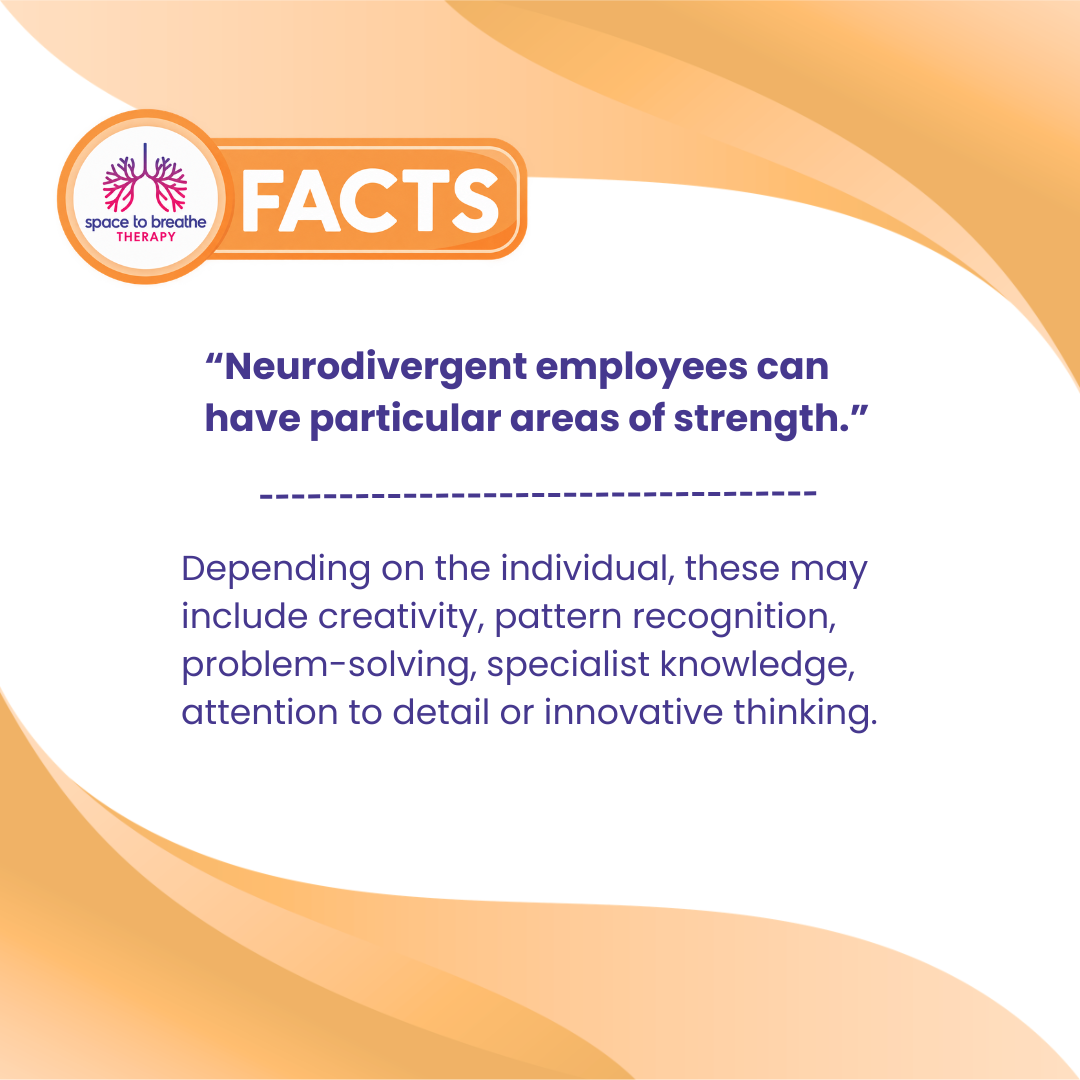
“Neurodivergent employees can have particular areas of strength.”
Depending on the individual, these may include creativity, pattern recognition, problem-solving, specialist knowledge, attention to detail or innovative thinking.
Some people may also demonstrate:
- Deep focus when working on areas of interest.
- Strong long-term memory for particular subjects or information.
- An ability to notice patterns, inconsistencies or details others may overlook.
- Creative or unconventional approaches to problems.
- Strong visual, spatial, analytical or systems-based thinking.
- Persistence and determination, particularly when solving complex problems.
- Extensive specialist knowledge developed through intense interests.
- Honesty, directness and strong values within workplace relationships.
- The ability to question established ways of working and suggest new or more efficient approaches.
Strengths aren't universal
Being neurodivergent does not automatically mean someone will have all of these strengths. Neurodivergent people are individuals, and their abilities, difficulties and support needs vary considerably.
The same characteristic can also be a strength in one environment and a challenge in another. For example, attention to detail can be incredibly valuable, but it may become exhausting when someone feels unable to move on until everything feels complete.
The environment matters
A person's strengths may be easier to recognise when the workplace provides the right environment, communication and reasonable adjustments.
Instead of only asking:
“What does this employee struggle with?”
workplaces can also ask:
“What helps this person work at their best?”
and
“Are we creating an environment where their strengths have the opportunity to be seen?”
Neurodiversity at work isn't only about accommodating difficulties. It is also about recognising different ways of thinking, working, communicating and contributing.
Space to Breathe Therapy