





Understanding Disability at Work – What This Resource Is For
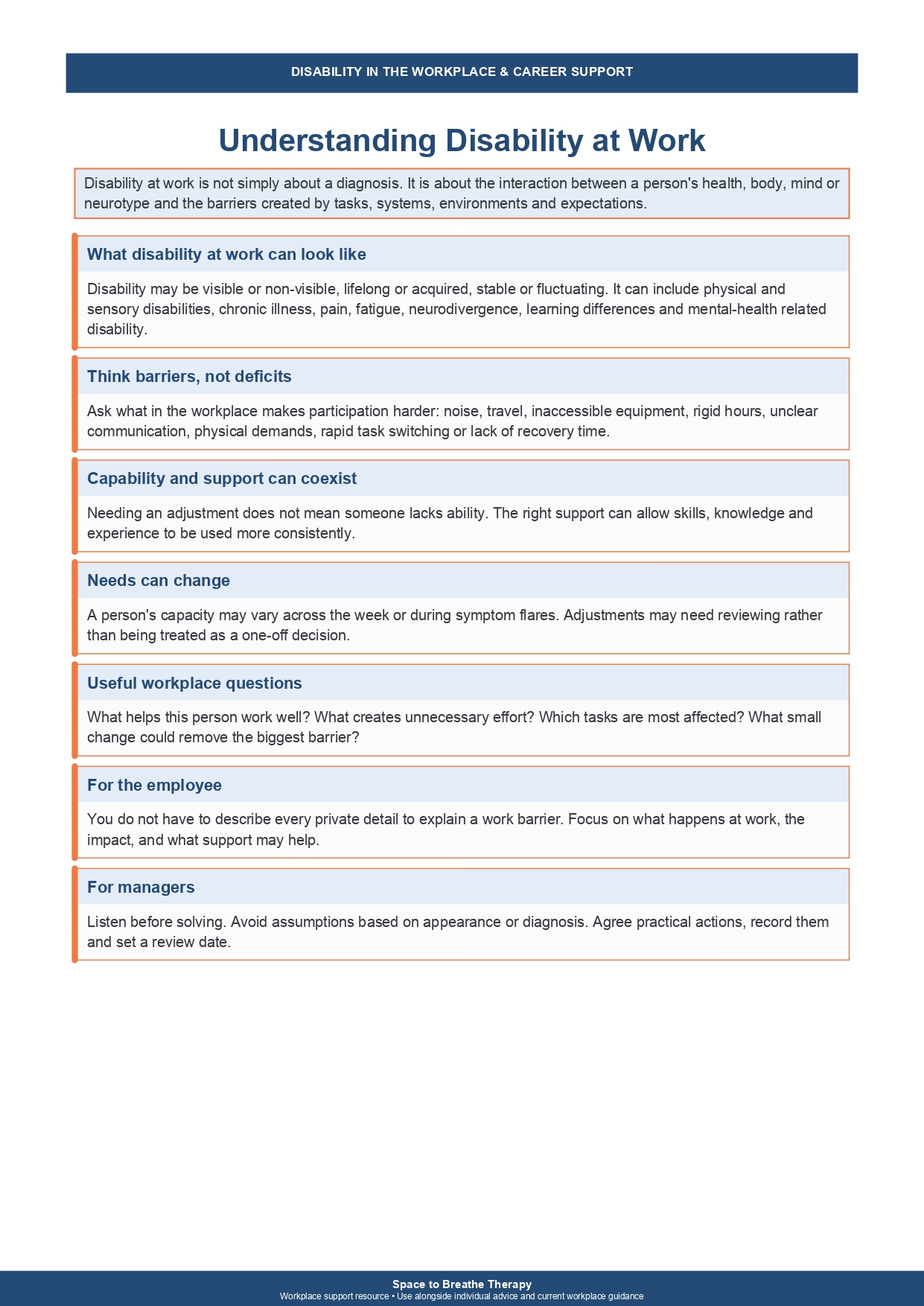
This resource is designed to help employees, managers and workplaces think about disability in a practical, person-centred way. Rather than focusing only on a diagnosis or on what somebody cannot do, it encourages people to consider how the individual, their role and the working environment interact.
Someone can be highly capable and still experience workplace barriers. Needing support or adjustments does not take away from a person's skills, knowledge or value.
What to do with this resource
Read through each section and think about the person's actual experience of work. Consider which parts of the job are working well and which create additional effort or difficulty.
Look particularly at potential barriers such as noise, travel, equipment, working hours, communication, physical demands, rapid task switching and insufficient recovery time.
Then use the questions on the sheet to guide a conversation:
What helps this person work well? What creates unnecessary effort? Which tasks are most affected? What small change could remove the biggest barrier?
The resource can be used privately by an employee to prepare for a workplace conversation, or collaboratively with a manager, HR professional, occupational health professional or other workplace support.
How it can help
It can help move conversations away from “What is wrong with this person?” towards “What is making this particular part of work harder, and what could we change?”
For employees, this can make it easier to describe the functional impact at work and the support that might help, without feeling that every private detail of a health condition or disability needs to be shared.
For managers, it provides a starting point for listening, avoiding assumptions and agreeing practical actions that can be reviewed over time.
Importantly, the resource also recognises that needs can fluctuate. An adjustment that works today may need reviewing if someone's role, environment, health or circumstances change.
The aim is not to lower expectations or assume incapability. It is to identify and reduce avoidable workplace barriers so that people have a fairer opportunity to use their skills and do their work well.