





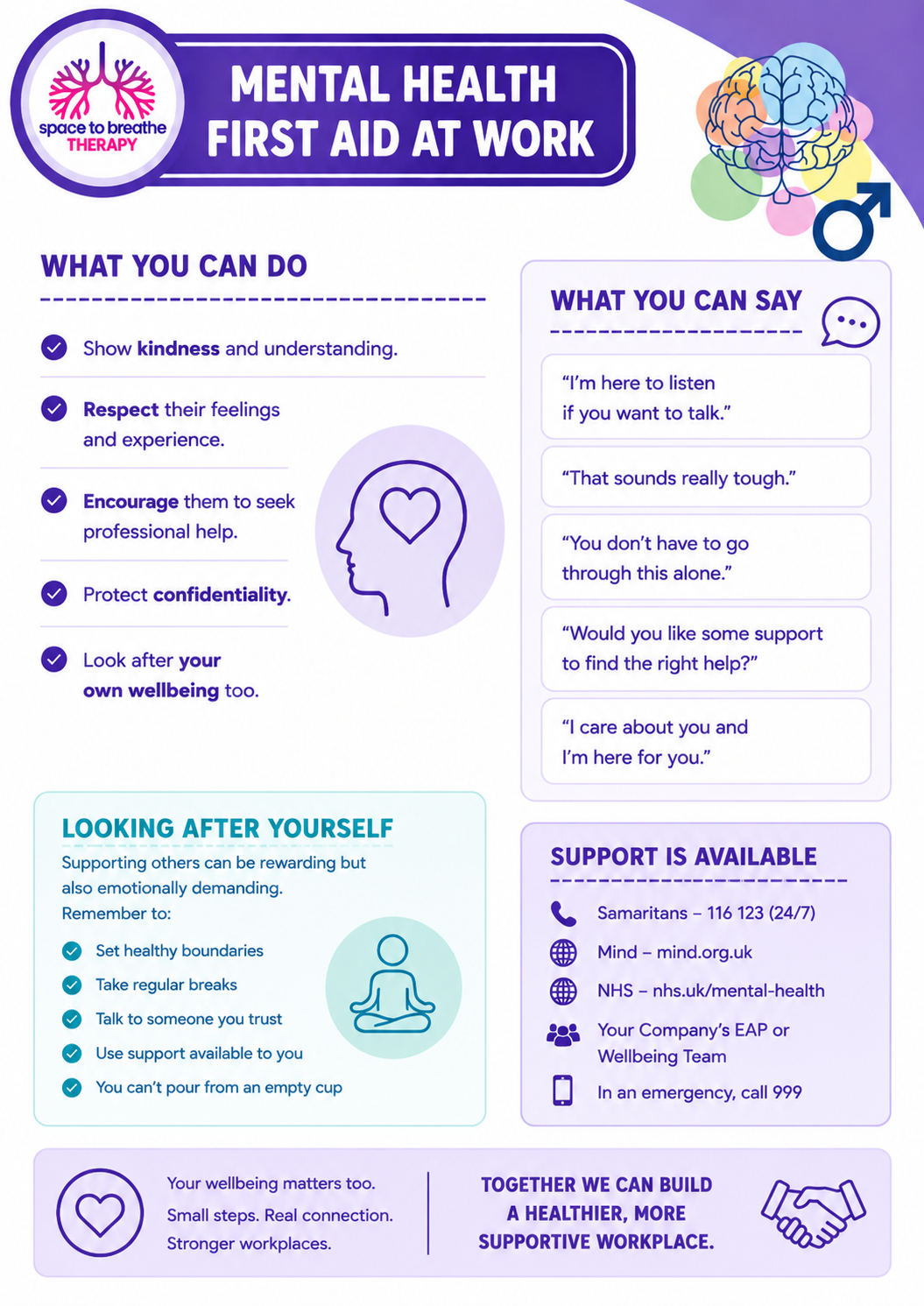
What You Can Do and Say
Mental Health First Aid at Work
Knowing that somebody is struggling and knowing what to say to them can feel like two very different things.
People sometimes avoid starting a conversation because they're frightened they'll say the wrong thing. But supporting someone's mental health doesn't require perfect words.
Very often, what matters most is how we make somebody feel while they're talking to us.
Safe. Heard. Respected. Believed.
Start With Kindness
If somebody chooses to tell you they're struggling, try to resist the urge to immediately solve the problem.
Instead, listen.
You might say:
“I'm here to listen if you want to talk.”
“That sounds really tough.”
“You don't have to go through this alone.”
Or simply:
“What would help you right now?”
These aren't complicated statements, but they communicate something powerful:
You matter, and I'm listening.
A Few Tips From Me
Listen to understand, not to respond
While somebody is talking, try not to spend that time thinking about what you're going to say next.
Be present.
Sometimes people need to hear their own thoughts out loud before they can begin making sense of them.
Validate before offering solutions
You don't necessarily need to agree with someone's interpretation of a situation to recognise how difficult it feels for them.
Try:
“I can hear how much this is affecting you.”
before moving into:
“Shall we think about what support might help?”
Ask rather than assume
One of my favourite questions is:
“What do you need from me right now?”
Someone may want advice.
They may want practical help.
They may want you to help them find professional support.
Or they may simply want somebody to listen.
Let them tell you.
Keep confidentiality — but understand its limits
Respecting someone's privacy is an important part of creating trust.
However, don't promise absolute secrecy. If you're concerned about someone's immediate safety, or workplace safeguarding procedures require action, additional support may need to be involved.
Be open with the person about this wherever possible.
And Please Remember Yourself
This part is sometimes forgotten in conversations about Mental Health First Aid.
The person providing support matters too.
Listening to somebody who is distressed can affect us emotionally, particularly when we care about them or their experience connects with something from our own lives.
It's okay to have boundaries.
It's okay to take a break.
It's okay to say:
“I want to support you, but I think we need some additional help with this.”
That isn't abandoning somebody.
Sometimes that's exactly what good support looks like.
A Little Reminder From Me
You can't pour from an empty cup — but I also don't believe we should wait until the cup is completely empty before we notice ourselves.
Check in with yourself too.
How are you feeling?
Are you becoming overwhelmed?
Are you carrying conversations home?
Are you taking responsibility for things that aren't yours to carry?
Supporting other people should never mean disappearing from your own wellbeing.
Compassion needs boundaries too.
So be kind.
Listen.
Reach out.
Help somebody find support when they need it.
But remember that you are a person in the conversation as well.
Their wellbeing matters. And yours does too.
Until next time, give yourself — and others — Space to Breathe.
Maggie
Space to Breathe Therapy