





Body Neutrality — How to Use
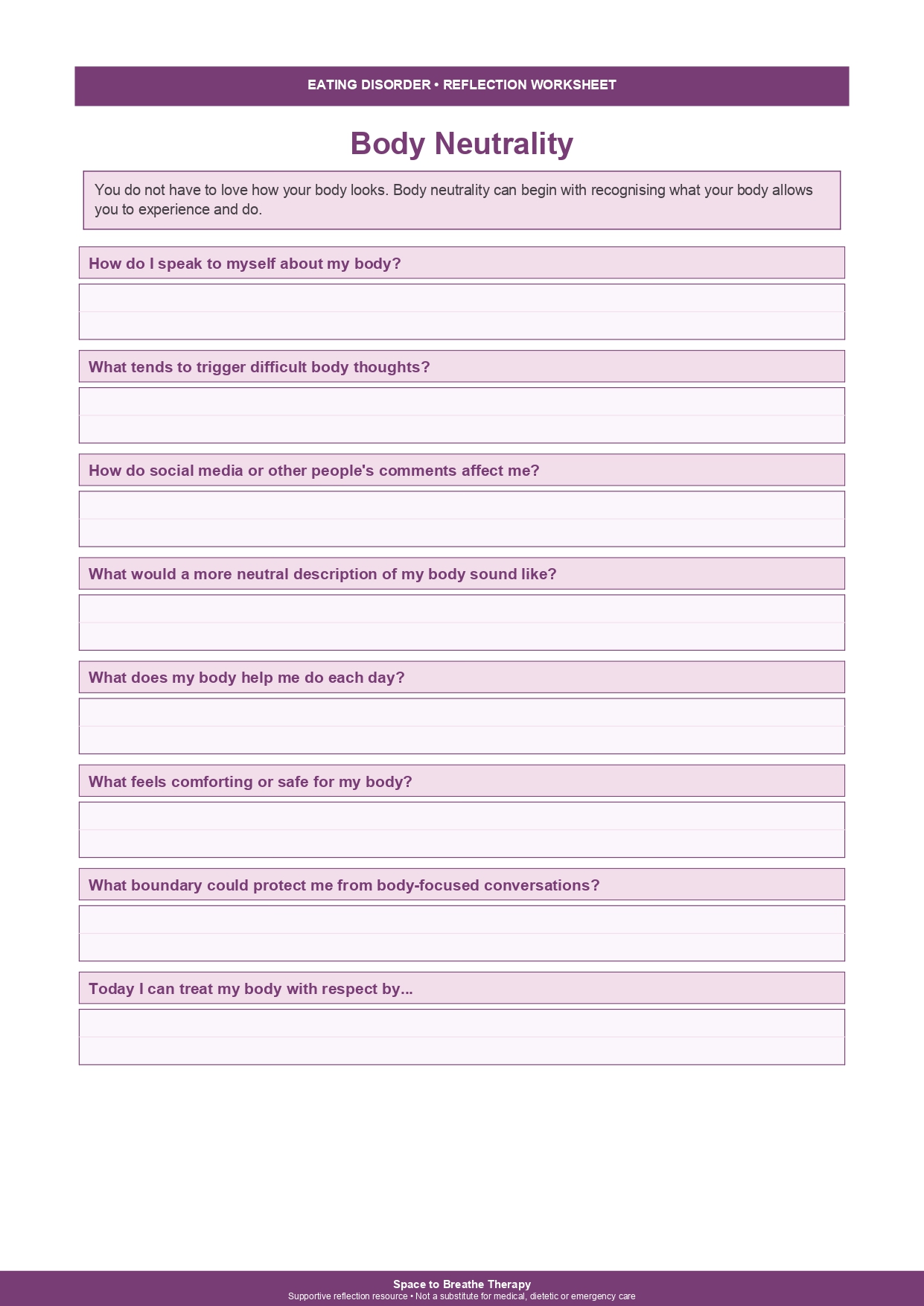
Body neutrality doesn't require you to love how your body looks. This worksheet helps you move towards relating to your body with less judgement and more respect.
Begin by noticing how you currently speak to yourself about your body. Try not to edit the answer.
Then identify situations that trigger difficult body thoughts. These might include mirrors, clothing, photographs, social media, changes in your body or comments from other people.
Notice particularly how social media and other people's opinions affect your own thoughts.
Next, try describing your body using more neutral language. Neutral doesn't have to mean positive — it simply means moving away from harsh judgement.
Think about what your body helps you do and experience each day, while recognising that bodies can also experience pain, disability, fatigue and limitations.
Identify what helps your body feel comfortable or safe.
Then consider whether you need boundaries around body-focused conversations. You might decide that discussions about weight, diets or appearance are not helpful for you.
Finish with one way you can treat your body with respect today.
Respect can come before body confidence.




