





The Eating Disorder Voice — How to Use
This worksheet helps you notice when the eating disorder is speaking and begin separating those messages from your own needs, values and compassionate voice.
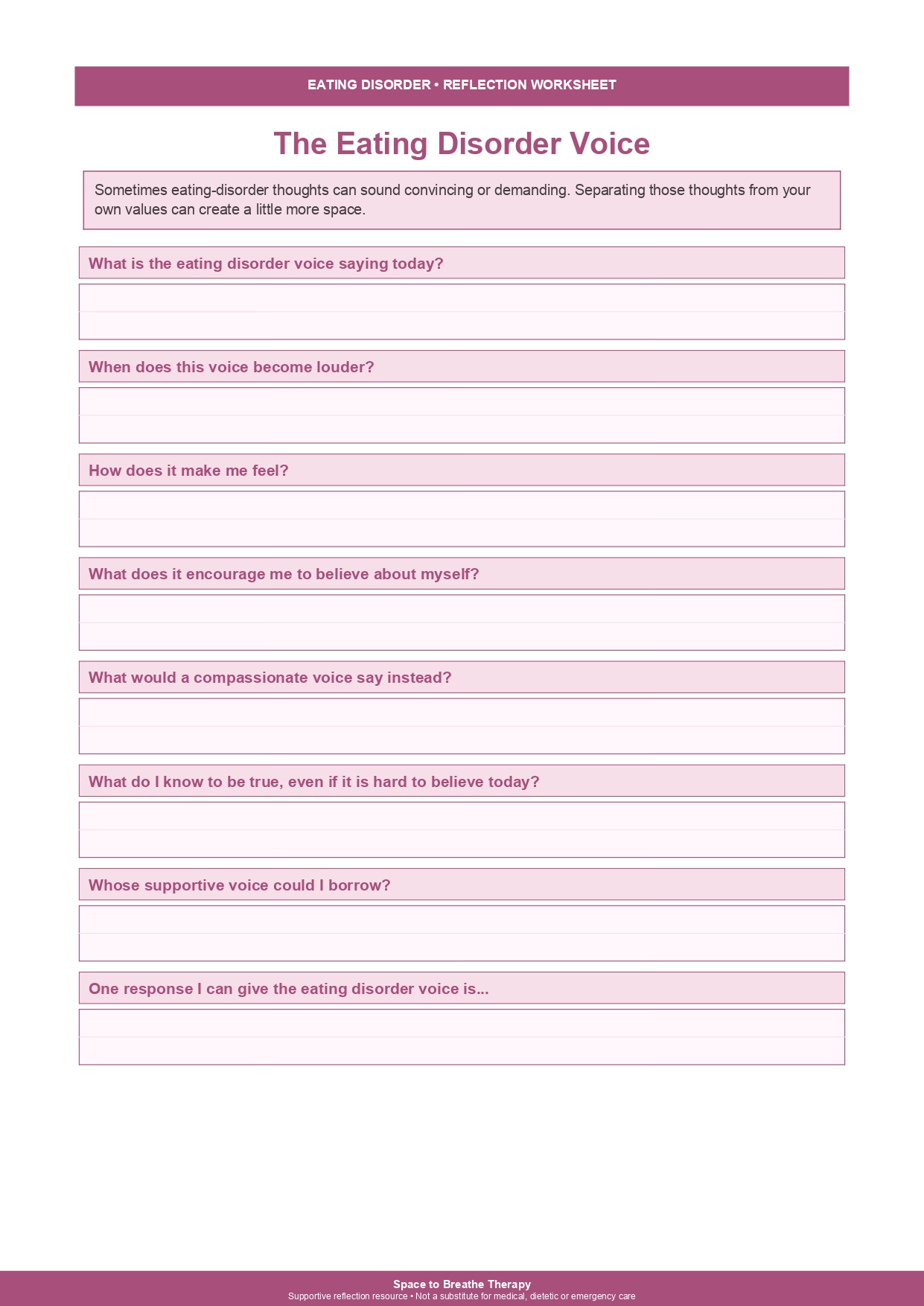
Start by writing down what the eating-disorder voice is saying today. Try to capture the actual message, even if it feels uncomfortable.
Next, consider when that voice becomes louder. Is it around meals, after eating, during stress, when looking at your body, after comments from others, or at particular times of day?
Notice how the voice makes you feel and what it encourages you to believe about yourself.
Then begin introducing another perspective. Ask yourself: What would a compassionate voice say instead?
“What do I know to be true?” can help you distinguish between a powerful thought and something you actually know.
If your own compassionate voice is difficult to access, think about whose supportive voice you could borrow — perhaps a trusted person, therapist or someone who makes you feel safe.
Finally, write one response you could give the eating-disorder voice.
You don't have to make the voice disappear. The aim is to begin recognising that it is not the only voice available to you.