





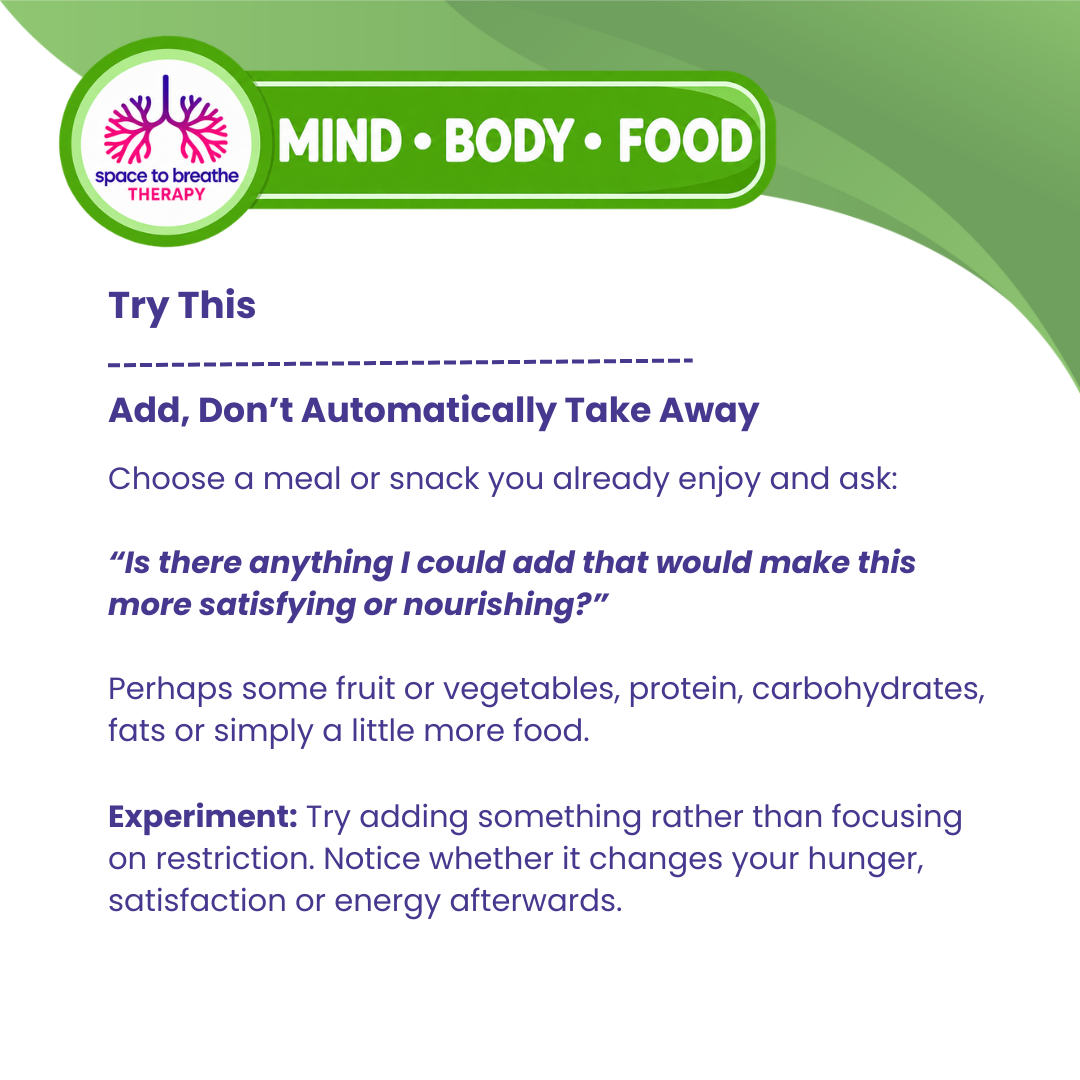
Try This
Add, Don’t Automatically Take Away
When people think about improving their nutrition, the first thought is often:
“What should I stop eating?”
“What should I cut out?”
“What do I need to replace?”
But improving nutrition does not always have to begin with restriction.
Sometimes a gentler and more sustainable place to start is:
“What could I add?”
Rather than changing everything on your plate, begin with a meal or snack that already feels familiar, enjoyable and manageable.
Then explore whether adding something could help make it more nourishing, satisfying or supportive of your energy.
Start With What Already Works
A familiar meal does not have to disappear just because you want to improve your nutrition.
You can build around the foods you already eat.
This can be particularly helpful for people who experience sensory differences, food anxiety, ARFID, neurodivergence, restricted eating or a strong preference for predictable foods.
Keeping familiar foods can provide a sense of safety while allowing nutrition to develop gradually.
What Could You Add?
There is no single correct addition. Think about what your body, appetite and sensory needs can manage.
Protein
Eggs, yogurt, cheese, fish, meat, beans, lentils or another tolerated protein may help make a meal more satisfying.
Carbohydrates
Bread, potatoes, rice, pasta, oats, cereal or other carbohydrates provide an important source of energy.
Fats
Oils, avocado, cheese, seeds or other tolerated fats can add energy, flavour and satisfaction.
Fruit or Vegetables
These can be fresh, frozen, cooked, blended, mashed, crunchy or soft. The form that works for you is the one that matters.
Flavour or Texture
A favourite sauce, seasoning, dip, topping or crunchy side may make a meal easier or more enjoyable to eat.
More of a Safe Food
Sometimes the most useful addition is simply more food. Nourishment does not always require introducing something new.
Think Addition, Not Perfection
A meal does not need to contain every food group to have value.
One meal may be very balanced. Another may consist mainly of safe or familiar foods.
Both can have a place.
Instead of asking:
“Is this meal healthy enough?”
try asking:
“What is this meal already giving me?”
and then:
“Is there anything I could comfortably add?”
Why This Approach Can Help
Constantly categorising food as good, bad, healthy or unhealthy can create pressure around eating.
An addition-based approach can encourage:
Curiosity instead of judgement
Flexibility instead of rigid rules
Nourishment instead of restriction
Choice instead of pressure
It allows nutrition to develop without suggesting that the foods someone already relies upon are wrong.
Safe Foods Still Count
For someone with ARFID, sensory processing differences or a restricted range of foods, a safe food can be incredibly important.
Safe foods may provide predictability in:
Taste • Texture • Smell • Temperature • Appearance • Brand • Preparation
Removing a safe food to make a meal appear “healthier” may actually result in the person eating less overall.
Sometimes the more supportive approach is:
Keep the safe food and build around it.
New Foods Don’t Have to Replace Familiar Foods
If you want to explore something different, put it alongside something familiar.
There is also no requirement to immediately eat a new food.
Exploration might begin with:
Seeing it on the table.
Having it on a separate plate.
Smelling it.
Touching it.
Preparing it.
Taking a tiny taste.
Trying it again another day.
Food exploration can happen gradually.
Try a Simple Plate Check
Look at your meal and ask:
Energy: Is there enough food here to give me energy?
Satisfaction: Is there something I genuinely enjoy eating?
Protein: Would adding some protein feel manageable?
Carbohydrate: Do I have an accessible source of energy?
Variety: Is there anything else I would comfortably add?
Sensory needs: Are the textures, smells and temperatures manageable for me?
Portion: Am I actually giving myself enough food?
Not every question needs a yes.
They are prompts, not rules.
Try a Small Experiment
Choose a meal or snack you already eat regularly.
Step 1
Keep the original meal exactly as it is.
Step 2
Choose one manageable addition.
Step 3
Eat without putting pressure on yourself to decide whether the addition was “good” or “bad”.
Step 4
Notice what happened afterwards.
Ask yourself:
Was I satisfied?
Did I enjoy the meal?
Did I have enough energy?
Did I stay fuller for longer?
Was the texture comfortable?
Did the addition make eating easier or harder?
Would I have it again?
Would I change anything next time?
Remember: Nutrition Can Look Different for Different People
There is no universal perfect plate.
Someone managing sensory differences, disability, chronic illness, executive functioning difficulties, low appetite or food anxiety may need a very different approach from someone else.
Convenience foods, frozen foods, ready meals, repeated meals and safe foods can all have a place in nourishing yourself.
The aim is not to make eating look perfect.
The aim is to help eating become possible, adequate, enjoyable and sustainable.
A Gentler Food Mindset
Instead of:
“I shouldn't eat this.”
Try:
“What could I have with this?”
Instead of:
“This meal isn't healthy enough.”
Try:
“What is this meal already providing?”
Instead of:
“I need to replace my safe food.”
Try:
“Can I keep my safe food and explore something alongside it?”
Instead of:
“I should eat like everyone else.”
Try:
“What works for my body and my needs?”
Add • Explore • Nourish
You do not always need to take something off the plate to improve nutrition. Sometimes the next step is simply finding something supportive to add to it.
Space to Breathe