





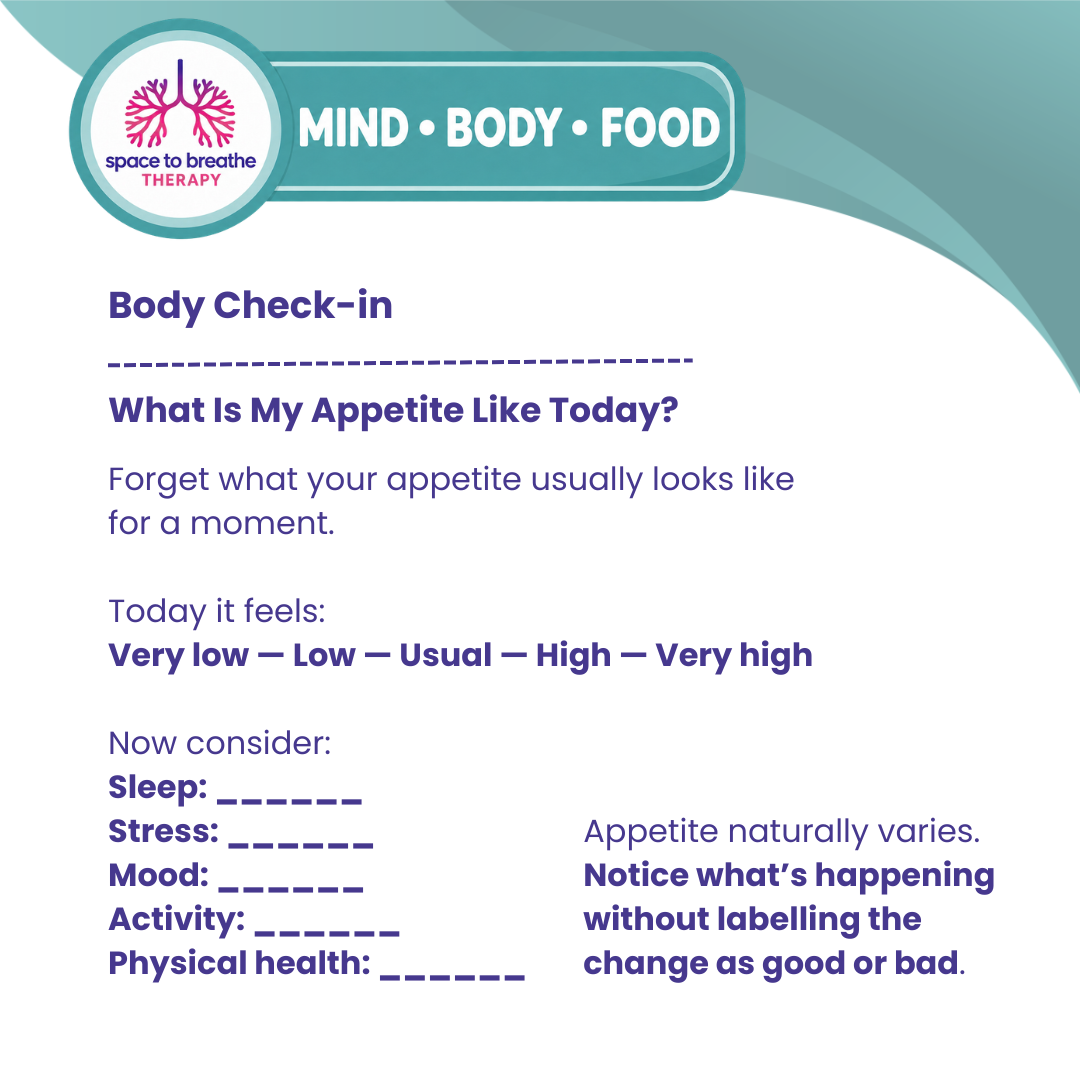
Body Check-In: What Is My Appetite Like Today?
Appetite isn’t fixed. It can change from day to day and even throughout the same day. Having more or less appetite than usual doesn’t automatically mean something is wrong.
Rather than comparing today with what you think your appetite should be, try noticing what is happening right now.
How does your appetite feel today?
Would you describe it as:
Very low — Low — Usual — High — Very high
There is no correct answer. This is simply information about your body today.
What can influence appetite?
Our desire to eat can be affected by much more than how long it has been since our last meal. Sleep, stress, emotions, activity, illness, medication, pain, hormones, sensory experiences and changes in routine can all influence appetite.
Sometimes you may feel physically hungry but have very little interest in food. At other times, you might want to eat without experiencing obvious stomach hunger.
Both experiences can happen.
Look at the wider picture
If your appetite feels different today, consider:
How did I sleep?
Poor or disrupted sleep can influence hunger and appetite.
How stressed am I?
Stress can increase appetite for some people and reduce it for others.
What is my mood like?
Emotions can influence both our interest in food and our awareness of hunger.
How active have I been?
Energy requirements change depending on activity, although hunger doesn't always respond immediately.
How am I physically?
Illness, pain, digestive discomfort and some medications can alter appetite.
For neurodivergent people, sensory overload, hyperfocus, changes in routine and difficulty recognising internal body signals may also affect awareness of hunger and appetite.
Try not to label the change
A high appetite isn't “bad”, and a low appetite isn't “good.”
Instead, try:
“My appetite is different today. I wonder what might be contributing to that?”
That small shift can turn judgement into curiosity.
When appetite is low
Remember that not feeling hungry doesn't necessarily mean your body doesn't need nourishment. If recognising hunger signals is difficult, regular eating opportunities or familiar, manageable foods can sometimes be more helpful than waiting for strong hunger to appear.
Notice patterns, not individual days
One unusual day usually tells us very little. What becomes more useful is noticing patterns over time.
If your appetite changes significantly, remains unusually low or high, affects your ability to eat adequately, or comes alongside other concerning symptoms, it is worth discussing it with a healthcare professional.
Your appetite doesn't have to look the same every day. The aim isn't to control it — it's to become more aware of what your body may be communicating.
Space to Breathe Therapy




