





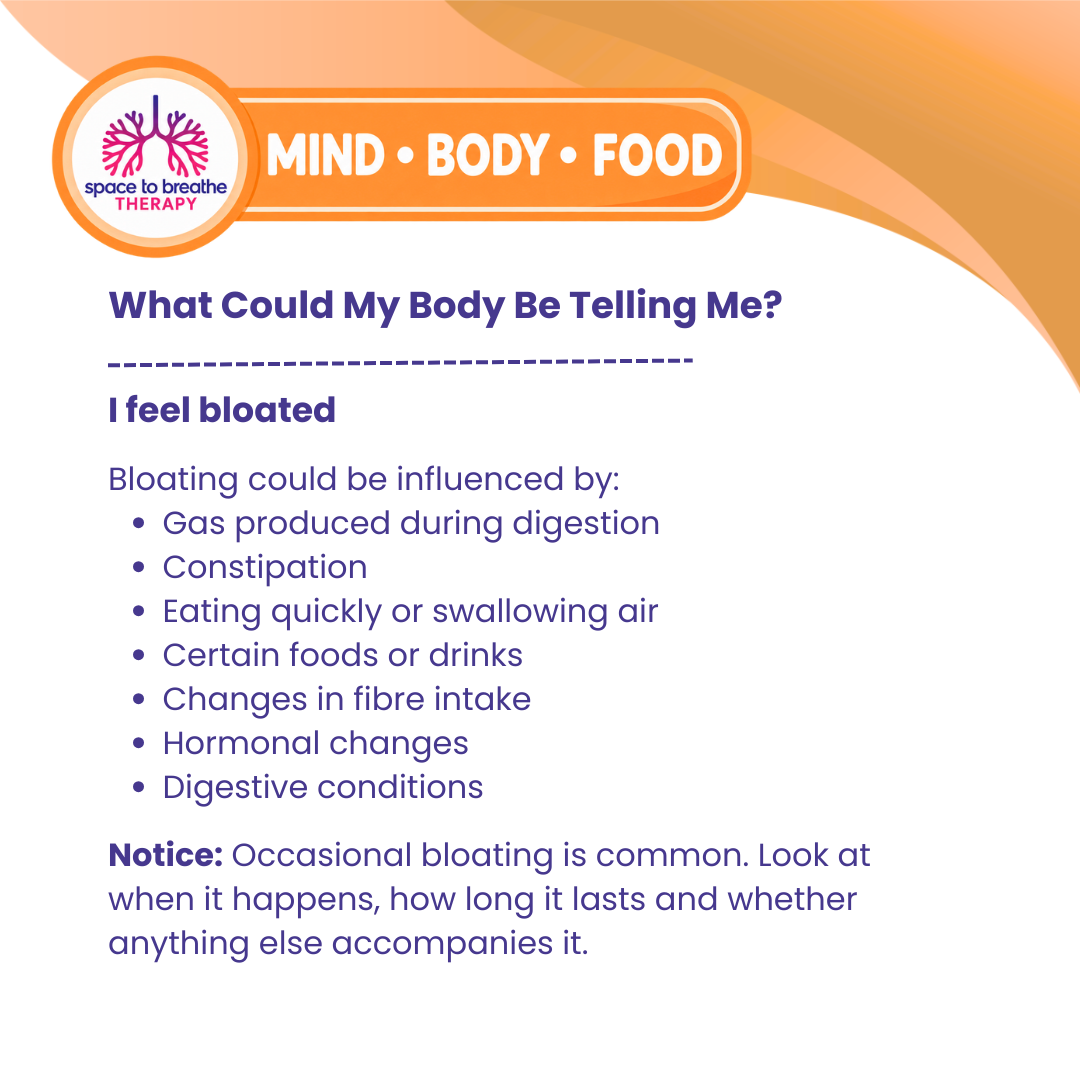
Bloating is extremely common and can happen for many different reasons. It can feel like fullness, pressure, tightness or swelling around the abdomen, and sometimes the stomach may visibly look larger.
Occasional bloating is often a normal part of digestion. It doesn't automatically mean that something is wrong or that a particular food needs to be removed from your diet.
What happens during digestion?
Our digestive system naturally produces gas as food is broken down and fermented by bacteria in the gut.
Some foods produce more gas than others, particularly foods containing certain types of carbohydrates and fibre. This isn't necessarily a bad thing — many of these foods can also be nutritious and beneficial for the gut.
Could constipation be contributing?
When bowel movements become less frequent or stools are difficult to pass, gas and stool can build up in the digestive system, contributing to feelings of fullness and bloating.
Fluid intake, movement, fibre intake, medications, stress and changes in routine can all influence bowel habits.
Have I changed how much fibre I'm eating?
Fibre is important for digestive health, but suddenly increasing it can temporarily cause additional gas and bloatingwhile the digestive system adjusts.
Gradually increasing fibre and drinking adequate fluids can make this more manageable.
This is another reason why dramatically changing your diet overnight isn't always helpful.
Could I be swallowing more air?
Eating very quickly, drinking through straws, chewing gum, drinking fizzy drinks or talking while eating can sometimes mean we swallow additional air.
Stress and anxiety may also change the way we breathe and eat, which can influence digestive sensations.
Hormones can affect digestion too
Hormonal changes can affect fluid retention, bowel movements and digestive symptoms.
Some people notice more bloating at particular points in their menstrual cycle, during perimenopause or around other hormonal changes.
Does bloating mean I have a food intolerance?
Not necessarily.
It can be tempting to respond to bloating by immediately removing foods from the diet. But bloating alone doesn't reliably identify a food allergy or intolerance.
Repeatedly cutting out foods without understanding the cause can lead to an increasingly restricted diet — particularly for someone who already experiences ARFID, sensory differences or anxiety around food.
Instead, try noticing patterns: When does the bloating happen? How long does it last? What else is happening at the same time? Have your bowel habits changed?
When should bloating be checked?
Persistent or regularly worsening bloating deserves further attention, particularly when accompanied by symptoms such as unexplained weight loss, blood in the stool, persistent vomiting, significant abdominal pain or a lasting change in bowel habits.
In these situations, speaking with a GP is more appropriate than simply removing more foods.
Your digestive system doesn't need to feel completely flat or silent after every meal. Some fullness and gas can be part of normal digestion — the important thing is noticing what is normal for your body and when something has changed.
Space to Breathe Therapy