





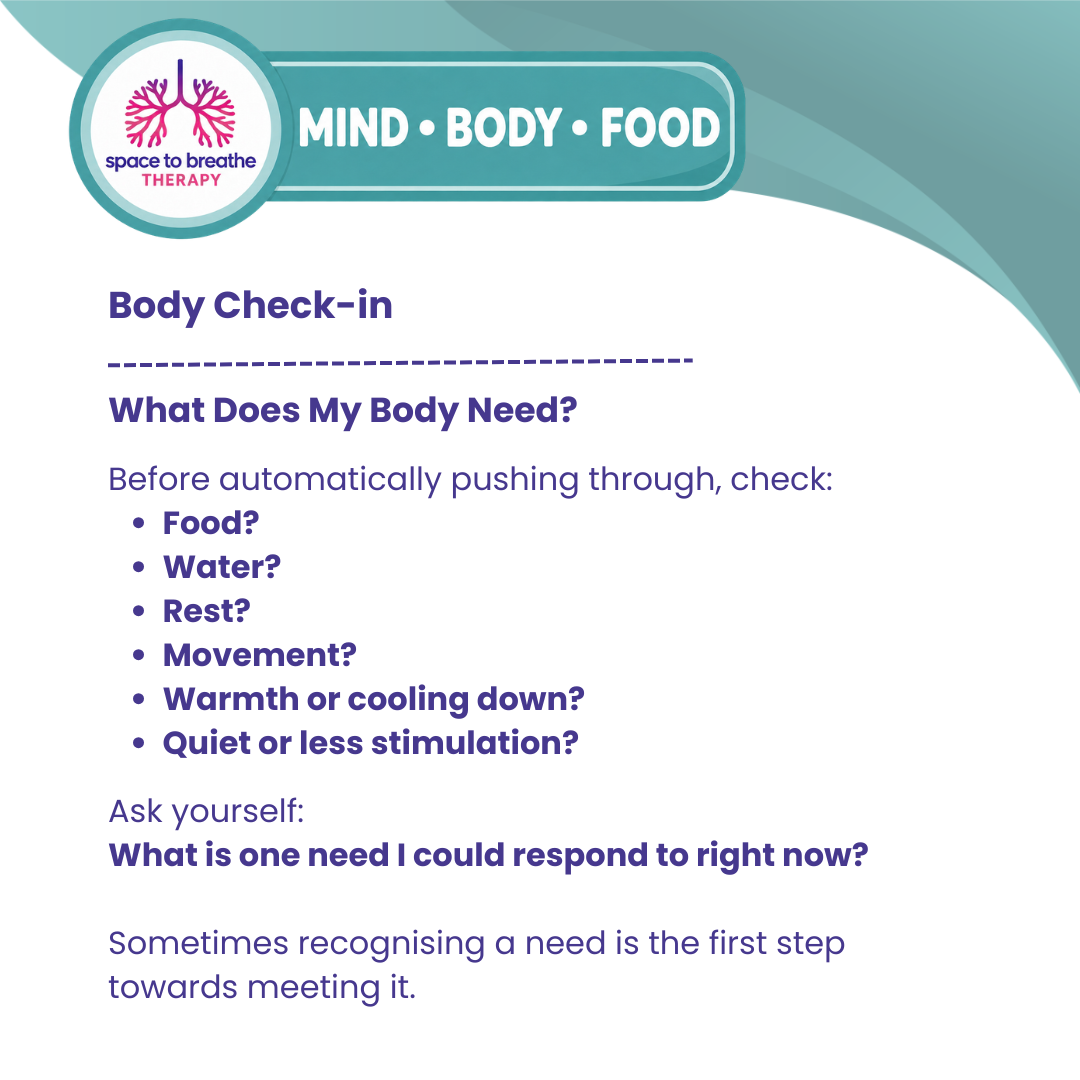
Body Check-In: What Does My Body Need?
Many of us become used to pushing through.
We keep working when we're tired, ignore hunger because we're busy, forget to drink, stay in overwhelming environments or tell ourselves we'll rest when everything else is finished.
But sometimes the body doesn't need us to push harder. It needs us to notice what it is asking for.
Start with the basics
Before assuming something is wrong, gently check some of your basic needs.
Do I need food?
When did I last eat? Hunger isn't always a rumbling stomach. It might appear as irritability, low energy, difficulty concentrating or simply thinking about food.
Do I need water?
When did I last drink? Thirst signals can be subtle, particularly when we're busy or hyperfocused.
Do I need rest?
Rest doesn't necessarily mean sleep. You might need to sit down, stop concentrating, reduce demands or simply have a few minutes where nobody needs anything from you.
Do I need movement?
Sometimes we've been sitting or staying in one position for too long. Stretching, walking, changing position or moving your body in a way that feels comfortable may help.
What about my sensory needs?
Physical needs aren't limited to eating, drinking and sleeping.
Ask yourself:
Am I too hot or too cold?
Is the environment too noisy, bright, crowded or busy?
Would quieter surroundings or less stimulation feel better?
For someone with autism, ADHD or sensory-processing differences, sensory overload can sometimes be experienced as irritability, exhaustion, agitation or a strong need to escape before the source of the discomfort is recognised.
Interoception can make needs difficult to identify
Interoception is our ability to notice and interpret signals coming from inside the body.
For some people these signals are clear.
For others they may be delayed, faint, overwhelming or difficult to interpret.
You might not recognise hunger until you're shaky.
You may not notice tiredness until you're completely exhausted.
You might not realise you're overwhelmed until everything suddenly feels too much.
That doesn't mean you aren't listening to your body. Your body may simply communicate differently.
You don't have to solve everything
When several things feel wrong at once, trying to fix everything can become another demand.
Instead ask:
“What is one need I could respond to right now?”
Maybe that's having something to drink.
Eating something familiar.
Opening a window.
Putting headphones on.
Standing up and stretching.
Turning a light down.
Sitting quietly for five minutes.
Small responses still count.
Build check-ins into your day
You don't have to wait until your body is shouting.
Try occasionally asking:
Have I eaten? Have I drunk? Do I need the toilet? Am I comfortable? Am I tired? Am I overloaded? Do I need movement?
Over time, these intentional pauses can help you recognise patterns and respond earlier.
Meeting your needs isn't something you have to earn by becoming exhausted first. Sometimes recognising a need is the first step towards meeting it.
Space to Breathe Therapy




