





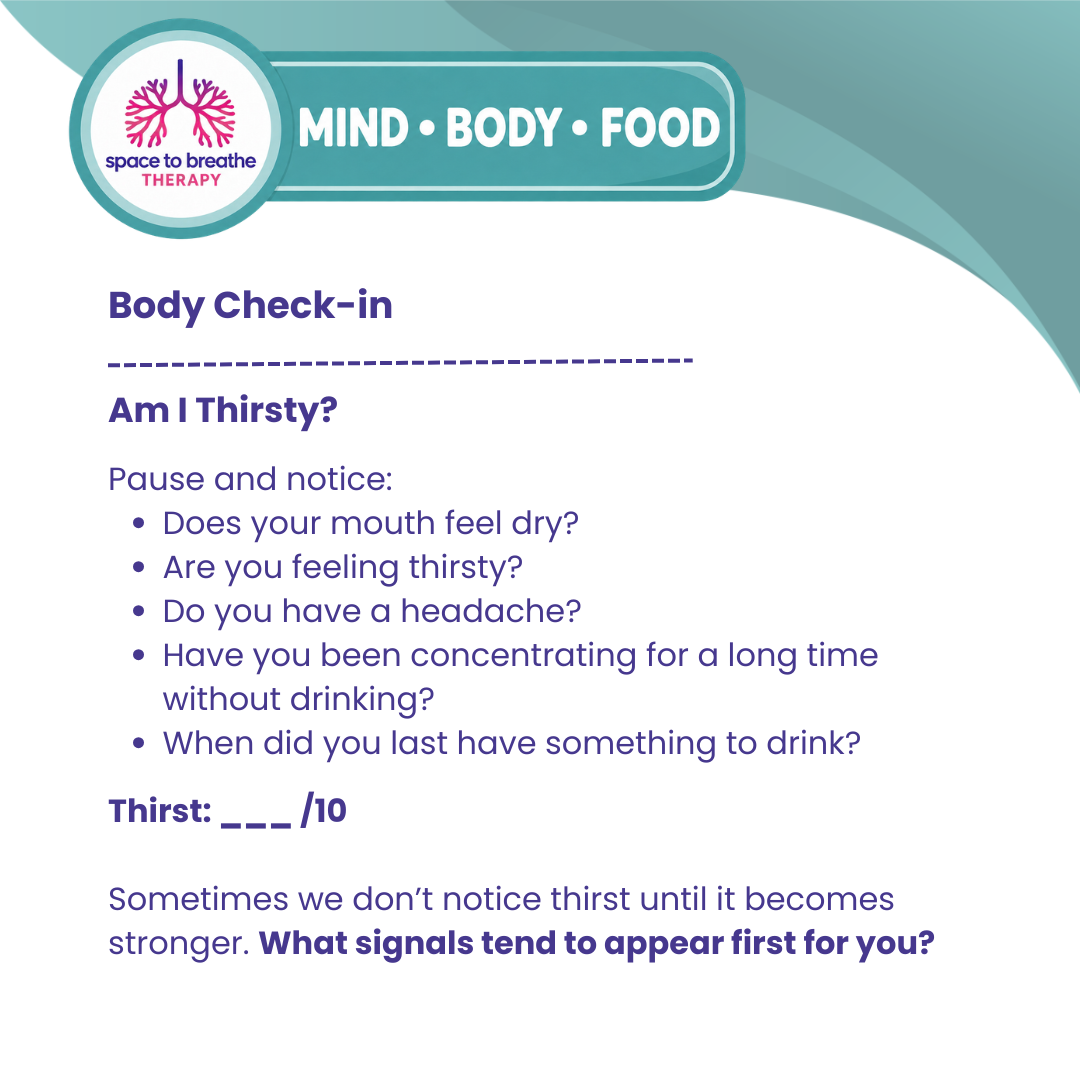
Body Check-In: Am I Thirsty?
We often think thirst should be obvious — “I’m thirsty, so I need a drink.” But our bodies don't always communicate their needs that clearly.
For some people, particularly those with ADHD, autism, sensory differences or differences in interoception, recognising internal body signals can be difficult. You may become absorbed in an activity and not notice thirst until your body begins sending stronger signals.
Thirst can show up in different ways
A dry mouth or feeling thirsty may be the most recognisable signs, but you might first notice something else.
You may experience a headache, tiredness, difficulty concentrating, dizziness or simply feeling a little “off.”
This doesn't automatically mean you're dehydrated — these symptoms can have many causes — but they can be useful prompts to check in with yourself.
When did I last drink?
Sometimes this is a more useful question than “Am I thirsty?”
If recognising thirst is difficult, think about your day:
When did I last have something to drink?
Have you been working, gaming, studying, driving or hyperfocused for several hours?
Have you exercised?
Is the weather particularly warm?
Have you been drinking more caffeine or alcohol than usual?
You don't need to wait for strong thirst before having something to drink.
What does thirst feel like for you?
Body awareness isn't about learning a list of symptoms and deciding what they mean. It's about gradually recognising your own patterns.
Perhaps your mouth becomes dry first.
Maybe you get a slight headache.
Perhaps your concentration disappears, or you suddenly realise you haven't had a drink since breakfast.
Your signals don't have to look the same as somebody else's.
Use external prompts if you need them
If your body doesn't reliably remind you, it's completely reasonable to create reminders around you.
Keeping a drink where you can see it, drinking alongside meals and snacks, using a favourite bottle or setting reminders can all reduce the need to rely entirely on internal thirst cues.
Try the 0–10 check-in
Pause occasionally and ask:
How thirsty do I feel right now? ___ /10
Don't worry about finding the “correct” number. The purpose is simply to stop for a moment and notice.
Over time you may begin recognising the quieter signals that appear before thirst becomes intense.
Body awareness is something we can practise. The more often we pause and notice, the easier it can become to understand what our own body is communicating.
Space to Breathe Therapy