





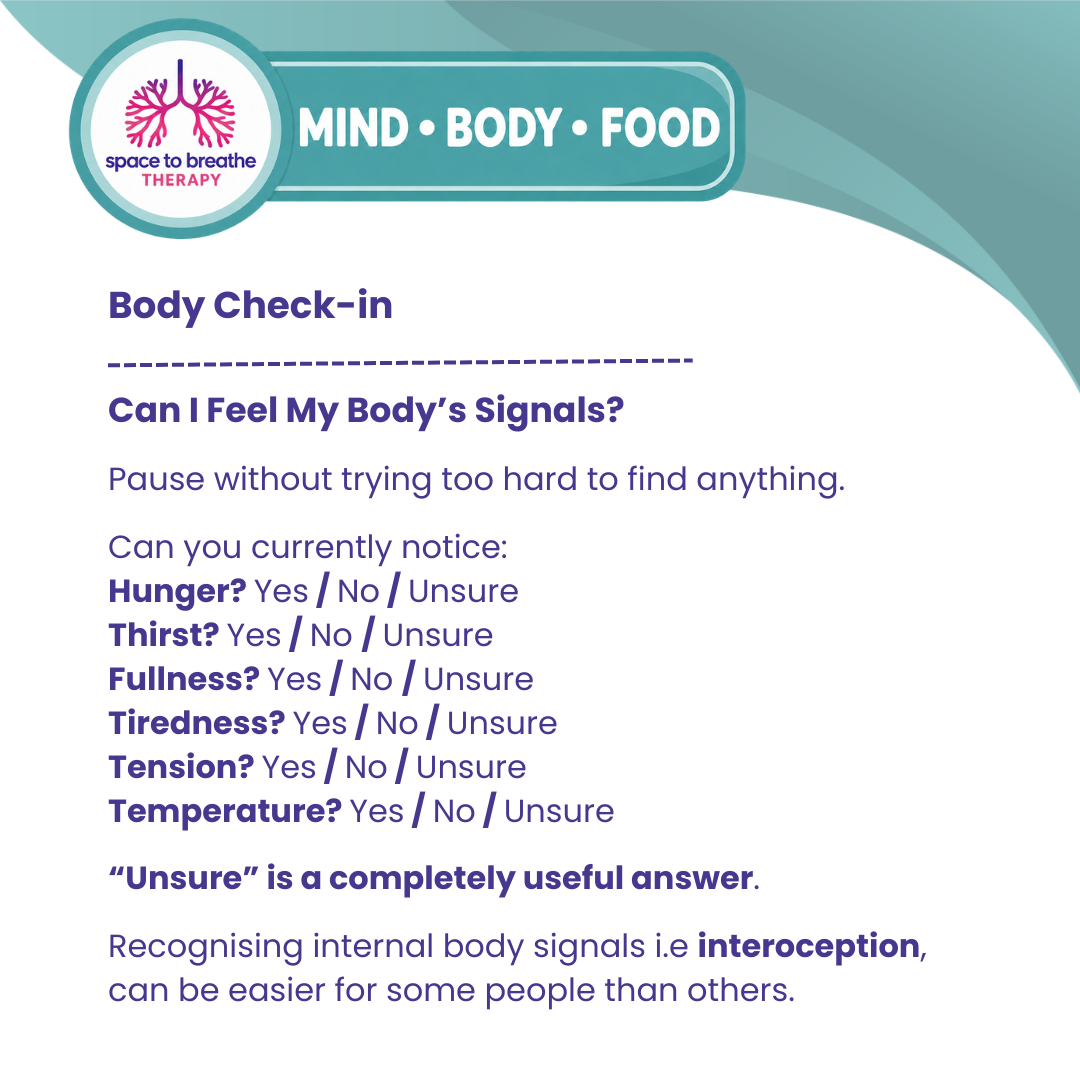
Body Check-In: Can I Feel My Body’s Signals?
Our bodies are constantly sending us information — about hunger, thirst, fullness, tiredness, temperature, tension, pain and the need to move or rest. But recognising those signals isn’t always easy.
The ability to notice and interpret sensations coming from inside the body is called interoception.
What is interoception?
Interoception is sometimes described as our internal sense. It helps us notice things such as:
- An empty, rumbling or uncomfortable stomach
- A dry mouth or feeling thirsty
- Becoming comfortably full
- Needing the toilet
- Feeling too hot or cold
- A racing heartbeat
- Muscle tension
- Tiredness or changes in energy
The signal itself and understanding what that signal means are not always the same thing.
Why might someone answer “unsure”?
Some people experience body signals very clearly. For others, signals may feel quiet, confusing, delayed or difficult to identify.
This can be particularly relevant for some neurodivergent people, including autistic and ADHD individuals. Someone might not recognise hunger until they feel shaky, irritable or exhausted, for example, or may suddenly realise they haven't had anything to drink for several hours.
Stress, anxiety, sensory overload, hyperfocus, illness, tiredness and being very busy can also make internal signals harder to notice.
“Unsure” is useful information
If you can't tell whether you're hungry, thirsty, full or tired, you haven't failed the exercise.
“I don't know” or “I'm not sure” is an observation in itself.
Rather than forcing yourself to identify a feeling, you can become curious:
What can I notice?
Where do I feel it?
Is the sensation strong, subtle or unclear?
Has anything changed since I last checked?
Over time, you may begin to recognise your own patterns.
External cues can help too
You don't have to rely entirely on body signals. If interoception is difficult, routines, reminders, regular meals and drinks, visual prompts or support from another person can provide useful external cues.
The goal isn't to become perfect at reading your body.
It's to gradually build awareness of how your own body communicates with you — without judgement or pressure.
Space to Breathe Therapy




