





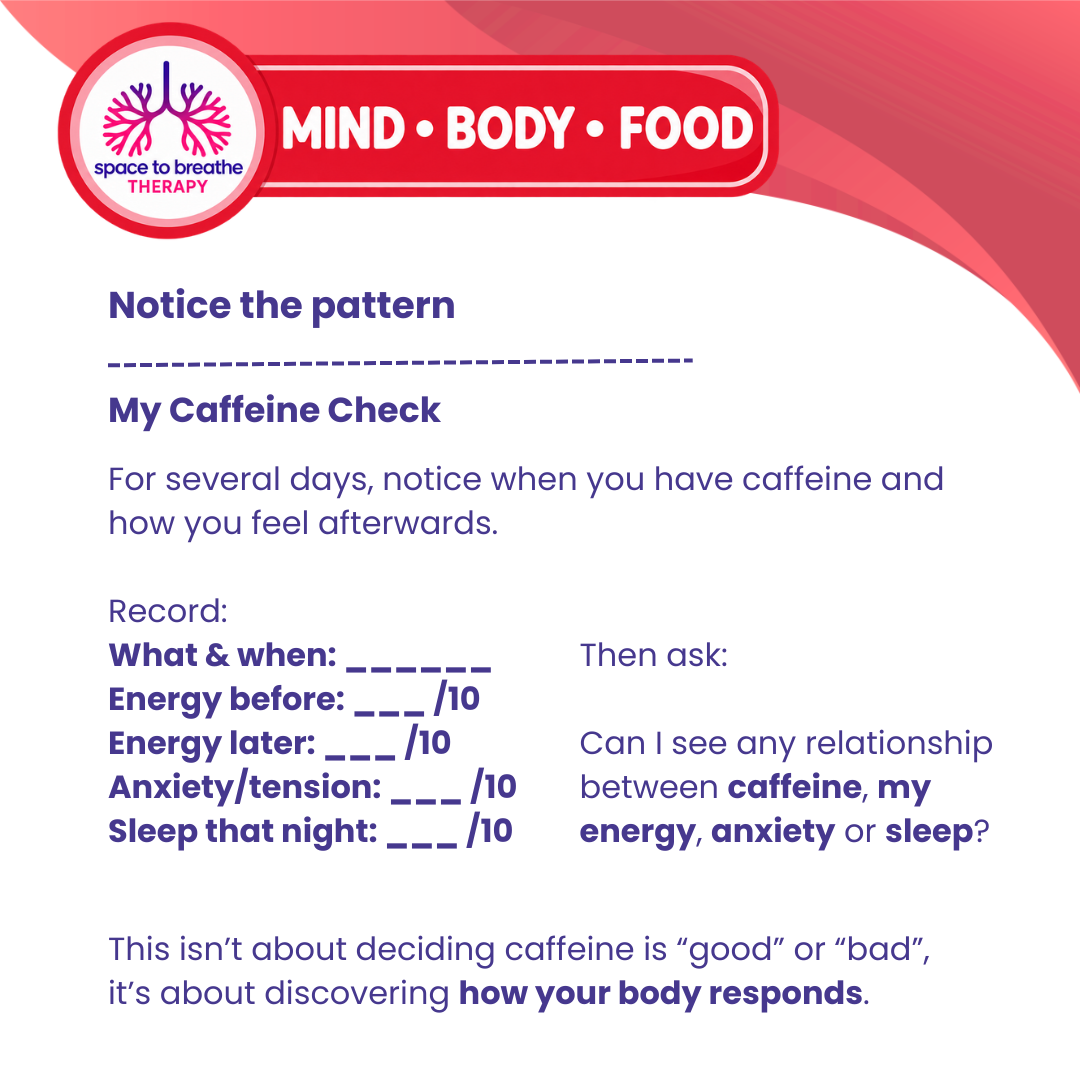
Notice the Pattern: My Caffeine Check
Caffeine can affect people very differently. Some people feel more alert and focused, while others may notice jitteriness, anxiety, a racing heart, digestive changes or difficulty sleeping.
The amount you have, the time of day, whether you've eaten, your sleep, medication and your individual sensitivity can all influence how caffeine feels in your body.
What counts as caffeine?
Remember it isn't only coffee. Caffeine may also be found in tea, green tea, energy drinks, cola, chocolate, pre-workout drinks and some medicines.
For several days, make a quick note:
What did I have? __________
How much? __________
What time? __________
Had I eaten? Yes / No
Energy before: ___ /10
Energy 1–2 hours later: ___ /10
Focus: ___ /10
Anxiety/tension: ___ /10
Any physical sensations? __________
Sleep that night: ___ /10
Look beyond the immediate effect
Caffeine may give you an initial lift, but it's worth noticing the whole-day pattern.
Ask yourself: Did I feel more awake? Did my concentration change? Did I become restless or tense? Did I experience a later energy dip? Did caffeine affect my appetite? Was it harder to fall asleep? Did I wake more during the night?
Also notice whether you tend to reach for more caffeine following poor sleep, low energy, stress or long gaps without food. Sometimes caffeine becomes part of a cycle: poor sleep → tiredness → more caffeine → disrupted sleep → tiredness again.
After a week, look back
Rather than judging individual drinks, look for repeated patterns. You might discover that a morning coffee feels helpful but caffeine later in the day affects your sleep — or you may notice very little effect at all.
There isn't one response everyone should have.
The aim isn't to label caffeine as “good” or “bad”. It's to understand how your individual body responds and make choices from that information.
Space to Breathe Therapy