

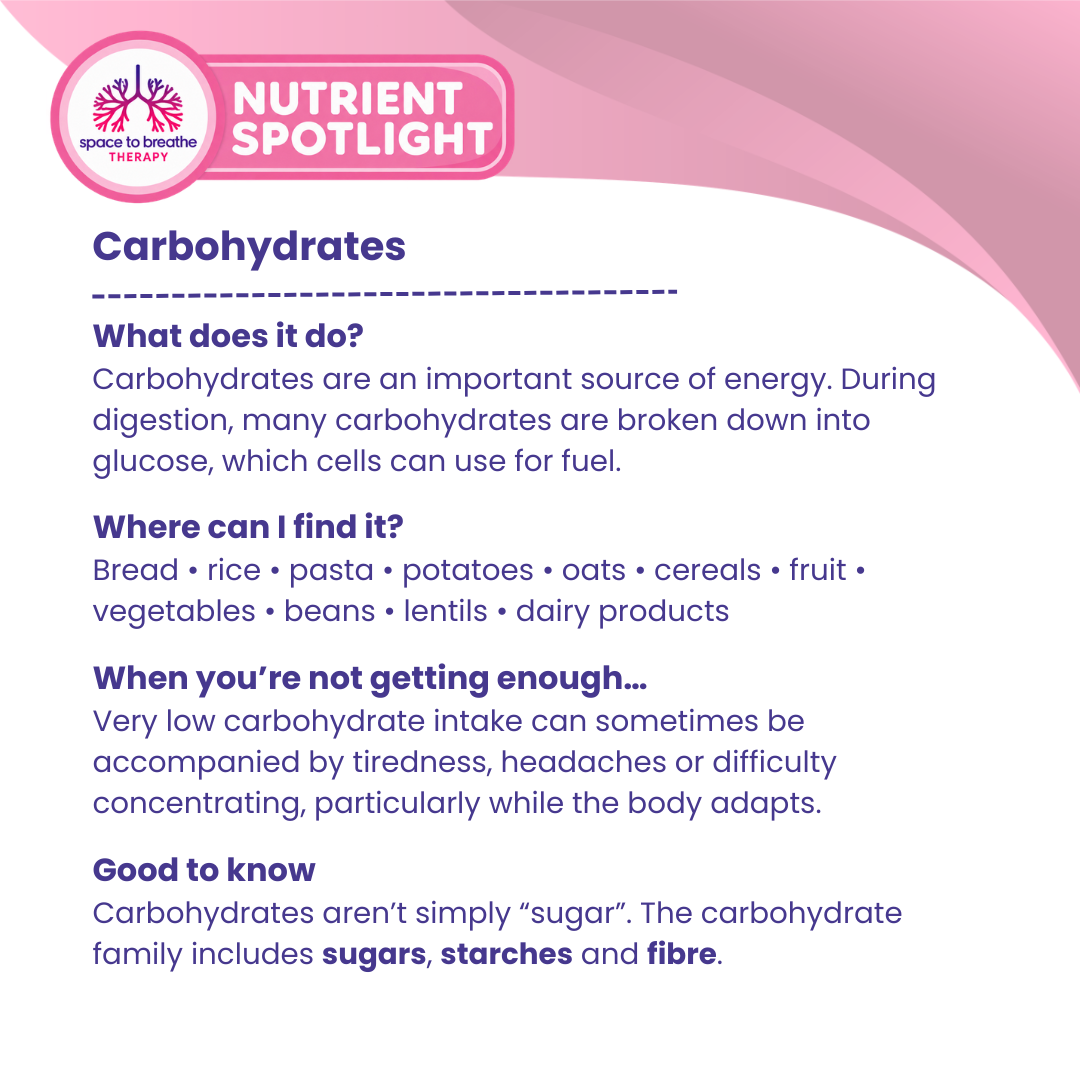
Carbohydrates are one of the body's main sources of energy. During digestion, many carbohydrates are broken down into glucose, which can then be used by our cells for fuel.
Our brains also have a high demand for energy, which is one reason carbohydrates can form an important part of a balanced and varied diet.
Carbohydrates are more than just sugar
Carbohydrates are sometimes talked about as though they are all the same, but the carbohydrate family includes sugars, starches and fibre.
They can be found in a wide variety of foods, including bread, rice, pasta, potatoes, oats, cereals, fruit, vegetables, beans, lentils and dairy products.
Many carbohydrate-containing foods provide much more than energy. Depending on the food, they can also provide fibre, vitamins, minerals and other important nutrients.
What happens if we don't eat enough?
People's nutritional needs vary, but a very low carbohydrate intake can sometimes be accompanied by tiredness, headaches, low energy or difficulty concentrating, particularly while the body is adapting to a significant dietary change.
This doesn't mean we need to fear periods without carbohydrates or constantly monitor our intake. Instead, it is helpful to recognise that carbohydrates can have a valuable place within our overall nutrition.
For someone with ARFID, sensory differences, food anxiety or a restricted range of safe foods, carbohydrates may also be some of the most predictable and manageable foods available. Removing safe carbohydrate foods simply because they have been labelled as "bad" can make an already restricted diet even harder.
Nutrition isn't about labelling individual foods as good or bad. It's about looking at the bigger picture, considering what a person can realistically eat and finding ways to support their nutritional needs without creating additional fear or pressure around food.
Carbohydrates aren't the enemy — they're one of the ways our bodies access the energy they need.
Space to Breathe Therapy