





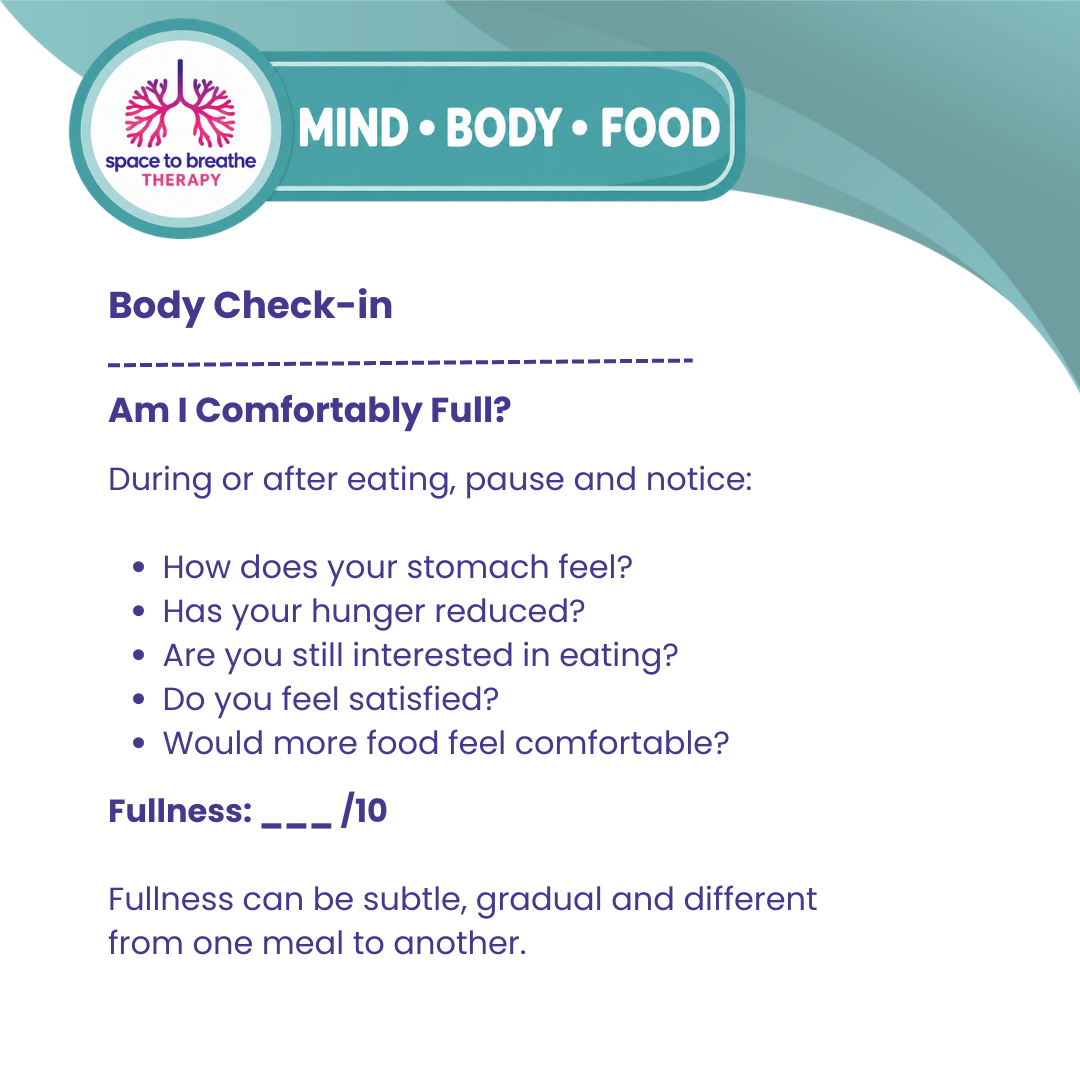
Body Check-In: Am I Comfortably Full?
Fullness isn't always a sudden feeling of “I've had enough.” It can develop gradually, and the signals can be subtle.
For some people, particularly those with ADHD, autism, ARFID, sensory differences or differences in interoception, recognising fullness can be difficult. You might notice it immediately, much later, or not experience the typical stomach sensations people often associate with being full.
What does fullness actually feel like?
There isn't one correct sensation.
During or after eating, you might notice:
Your stomach feels different. There may be a gentle sense of pressure, warmth or heaviness.
Your hunger has reduced. You may not feel completely full, but the urgency to eat has changed.
Food becomes less interesting. Something that tasted particularly enjoyable at the beginning of the meal may gradually feel less appealing.
You feel satisfied. This can be different from physical fullness. Sometimes your stomach has food in it, but the meal hasn't felt satisfying.
Am I still interested in eating?
This can be another useful clue.
Pause for a moment and ask:
Do I still want this food? Would some more feel comfortable? Am I stopping because I'm satisfied, or because I think I should stop?
There's no need to get the answer exactly right.
The purpose is to become curious about your body's signals rather than turning them into another set of food rules.
Try the 0–10 check-in
You might find it useful to rate fullness:
Fullness: ___ /10
The number isn't a target.
You don't have to reach a particular score before you're “allowed” to stop eating, and you don't have to continue eating simply because your fullness rating seems low.
It is simply another way of noticing what's happening in your body.
Hunger and fullness aren't opposites
You can sometimes feel physically full but still want more food, or have little appetite while knowing your body needs nourishment.
Sensory satisfaction, emotions, medication, stress, illness and the type of food you've eaten can all influence the experience.
This is why body awareness needs flexibility rather than rigid rules.
Your signals may change
How full you feel after a meal can vary depending on what you've eaten, how hungry you were beforehand, activity levels, stress, sleep, hormones and your body's energy needs that day.
One meal doesn't need to feel exactly like another.
If fullness signals are difficult to recognise
You don't have to rely entirely on your body telling you when to start and stop eating.
Regular meals, familiar portions, routines and external prompts can provide useful structure, particularly when internal signals aren't clear.
Over time, gentle check-ins can help you begin noticing your own patterns.
Fullness isn't a test you have to pass. It's simply one of the many ways your body may communicate with you — and learning its language can take time.
Space to Breathe Therapy