





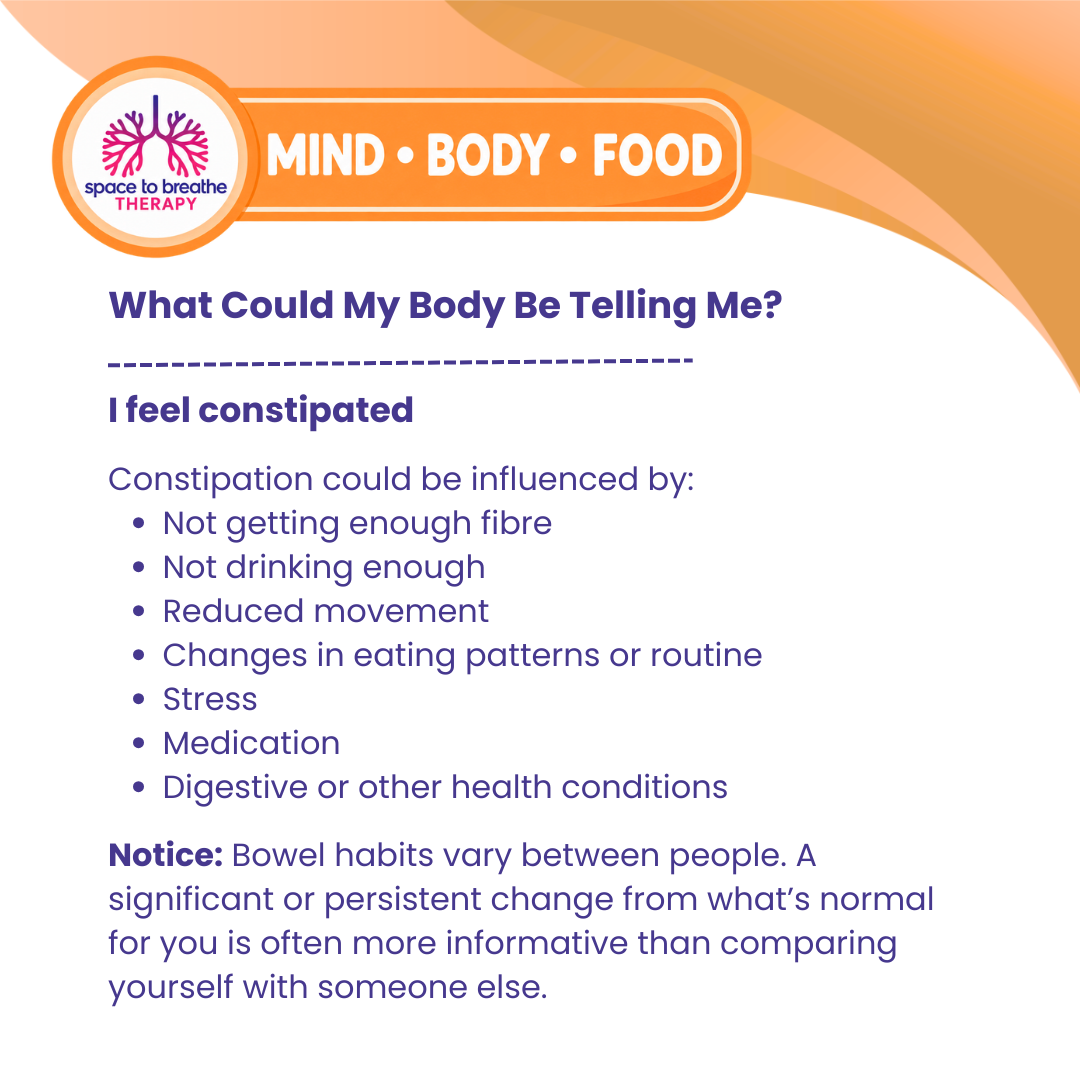
Constipation is common, and what is “normal” when it comes to bowel habits can vary considerably from one person to another. It isn't only about how often you go to the toilet — constipation can also mean stools are hard or difficult to pass, needing to strain, or feeling as though you haven't completely emptied your bowels.
Rather than comparing yourself with somebody else, it can be more useful to notice what is normal for your own body and whether that pattern has changed.
Am I getting enough fibre?
Fibre helps support normal bowel function by adding bulk and, depending on the type, helping stools retain water.
Sources include wholegrains, oats, fruit, vegetables, beans, lentils, nuts and seeds.
However, suddenly increasing fibre isn't always the answer. Adding large amounts very quickly can sometimes increase bloating, wind and abdominal discomfort.
If your current diet is low in fibre, gradual changes are usually more manageable.
Am I drinking enough?
Fluid helps keep stools softer and easier to pass.
People with ADHD, autism or differences in interoception may not always notice thirst signals clearly, particularly when busy, distracted or hyperfocused.
Keeping drinks visible or building them into an existing routine can sometimes be more effective than relying on thirst alone.
Have I been moving less?
Physical movement can help stimulate the digestive system.
This doesn't mean you need an intense exercise programme. Walking, stretching and everyday movement can all contribute to supporting normal bowel function.
Has my routine changed?
Our digestive systems can be surprisingly sensitive to changes in routine.
Travel, changes in meal times, eating less than usual, disrupted sleep or ignoring the urge to use the toilet can all influence bowel habits.
Some people also find unfamiliar toilets difficult to use because of privacy, anxiety or sensory discomfort, which may lead to repeatedly delaying going.
Could stress be affecting my gut?
The brain and digestive system communicate constantly through what is often called the gut-brain axis.
Stress doesn't mean digestive symptoms are imaginary. Emotional and physiological stress can genuinely influence how quickly or slowly the digestive system moves.
Could medication be contributing?
Some medicines and supplements can cause constipation as a side effect. These can include certain painkillers, iron supplements and some medications used for mental or physical health conditions.
If constipation began after starting or changing medication, speak with a pharmacist or healthcare professional rather than stopping prescribed medication yourself.
Constipation and restricted eating
For someone with ARFID, sensory differences or a very restricted diet, advice to simply "eat more fruit and vegetables" may not be realistic.
Support can start with foods that already feel safe. It may be possible to gradually add a tolerated source of fibre, increase fluids or build more movement into the day without removing familiar foods.
When should constipation be checked?
Seek medical advice if constipation is persistent, significantly different from your normal pattern, or accompanied by blood in the stool, unexplained weight loss, persistent or severe abdominal pain, vomiting or other concerning symptoms.
Your bowel habits don't need to look exactly like anyone else's. What matters most is understanding your normal and noticing when your body begins doing something significantly different.
Space to Breathe Therapy




