





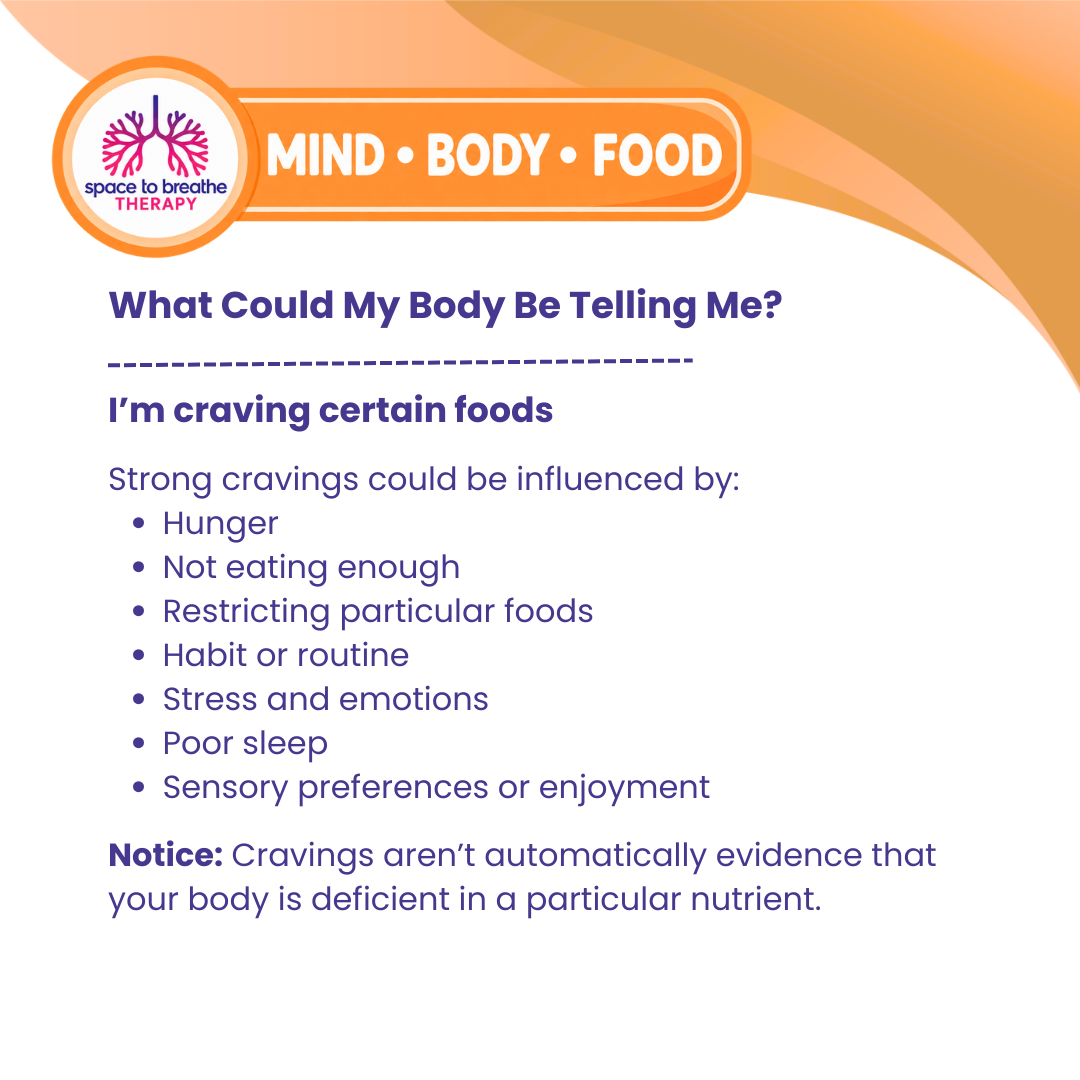
Craving a particular food is completely normal. Sometimes a craving can feel very strong or specific, but it doesn't automatically mean your body is deficient in a particular vitamin or mineral.
Cravings can be influenced by a mixture of physical hunger, emotions, habits, sensory preferences, sleep, restriction and simply enjoying a particular food.
Am I actually hungry?
If you've gone a long time without eating or haven't eaten enough overall, your body may naturally become more focused on food.
When we are very hungry, we may be particularly drawn towards foods that provide quick, accessible energy. This isn't a lack of willpower — it can be a normal response to needing food.
Have I been restricting this food?
The more we tell ourselves that a particular food is "bad", "forbidden" or something we shouldn't eat, the more mentally important that food can sometimes become.
Restriction can increase thoughts about food and make cravings feel stronger. For some people, allowing a wider variety of foods without guilt can actually reduce the intensity surrounding them.
Could it be sensory?
Food isn't only about nutrients.
We also eat for taste, texture, temperature, smell, predictability, comfort and enjoyment.
For autistic people, people with ADHD or those with sensory differences, a craving may sometimes be for a very particular sensory experience — something crunchy, cold, smooth, salty or familiar.
For someone with ARFID, repeatedly wanting the same food may also reflect safety and predictability rather than a nutritional deficiency.
What about stress and emotions?
Food can be connected to memories, routines, comfort and emotional regulation.
Stress, boredom, sadness, excitement or overwhelm can sometimes increase the desire for particular foods. That doesn't automatically make eating for comfort "wrong".
Instead of judging the craving, it can be more helpful to ask:
"What am I needing right now?"
The answer might be food. It might also be rest, comfort, stimulation, connection or a break.
Sleep can influence appetite too
Poor sleep can affect hormones and brain systems involved in hunger, appetite and reward, which may change how appealing certain foods feel.
If cravings seem noticeably stronger after a poor night's sleep, that may simply be another pattern worth noticing.
Cravings aren't a reliable deficiency test
Claims such as "craving chocolate means you need magnesium" or "craving salt means you have a mineral deficiency"can sound convincing online, but cravings generally cannot diagnose a nutrient deficiency.
If there is a genuine concern about nutritional deficiency, particularly alongside a very restricted diet or other symptoms, appropriate medical or dietetic assessment is much more reliable.
A craving doesn't always need fixing or resisting. Sometimes it is simply information — and sometimes you just really fancy a particular food. Both are okay.
Space to Breathe Therapy