





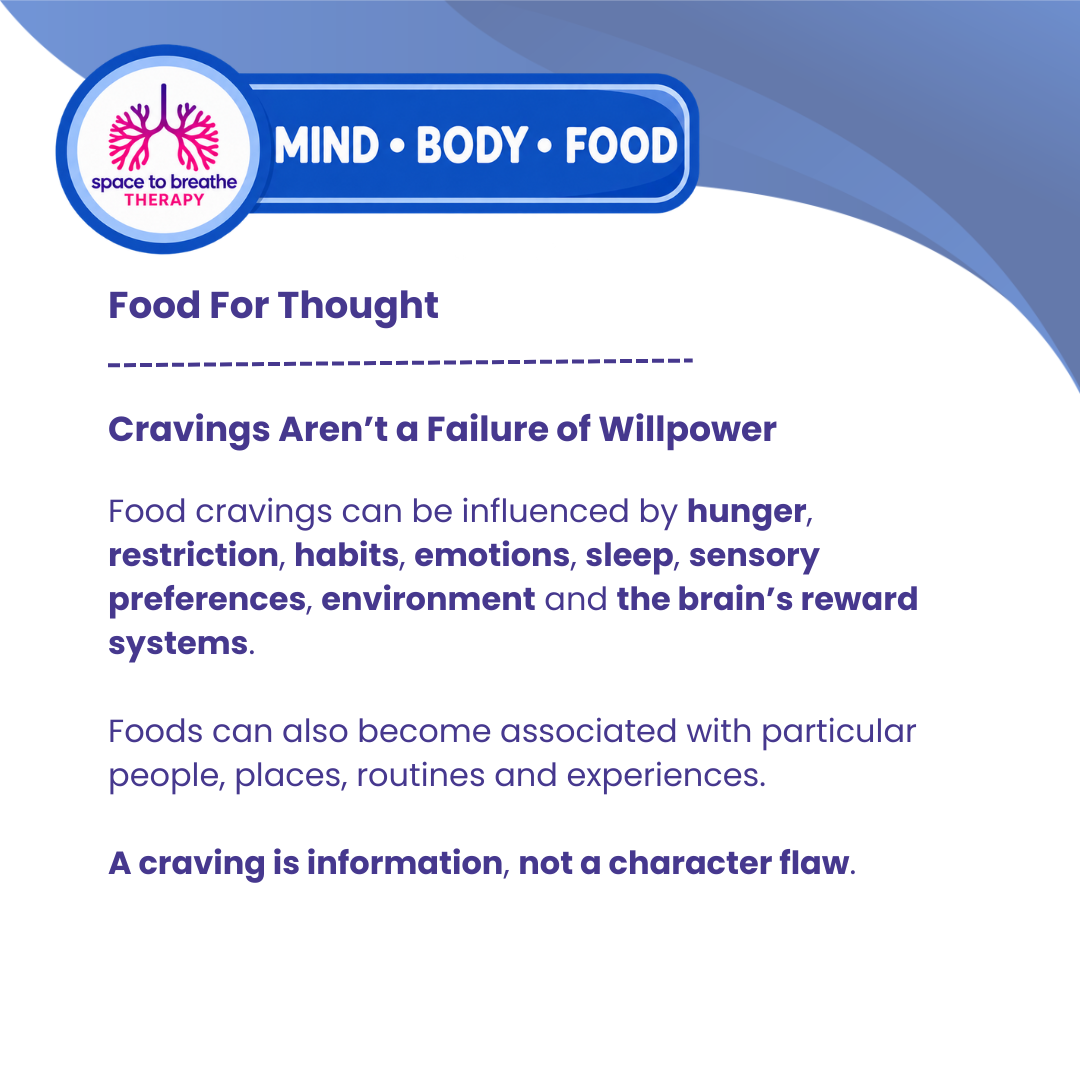
Food for Thought: Cravings Aren’t a Failure of Willpower
Food cravings can sometimes feel powerful, frustrating or difficult to understand. But having a craving doesn't mean you lack self-control or willpower.
Cravings are a normal human experience, and there can be many things happening underneath them.
What can influence a craving?
Cravings may be affected by hunger, restriction, emotions, habits, sleep, sensory needs, environment and our brain's reward systems.
For example, you might notice stronger cravings when you:
- Haven't eaten enough
- Have gone a long time without eating
- Have been restricting a particular food
- Are tired or sleep-deprived
- Feel stressed, anxious, bored or overwhelmed
- Want a particular texture, flavour or sensory experience
- See, smell or think about a familiar food
Food can carry memories and associations
We don't experience food purely as nutrition.
A particular food might remind us of childhood, family, celebrations, comfort, safety, routines or certain people and places.
Sometimes the craving may be connected to what the food represents or how eating it makes us feel.
Neurodivergence can play a part
For some autistic and ADHD people, food preferences and cravings can also be influenced by sensory seeking, dopamine and reward, predictability, safe foods, routines or executive functioning.
Wanting the same food repeatedly doesn't automatically mean there's something wrong.
Restriction can sometimes intensify cravings
When a food becomes something you believe you “shouldn't” have, you may find yourself thinking about it even more.
Instead of immediately trying to suppress a craving, it can be useful to become curious:
Am I hungry?
Have I eaten enough today?
Am I looking for comfort or stimulation?
Do I simply really enjoy this food?
And sometimes the answer can simply be: “I want it.”
That is information too.
A craving is a signal or experience to explore — not evidence of weak willpower or a character flaw.
Space to Breathe Therapy