





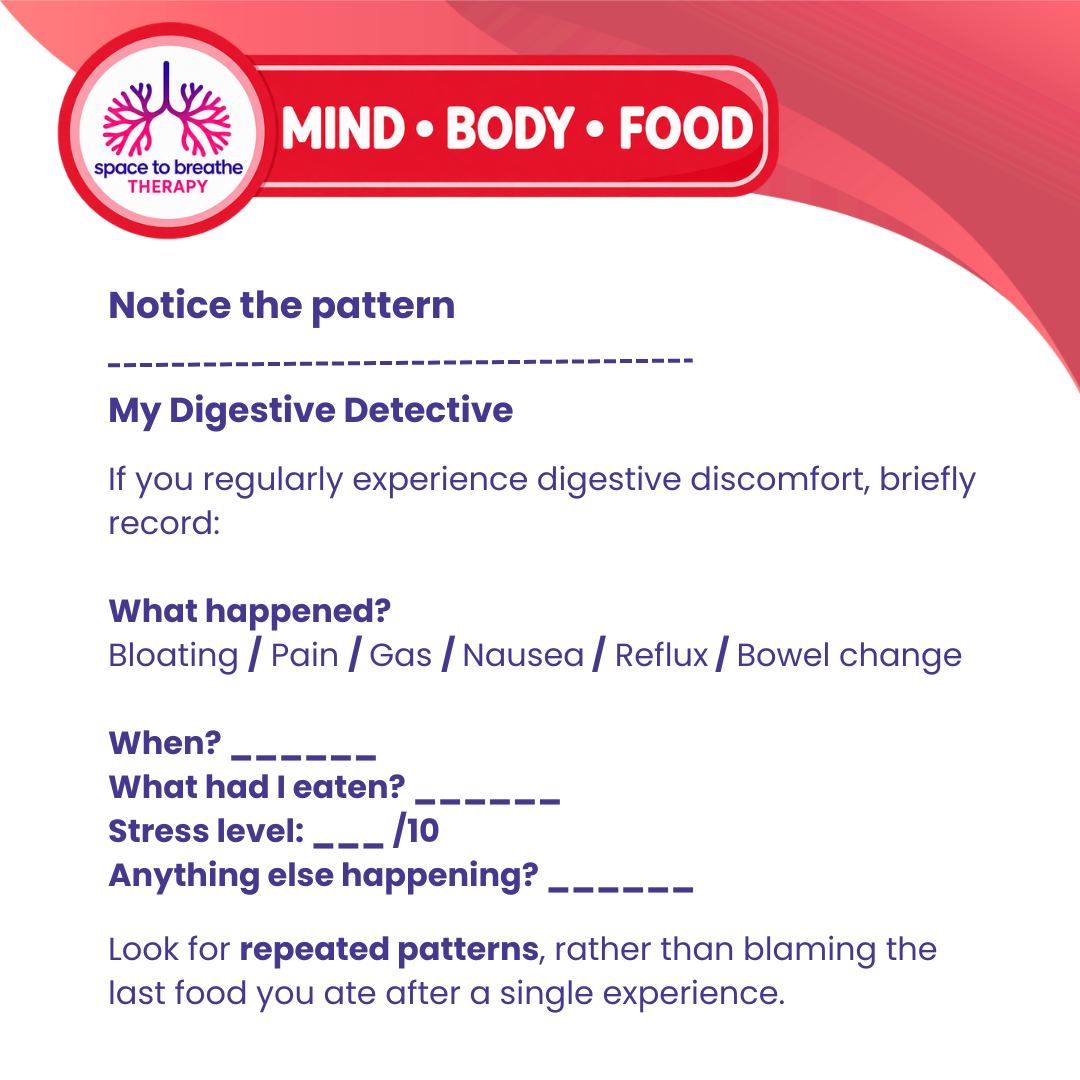
Notice the Pattern: My Digestive Detective
Digestive symptoms can be frustrating, especially when it isn't obvious what is causing them. It can be tempting to think, “It must have been the last thing I ate,” but digestion is much more complex than that.
Symptoms such as bloating, gas, nausea, reflux, abdominal discomfort, constipation or diarrhoea can have many possible influences.
Look at more than the food
When symptoms appear, consider:
- What and how much you ate
- What time you ate
- How quickly you ate
- Whether you had gone a long time without food
- How much fluid you had
- Changes in fibre intake
- Stress or anxiety
- Sleep
- Hormonal changes
- Physical activity
- Medication
- Illness or existing digestive conditions
- Changes in routine
Even the environment around eating can matter. Feeling rushed, overwhelmed or highly stressed may affect how comfortable eating and digestion feel.
Keep a simple record
When you experience discomfort, briefly note:
What happened?
Bloating / Pain / Gas / Nausea / Reflux / Bowel change
When did it begin? __________
What had I eaten and drunk? __________
How long after eating did it happen? __________
Stress level: ___ /10
Sleep: ___ /10
Bowel pattern: __________
Medication/supplements: __________
Anything unusual today? __________
Look for repetition, not one-off events
One episode after eating a particular food doesn't necessarily mean that food caused the symptom.
Look across several days or weeks. You might begin to notice that symptoms appear:
after particular foods repeatedly, during stressful periods, after eating quickly, when constipation is present, after changes in routine, or at particular times of the day.
That gives you much more useful information than automatically removing foods after a single uncomfortable experience.
Be careful with unnecessary restriction
Repeatedly eliminating foods without clear evidence can gradually make someone's diet increasingly restricted. This can be particularly important for people who already experience ARFID, sensory food difficulties, anxiety around eating or a limited range of safe foods.
Where symptoms are persistent, a GP or appropriately qualified dietitian can help investigate possible causes rather than relying on guesswork.
Seek medical advice for digestive symptoms that are persistent, worsening, severe or accompanied by concerning changes such as unexplained weight loss, difficulty swallowing, persistent vomiting or blood in the stool.
Be a detective, not a judge. Gather clues over time and look at the whole picture before deciding what they mean.
Space to Breathe Therapy




