





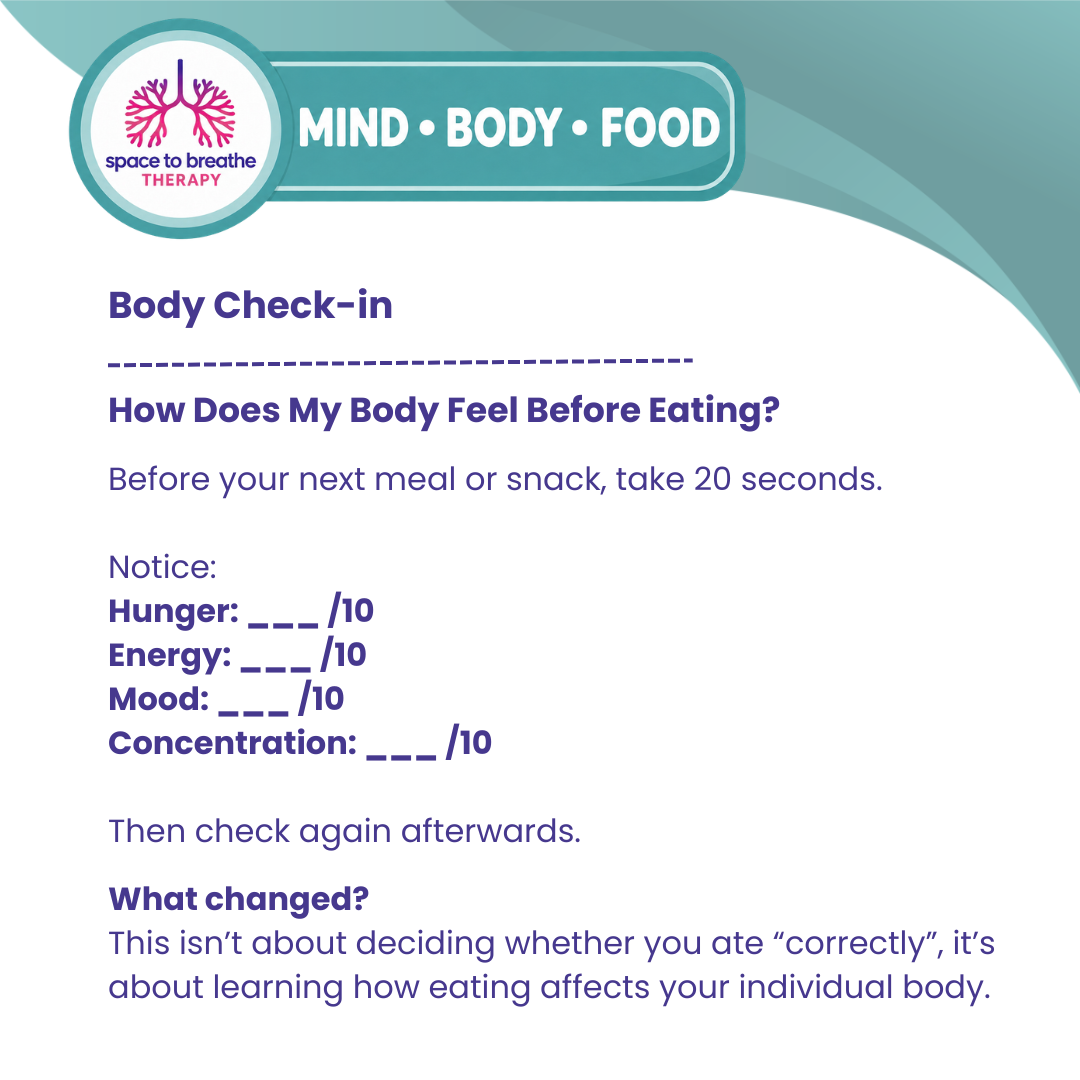
Body Check-In: How Does My Body Feel Before Eating?
Eating can affect much more than the feeling in our stomach. It can influence energy, concentration, mood and how regulated we feel.
Taking a few seconds before and after eating can help you begin recognising your own patterns — particularly if hunger signals aren't always obvious.
Before you eat, pause for 20 seconds
You don't need to analyse anything. Simply notice what is happening right now.
Ask yourself:
Hunger: How hungry do I feel?
Energy: Do I feel energised, tired, sluggish or shaky?
Mood: Do I feel calm, irritable, anxious, flat or overwhelmed?
Concentration: Is it easy to focus, or does my brain feel foggy or distracted?
You can give each one a score from 0–10 if that's helpful.
There are no “good” or “bad” scores. You're simply gathering information.
Hunger isn't always felt in the stomach
For some people, hunger might begin with a rumbling or empty stomach.
For others, the first signs might be irritability, tiredness, headache, shakiness, thinking about food or suddenly struggling to concentrate.
People with ADHD, autism, ARFID or differences in interoception may find these internal signals particularly difficult to recognise or interpret.
Sometimes you don't realise you were hungry until after you've eaten and suddenly feel different.
Check again after eating
After your meal or snack, give your body a little time and repeat the check-in.
What happened to your:
Hunger? Energy? Mood? Concentration?
Perhaps your concentration improved.
Maybe you feel calmer.
Your energy might increase — or you may simply feel more settled.
And sometimes very little changes.
All of those observations are useful.
This isn't about eating “correctly”
The purpose isn't to score your meal, judge how much you ate or decide whether you should have been hungry.
It's about becoming curious:
“What happens in my body when I eat?”
Over time, you may begin recognising patterns that weren't obvious before.
You might discover that difficulty concentrating is sometimes an early hunger signal, or that irritability appears when you've gone too long without eating.
If you don't recognise hunger, you can still eat
You don't have to wait until your body produces a clear hunger signal before you're allowed to nourish it.
For people with unreliable or muted hunger cues, regular meals, snacks, routines and external reminders can provide helpful structure.
Body awareness and structure can work alongside each other.
The aim isn't to become perfect at reading your body. It's to become more familiar with the individual ways your body communicates with you.
Space to Breathe Therapy




