





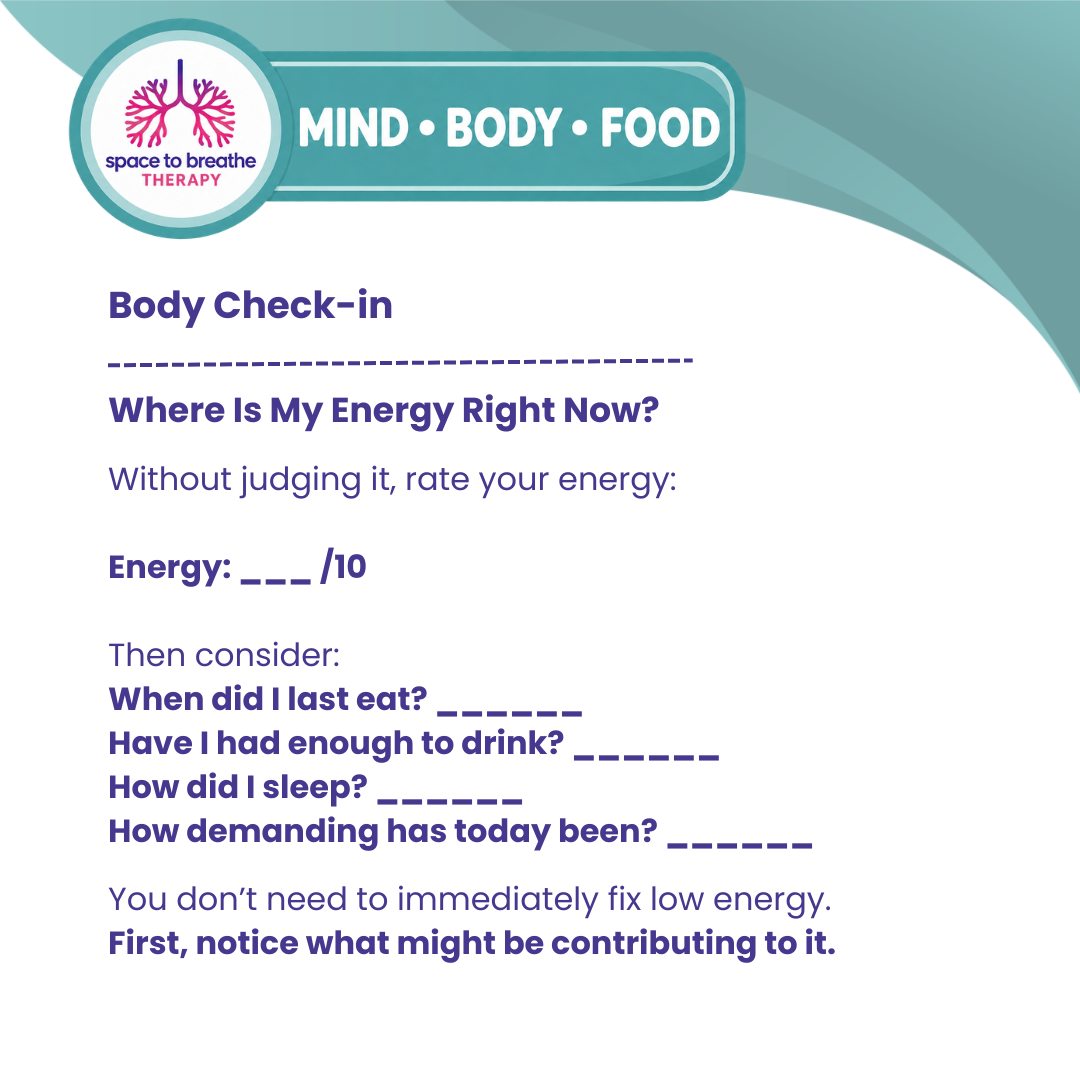
Body Check-In: Where Is My Energy Right Now?
Energy naturally changes throughout the day and from one day to another. We aren't designed to feel equally energetic all the time.
Instead of judging yourself for feeling tired or immediately trying to push through it, a body check-in can help you understand what might be influencing your energy right now.
Start by noticing
Ask yourself:
Where is my energy right now?
Give it a number from 0–10, without deciding whether that number is good or bad.
The aim isn't to achieve a 10. It's simply to notice where you are.
When did I last eat?
Your body needs energy from food throughout the day.
Long gaps between meals, eating less than your body needs or becoming so busy or hyperfocused that you forget to eat can sometimes leave you feeling tired, foggy, irritable or physically drained.
For people who don't experience clear hunger signals, waiting until you feel hungry may not always be the most reliable reminder to eat.
Have I had enough to drink?
Hydration can influence how we feel physically and mentally.
If you've been concentrating for hours, exercising, working in a warm environment or simply haven't thought about drinking, pause and consider when you last had something to drink.
How did I sleep?
Energy isn't only influenced by how many hours you slept.
Ask yourself whether your sleep was settled, interrupted, restless or refreshing.
One difficult night can affect the following day, while ongoing sleep difficulties can gradually build into significant fatigue.
How demanding has today been?
This one is easy to overlook.
Energy is used by more than physical activity.
Thinking, concentrating, communicating, making decisions, managing emotions, coping with sensory input, masking and navigating social situations all require energy.
You may have done very little physically and still feel completely exhausted.
What does my body need next?
Once you've noticed what may be contributing, ask:
Do I need food? A drink? Movement? Quiet? Sensory regulation? Fresh air? A break? Sleep? Less demand?
The answer won't always be obvious, and that's okay.
Sometimes the check-in itself is enough.
Low energy isn't a failure
You don't need to immediately fix, fight or justify low energy.
Learning to recognise patterns can help you understand your needs earlier rather than waiting until you're completely depleted.
If fatigue is persistent, unexplained, significantly different from your usual energy levels or interfering with everyday life, it's worth discussing it with a healthcare professional.
Your energy level is information, not a measure of how productive, motivated or successful you've been today.
Space to Breathe Therapy