





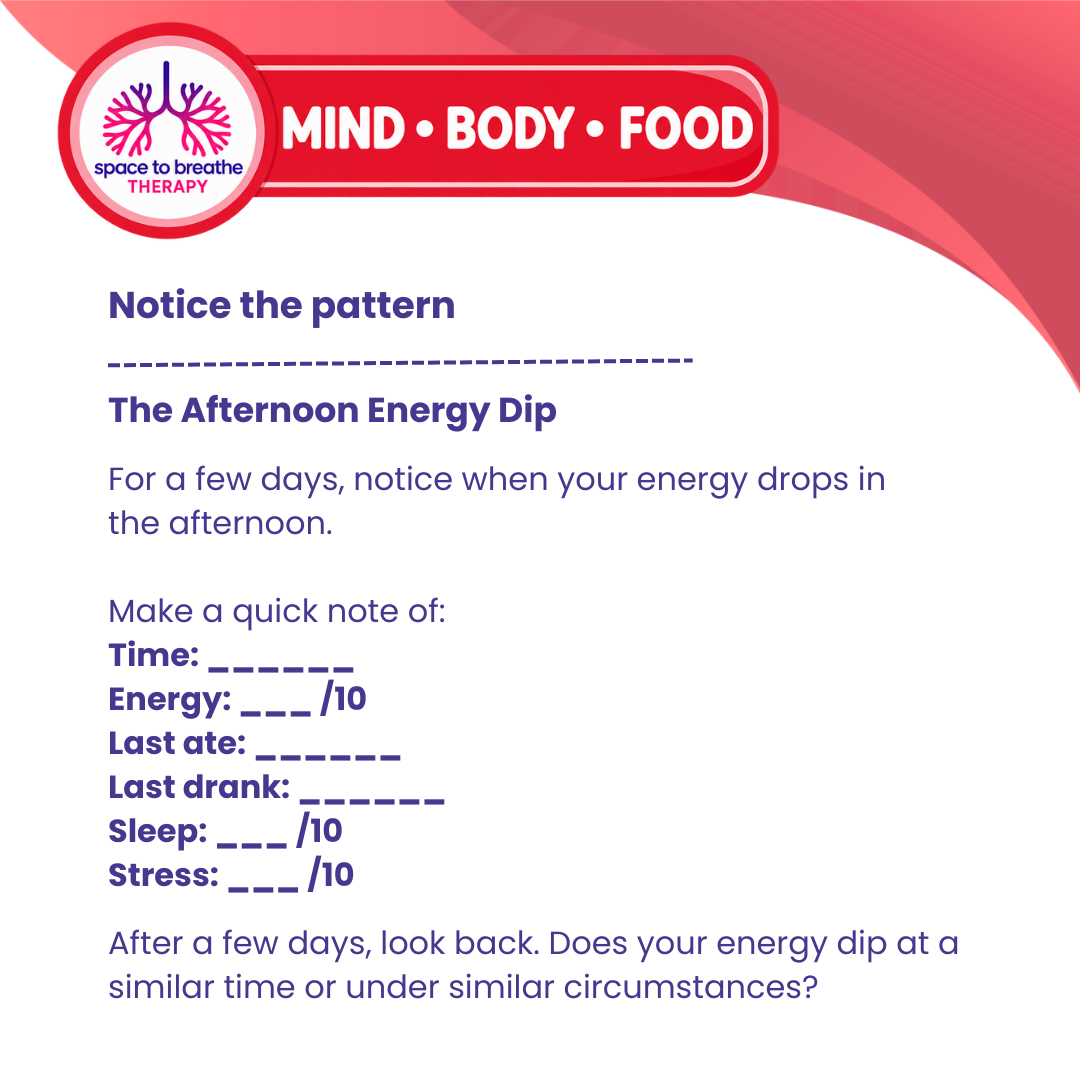
Notice the Pattern: The Afternoon Energy Dip
An afternoon energy dip can feel like sudden tiredness, brain fog, irritability, shakiness, low motivation, difficulty concentrating or simply feeling as though you have run out of steam.
It can be tempting to immediately blame what you ate — but energy is influenced by many different things happening across the whole day.
What might be contributing?
Consider what was happening in the hours before your energy dropped:
- Food: When did you last eat? Was it enough for you? Have there been long gaps between meals?
- Hydration: When did you last drink? Have you been busy and forgotten?
- Sleep: How well did you sleep the night before? Has tiredness been building across several days?
- Stress: Has your brain been managing lots of decisions, conversations, emotions or responsibilities?
- Activity: Have you been particularly physically active — or sitting concentrating for a long time?
- Sensory load: Have you been dealing with noise, people, screens, bright lights or a demanding environment?
- Caffeine: How much have you had and when? Changes in caffeine intake can affect how you feel later.
- Medication: Some medicines can influence appetite, alertness or energy.
- Hormones and health: Hormonal changes, illness and health conditions can also affect energy.
- Natural rhythm: Many people naturally experience changes in alertness across the day.
Try tracking rather than guessing
For several days, jot down:
Time of dip: ______
Energy: ___ /10
Last ate: ______
Last drank: ______
Sleep: ___ /10
Stress: ___ /10
Activity level: ___ /10
Sensory/mental load: ___ /10
Anything else I notice: __________________
Then look back across your notes.
Does the dip happen at roughly the same time each day?
Does it happen more when you have missed or delayed food, haven't drunk enough, slept badly, been particularly busy or experienced a demanding morning?
Or does it happen regardless of these things?
Experiment gently
Once you notice a possible pattern, change one small thing at a time and see what happens.
You could try eating a little earlier, adding a snack, keeping a drink visible, taking a proper break, stepping outside, moving your body, reducing sensory input or allowing yourself some quiet time.
You don't need to find the “perfect” solution.
Look beyond one day
One afternoon doesn't tell you very much. Patterns become more useful when we notice them over time.
If your energy is regularly very low, suddenly changes, interferes with everyday life or remains unexplained despite rest and nourishment, it may be worth discussing it with a healthcare professional.
The aim isn't to judge your body or force yourself through the dip. It's to become curious about what your body may be communicating and what support it might need.
Space to Breathe Therapy