





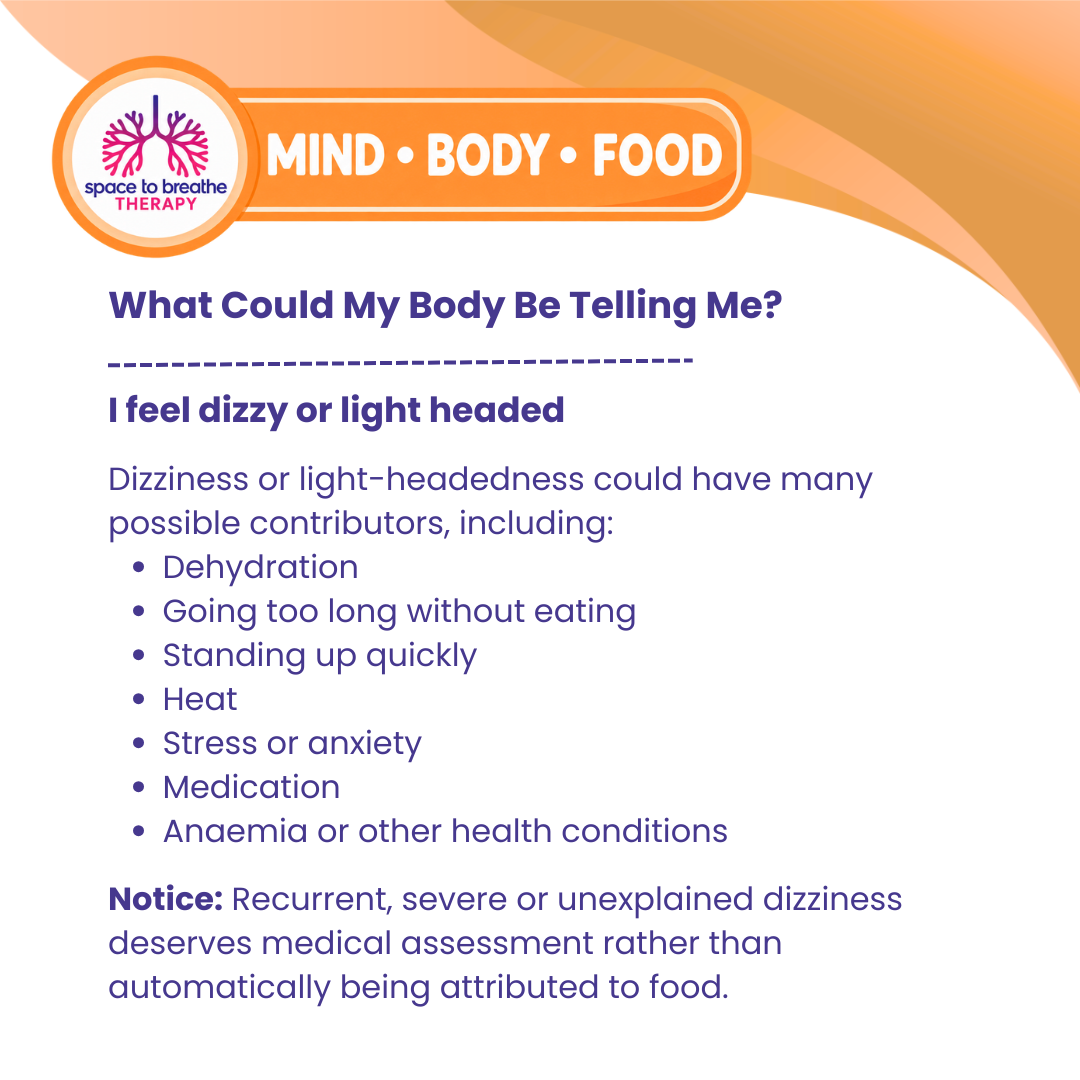
Feeling dizzy or light-headed can be your body's way of signalling that something needs attention, but there isn't one single cause. It can be related to food or hydration, but it can also be connected to blood pressure, medication, stress or an underlying health condition.
Understanding when it happens and what is happening around it can help identify useful patterns.
Have I had enough to drink?
Dehydration can sometimes cause dizziness, light-headedness, tiredness or weakness, particularly during hot weather, after exercise or when you've been busy and forgotten to drink.
For people with ADHD, autism or differences in interoception, thirst may not always be obvious. You might notice the effects of needing fluid before actually recognising that you're thirsty.
When did I last eat?
Going for a long period without eating or not eating enough overall may leave some people feeling weak, shaky, tired or light-headed.
If you have ARFID, sensory differences or difficulty recognising hunger, waiting until you feel hungry may not always work.
Regular meals, snacks or external reminders can sometimes provide useful structure when internal signals are unreliable.
Does it happen when I stand up?
Feeling briefly light-headed after standing can sometimes happen because of a temporary drop in blood pressure.
Getting up more slowly may help, but if this happens regularly, causes fainting or is becoming more noticeable, it is worth discussing with a healthcare professional.
Could heat be contributing?
Hot weather, hot baths, exercise or spending time in a warm environment can affect circulation and increase fluid loss.
If dizziness appears mainly in these situations, temperature and hydration may be worth considering.
Stress and anxiety can feel physical
Anxiety can affect breathing, heart rate and the nervous system and may sometimes cause light-headedness, tingling, shaking or feelings of unreality.
This doesn't mean dizziness should automatically be labelled as anxiety. Physical symptoms still deserve appropriate attention, particularly if they are new or unexplained.
Medication and health conditions matter too
Some medications can affect blood pressure, heart rate or fluid balance, while conditions such as anaemia can also cause dizziness or light-headedness.
Persistent symptoms shouldn't simply be treated by eating more, drinking more or assuming they are caused by stress.
Notice the pattern
It may help to ask:
Had I recently stood up? When did I last eat or drink? Was I hot? Was I anxious? Had I exercised? Did I take medication? Is this becoming a regular occurrence?
These observations can also be useful information to share with a healthcare professional.
Recurrent, severe or unexplained dizziness deserves medical assessment rather than automatically being attributed to food or hydration. Seek urgent medical help for sudden severe dizziness accompanied by symptoms such as fainting, chest pain, severe headache, weakness on one side, difficulty speaking or significant breathing difficulties.
Listening to your body means being curious about everyday signals while also recognising when a symptom needs proper medical attention.
Space to Breathe Therapy