





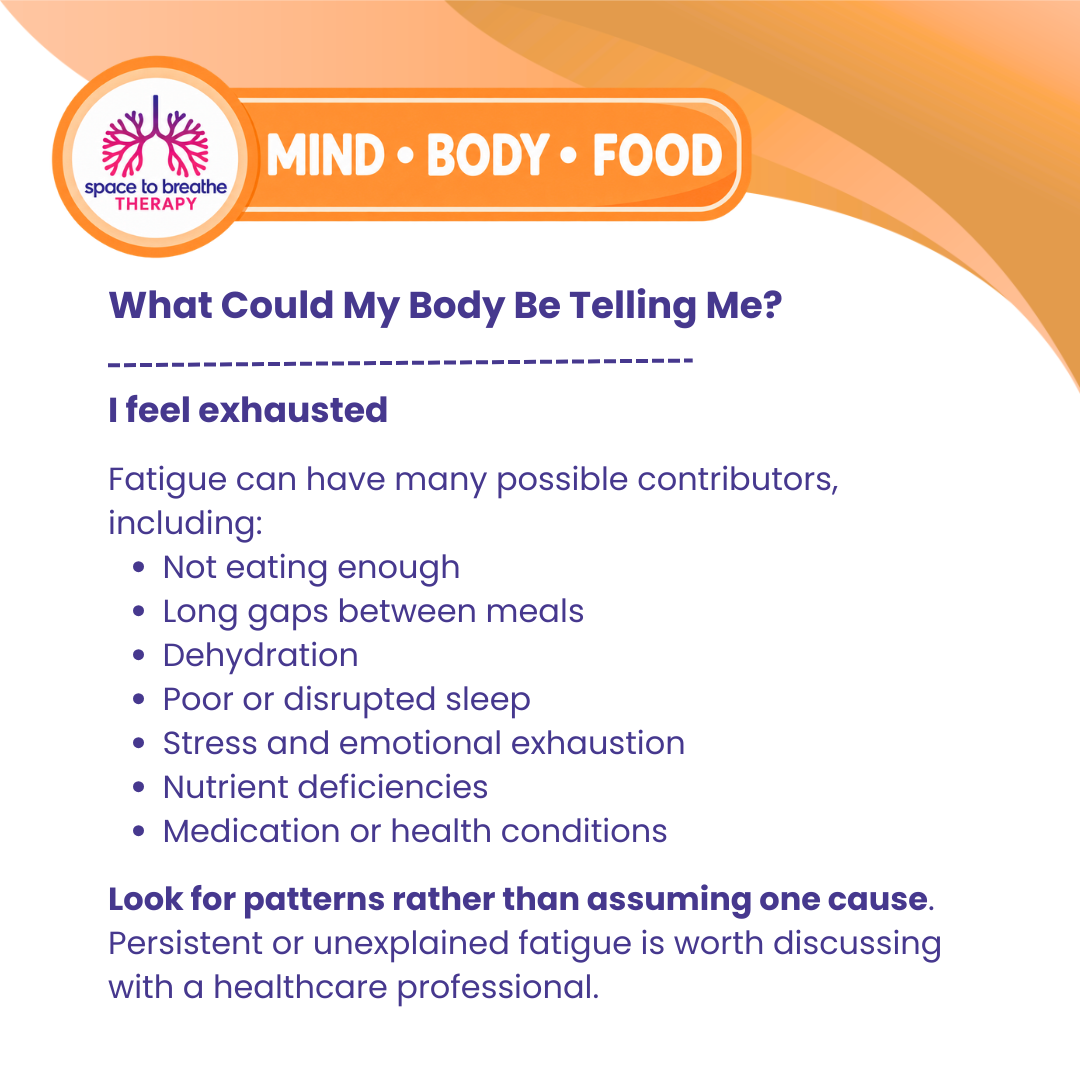
Feeling exhausted isn't always simply about needing more sleep. Fatigue can have many possible causes, and sometimes several things are happening at the same time.
Rather than immediately assuming there is one explanation, it can help to look at food, hydration, sleep, stress, emotional demands, medication and physical health together.
Have I eaten enough?
Our bodies need a regular supply of energy to function.
If you've eaten very little, skipped meals or regularly have long gaps between eating, you may notice low energy, weakness, brain fog, irritability or difficulty concentrating.
For people with ADHD, autism, ARFID or differences in interoception, it can be easy to miss hunger signals or become so focused on something that eating gets pushed further and further back.
Sometimes exhaustion is the first signal you actually notice.
Have I had enough to drink?
Not drinking enough can contribute to tiredness, headaches, dizziness and difficulty concentrating.
If you don't reliably notice thirst, try using external prompts such as keeping a drink visible, having one alongside meals or setting reminders.
How am I sleeping?
The number of hours we spend in bed doesn't always reflect the quality of our sleep.
Frequent waking, difficulty falling asleep, stress, pain, environmental disturbance or an inconsistent sleep pattern can all leave us feeling exhausted the following day.
Could I be mentally exhausted?
Emotional and cognitive demands use energy too.
Stress, anxiety, masking, sensory overload, constant decision-making and managing a demanding environment can leave someone feeling profoundly tired even if they haven't been physically active.
For neurodivergent people, repeatedly adapting to environments that don't meet their needs can be particularly exhausting.
Rest isn't always simply sleep. Sometimes the nervous system needs quiet, reduced demands, sensory regulation or time without having to perform or respond to other people.
Could there be a nutritional deficiency?
Certain nutritional deficiencies, including iron, vitamin B12 and folate deficiency, can contribute to fatigue.
But tiredness alone cannot tell us which nutrient — if any — is low.
Taking multiple supplements based only on feeling tired may mask the real cause. If deficiency is suspected, appropriate medical assessment and blood tests can provide much more useful information.
Medication and health conditions matter too
Fatigue can also be associated with medications and many physical or mental health conditions.
If exhaustion is persistent, unexplained, becoming worse or significantly affecting everyday life, it is worth speaking with a healthcare professional rather than simply trying to push through it.
Look for patterns
Try asking yourself:
Have I eaten? Have I had enough to drink? How have I slept? Have I been under additional stress? Have I been masking or overloaded? Is this different from my normal level of tiredness?
You don't have to find one perfect explanation.
Sometimes the most useful thing we can do is begin noticing what was happening before the exhaustion appeared and what helps us recover afterwards.
Exhaustion isn't always your body asking you to try harder. Sometimes it's communicating that it needs nourishment, hydration, recovery, fewer demands — or further support.
Space to Breathe Therapy