





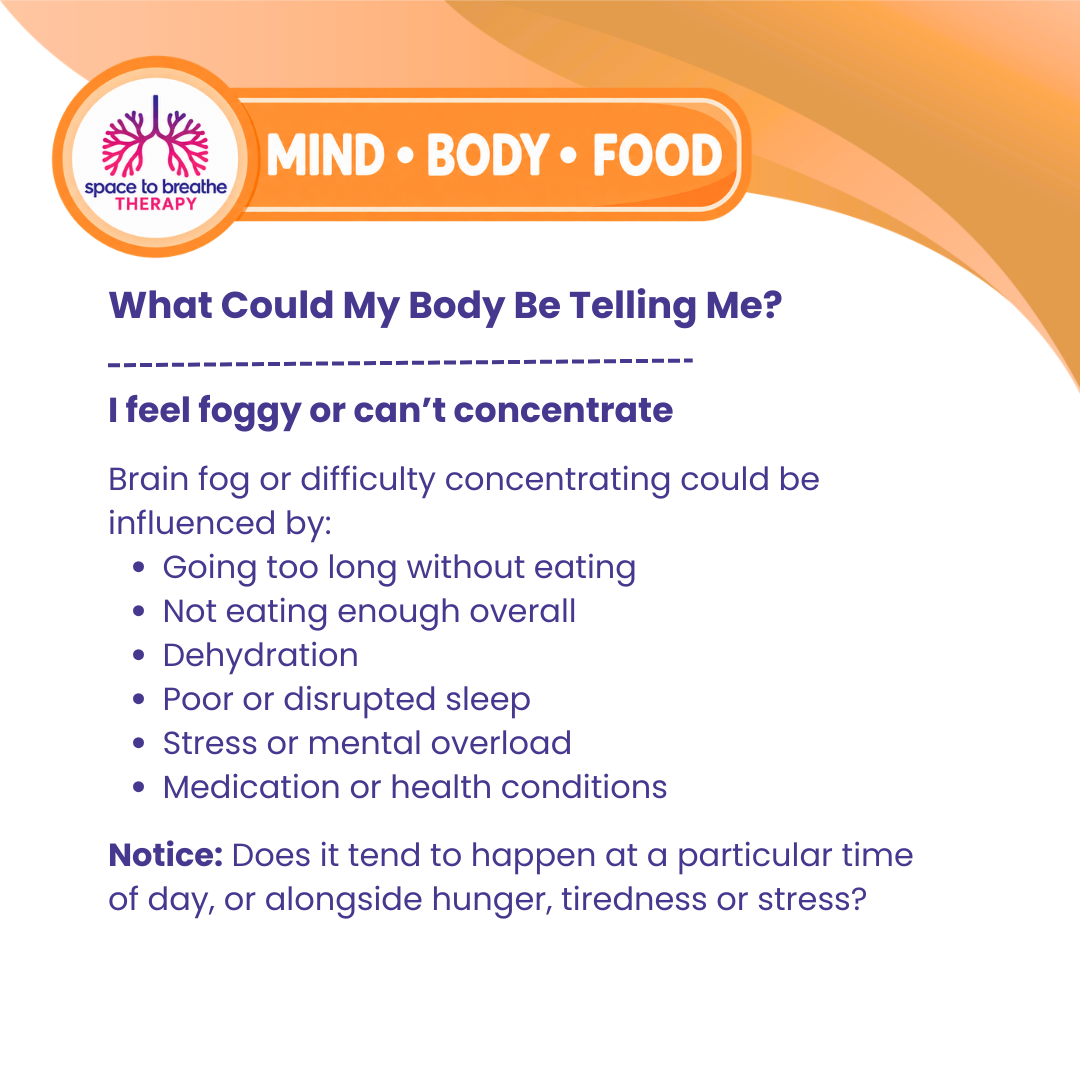
Feeling foggy, distracted or unable to concentrate can sometimes be your body's way of communicating that it needs something.
It is easy to assume that difficulty concentrating is simply a motivation problem, but concentration can be influenced by many physical, emotional and environmental factors.
Have I eaten enough?
Going for long periods without eating, or simply not eating enough overall, can leave some people feeling tired, distracted or mentally foggy.
Our brains require a continuous supply of energy. When eating is difficult because of ADHD, autism, ARFID, sensory differences, a busy schedule or reduced awareness of hunger, it can be surprisingly easy to reach the middle of the day without having eaten enough.
You may not necessarily experience a strong feeling of hunger first. Sometimes difficulty concentrating, irritability or low energy may be the signals you notice.
Could I be dehydrated?
Even mild dehydration can sometimes affect how alert and focused we feel.
If you've been concentrating intensely, working for several hours or simply don't notice thirst signals easily, checking when you last had a drink can be a useful part of your body check-in.
How have I been sleeping?
Poor or disrupted sleep can have a significant impact on attention, memory, processing speed and emotional regulation.
One difficult night's sleep can affect the following day, while ongoing sleep difficulties can make concentrating considerably harder.
Am I overloaded?
Brain fog isn't always about food or sleep.
Stress, anxiety, sensory overload, masking, decision fatigue and having too many demands competing for our attention can all make thinking clearly more difficult.
For neurodivergent people in particular, what looks from the outside like poor concentration may sometimes be an overloaded brain trying to process too much information at once.
Could something else be contributing?
Medication and physical or mental health conditions can also affect concentration and energy.
Persistent or unexplained brain fog shouldn't automatically be blamed on diet, stress or neurodivergence. If it is new, worsening or significantly affecting everyday life, it is worth discussing with a healthcare professional.
Start noticing patterns
Instead of immediately asking, "What's wrong with me?", try asking:
"What might my body need right now?"
Think about when you last ate, drank or rested. Consider how much sleep you've had and whether you've been under additional stress or sensory demand.
You don't have to find the answer immediately. Simply beginning to notice when brain fog appears and what is happening around it can help you understand your own patterns.
Your body doesn't always communicate through obvious signals. Sometimes difficulty concentrating is worth getting curious about rather than pushing through.
Space to Breathe Therapy