





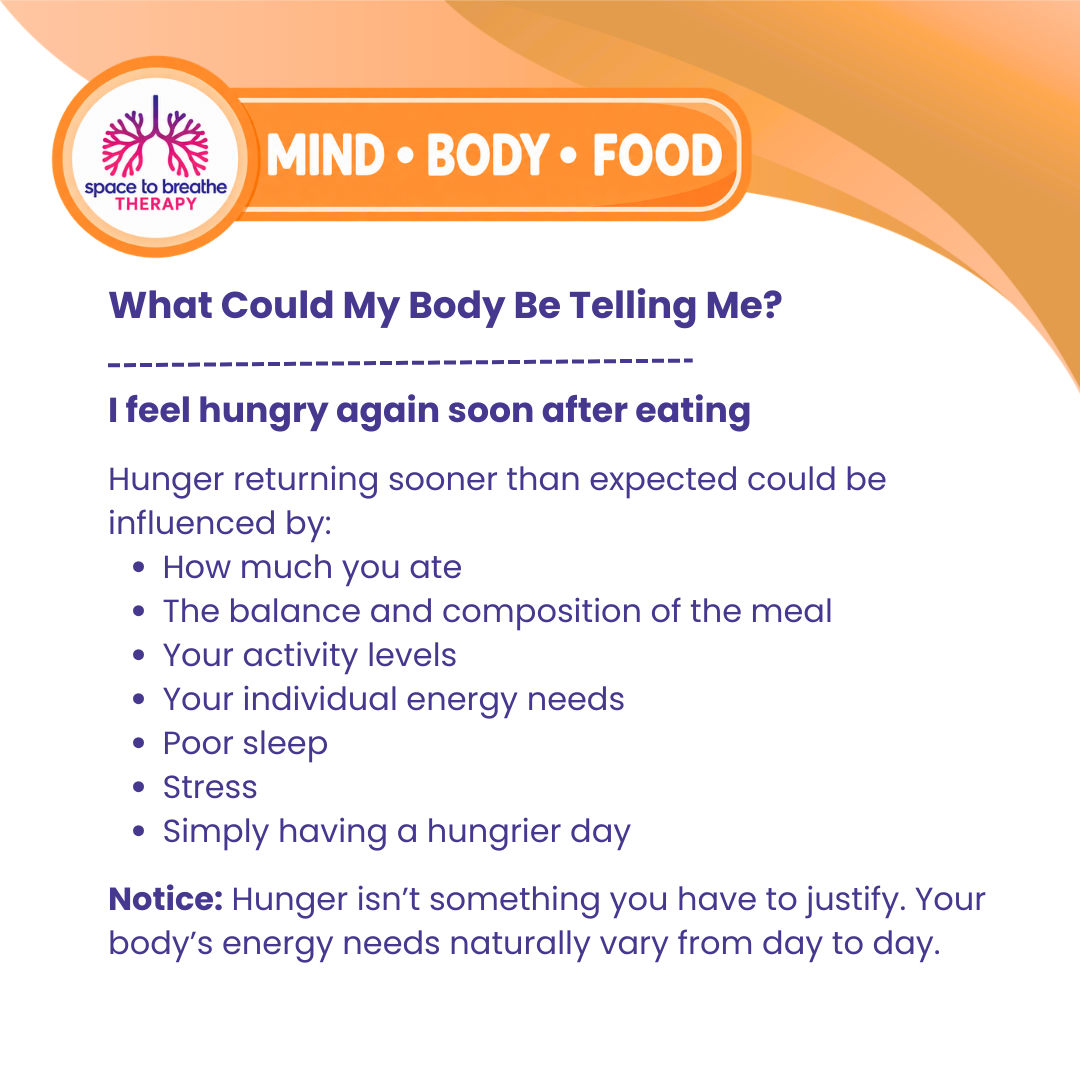
Feeling hungry again soon after eating doesn't necessarily mean you've eaten too much, done something wrong or lack self-control. Hunger naturally changes from day to day, and sometimes your body simply needs more energy.
How satisfied we feel after eating can be influenced by how much we ate, what the meal contained, our activity levels, sleep, stress and our individual energy needs.
Was the meal enough for me?
Sometimes the simplest explanation is that the meal wasn't quite enough to meet your body's needs at that moment.
Portion sizes aren't universal. The amount that satisfies one person may not satisfy another, and your own needs can change depending on what you've been doing that day.
If you're hungry again, you are allowed to eat again. You don't have to wait until a socially acceptable meal or snack time.
What was in the meal?
Different nutrients can influence how satisfied we feel after eating.
A meal containing a combination of carbohydrates, protein, fats and fibre may help provide energy and keep us satisfied for longer.
That doesn't mean every meal needs to contain everything or be perfectly balanced. Sometimes adding something to an existing safe meal — rather than replacing it — can make it more sustaining.
For example, you might add a tolerated source of protein, fat or fibre to something you already enjoy.
Have I been more active?
Walking, exercising, physical work or simply having a busier day can increase the amount of energy your body needs.
Sometimes increased hunger doesn't appear immediately after activity. You might notice it later that day or even the following day.
Increased hunger after increased activity is a normal biological response.
Could I have eaten less earlier?
Our bodies don't reset at every meal.
If you've eaten less than usual earlier in the day, skipped meals or had several days where you've struggled to eat enough, you may notice increased hunger later.
Your body may simply be asking for the energy it didn't receive earlier.
Sleep and stress can affect appetite
Poor sleep can influence the hormones and brain systems involved in hunger, fullness and food reward.
Stress can affect appetite differently too. Some people lose their appetite when stressed, while others become hungrier or seek particular foods.
Neither response is a personal failure.
What if I have ARFID or sensory differences?
If you have ARFID, autism, ADHD or sensory differences, eating a larger meal may not always feel possible.
Instead of forcing yourself to eat more at once, smaller meals and snacks more frequently may be much more manageable.
If a particular safe meal doesn't keep you satisfied for long, consider what could be added to the plate without changing the foods that already feel safe.
Some days you're simply hungrier
Hunger isn't perfectly predictable.
Hormones, activity, sleep, stress, temperature, illness, recovery and countless other factors can influence how much energy your body asks for.
You don't need to prove why you're hungry before responding to it.
Hunger isn't something you have to justify. If your body is asking for more food, listening to that signal is part of caring for it.
Space to Breathe Therapy