





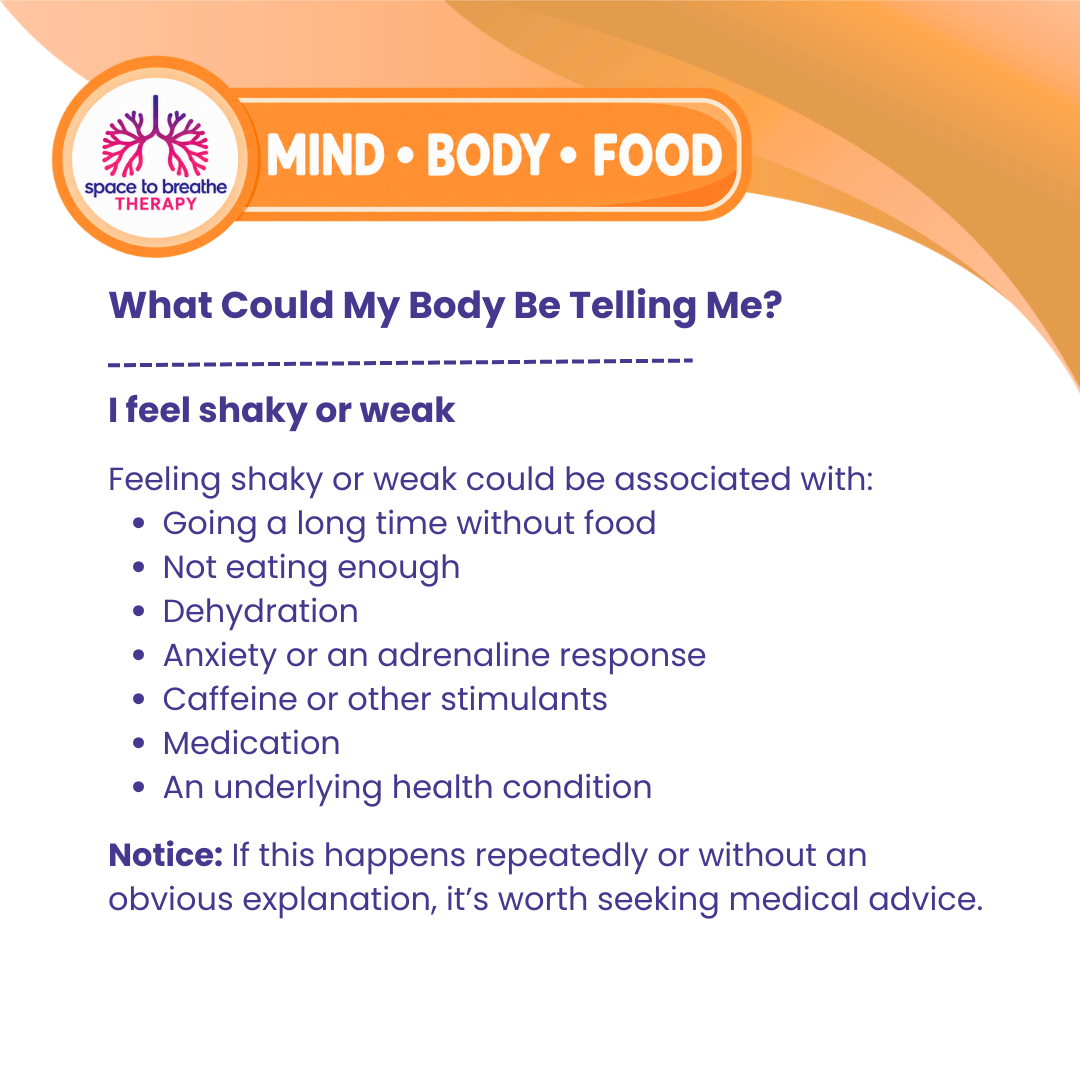
Feeling shaky or weak can be unsettling, particularly when it seems to happen suddenly. There are many possible reasons for these sensations, so rather than immediately assuming the cause, it can help to check in with what has been happening in your body and your day.
When did I last eat?
Going for a long period without food, or not eating enough overall, can leave some people feeling weak, shaky, tired or unable to concentrate.
For people with ADHD, autism, ARFID or differences in interoception, hunger isn't always recognised as a rumbling stomach. You might only realise you need food when your energy suddenly drops or you begin to feel physically uncomfortable.
If this happens, try to focus on something safe, accessible and manageable to eat rather than worrying about creating a perfect meal.
Have I had enough to drink?
Dehydration can sometimes contribute to weakness, dizziness, tiredness or feeling generally unwell.
If you tend not to notice thirst, keeping a drink visible or using reminders throughout the day can be helpful.
Could anxiety be involved?
Anxiety and stress can trigger the body's fight-or-flight response.
Adrenaline can cause physical sensations such as:
- Shaking or trembling
- A racing heartbeat
- Sweating
- Feeling light-headed
- Muscle tension
- Feeling weak or unsteady
These sensations are very real physical responses, even when anxiety is contributing to them.
What about caffeine?
Caffeine and other stimulants can sometimes cause jitteriness, trembling, palpitations or feelings of anxiety, particularly in larger amounts or when consumed without much food.
Rather than assuming caffeine is the problem, notice whether there is a pattern between what you consume and when symptoms appear.
Could medication be contributing?
Some medications can affect appetite, blood pressure, heart rate or blood glucose, while others may cause dizziness or weakness as a side effect.
If symptoms started after beginning or changing medication, speak with your pharmacist or healthcare professional rather than stopping prescribed medication yourself.
Don't automatically assume it's low blood sugar
People often describe feeling shaky as having "low blood sugar", but symptoms alone cannot confirm this.
For someone without diabetes, repeated episodes of unexplained shaking or weakness deserve proper assessment rather than repeatedly trying to treat them with sugary foods.
Notice the pattern
When it happens, gently ask:
When did I last eat? Have I had enough to drink? Am I anxious or overwhelmed? How much caffeine have I had? Have I recently changed medication?
You don't need to analyse every sensation. The aim is simply to become more aware of patterns.
If shakiness or weakness keeps happening, is severe, causes fainting, or occurs without an obvious explanation, seek medical advice.
Listening to your body means noticing its signals without immediately jumping to one conclusion. Sometimes it needs food, water or rest — and sometimes it needs further investigation.
Space to Breathe Therapy