





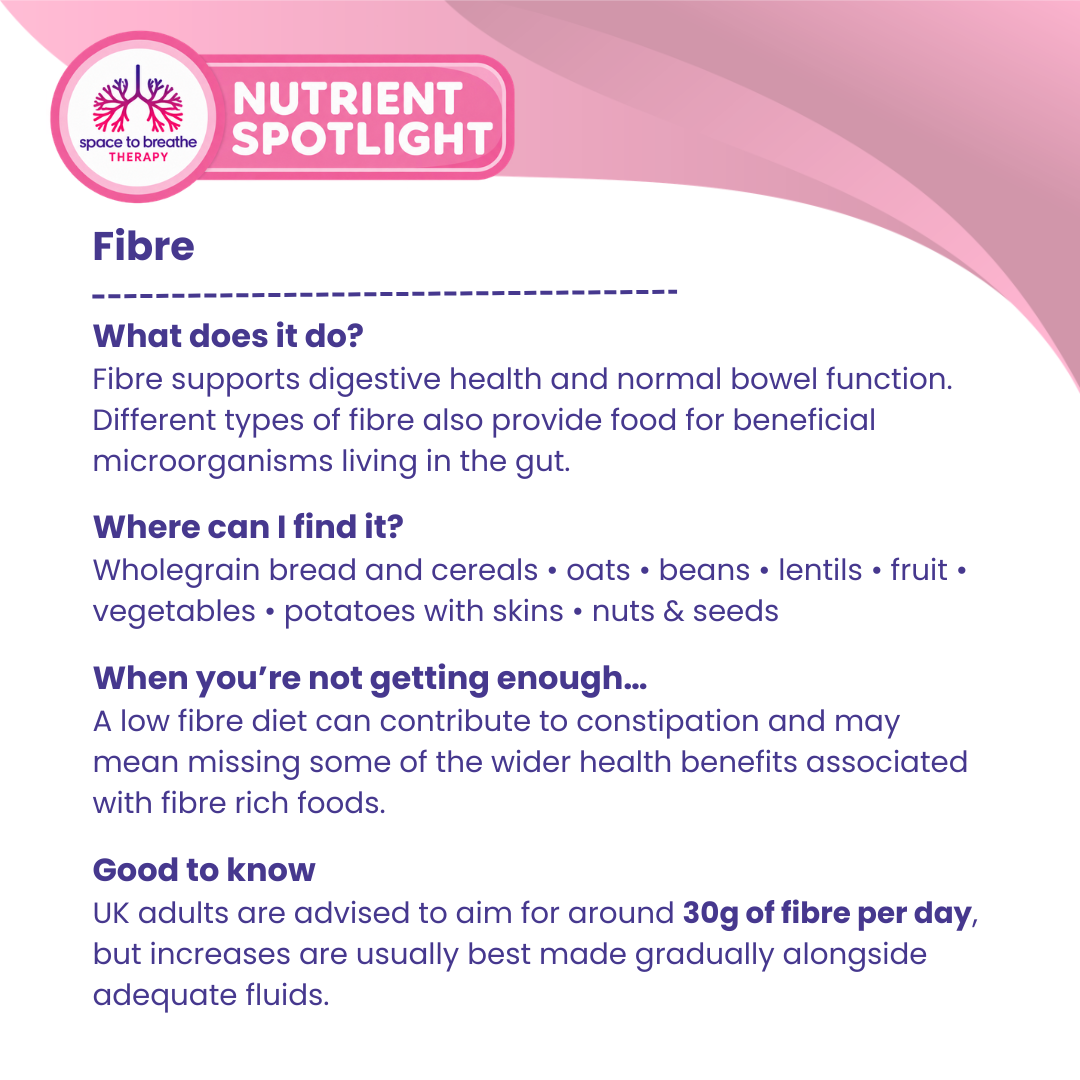
Fibre is an important part of a balanced diet, supporting digestive health, regular bowel function and the community of microorganisms that live within our gut.
Unlike many other nutrients, fibre is not completely broken down and absorbed in the small intestine. Instead, it travels into the large intestine, where different types of fibre have different roles. Some add bulk to stools, while others can be fermented by gut bacteria and provide them with a source of food.
Why is fibre important?
Getting enough fibre can help to keep our digestive system functioning normally and reduce the likelihood of constipation. Fibre-rich foods can also contribute valuable vitamins, minerals and other plant compounds to our diet.
Some types of soluble fibre can also help with cholesterol management and steadier blood glucose levels, while higher-fibre foods can help us feel fuller and more satisfied after eating.
Good sources include wholegrains, oats, beans, lentils, fruit, vegetables, potatoes with their skins, nuts and seeds. There is no need to rely on one particular food — variety can help provide different types of fibre.
What if you're not getting enough?
A low-fibre diet may contribute to constipation and can mean we are missing some of the wider benefits associated with fibre-rich foods.
For people who currently eat very little fibre, suddenly adding large amounts can sometimes cause bloating, wind or abdominal discomfort. Increasing it gradually can give the digestive system time to adjust.
UK adults are generally advised to aim for around 30g of fibre each day. Drinking adequate fluids is also important when increasing fibre intake.
For people with sensory differences, ARFID, restricted diets or food intolerances, reaching a particular number does not need to become another source of pressure. Starting with foods that already feel safe and gradually adding tolerated sources of fibre can be a much more realistic approach.
Nutrition doesn't have to be perfect. Small additions that feel manageable can still make a meaningful difference over time.
Space to Breathe Therapy




