





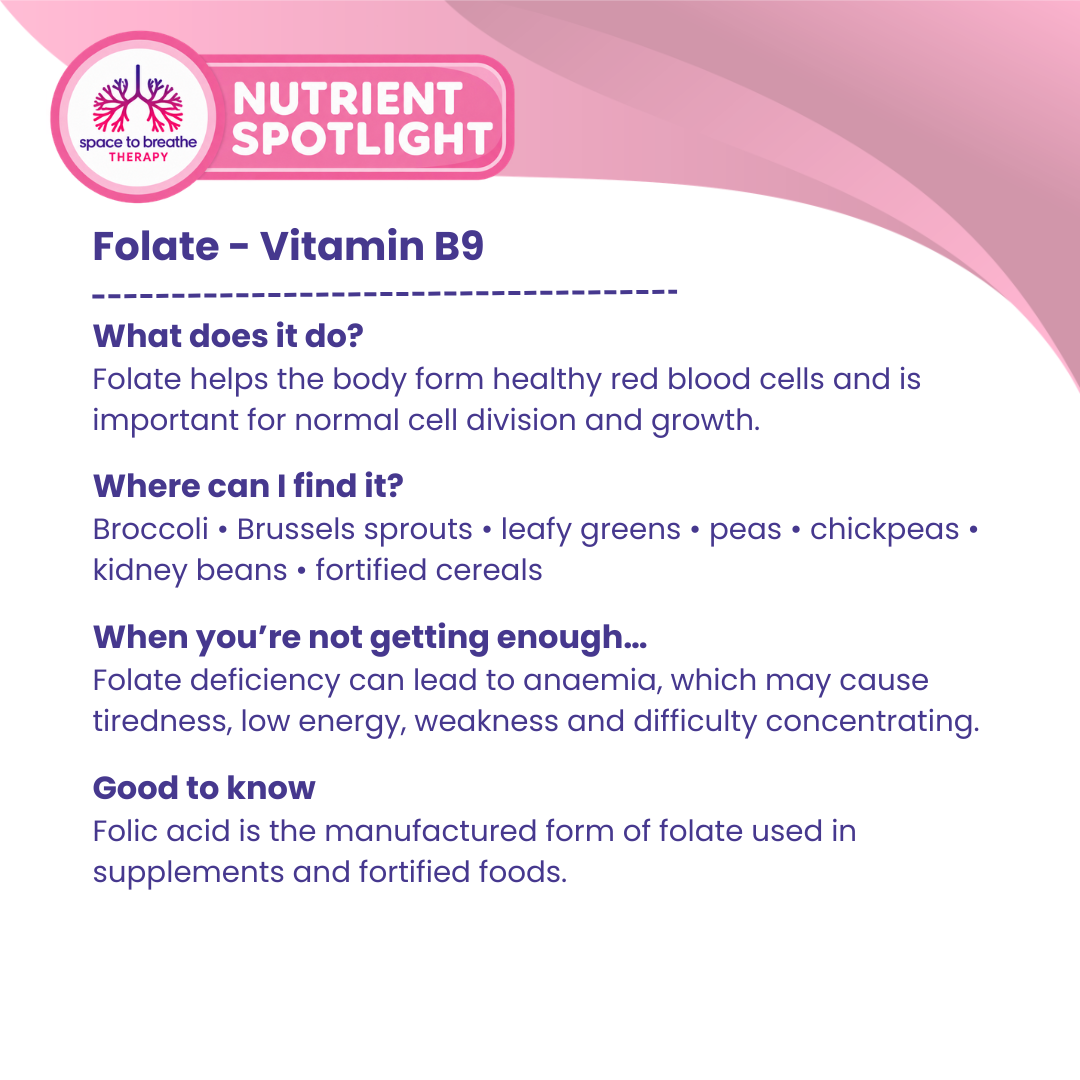
Folate, also known as vitamin B9, is an essential vitamin that our bodies need to make new cells and healthy red blood cells. It is particularly important during periods of rapid growth and development.
Folate also plays a role in DNA production and normal cell division, meaning our bodies need a regular supply through our diet.
Where do we get folate?
Folate occurs naturally in many foods, particularly leafy green vegetables, broccoli, Brussels sprouts, peas, chickpeas and kidney beans.
Some breakfast cereals and other foods are also fortified with folic acid, the manufactured form of folate used in supplements and fortified foods.
Eating a varied diet containing vegetables, pulses and fortified foods can help provide folate.
What happens if we don't get enough?
Not getting enough folate over time can lead to folate-deficiency anaemia. This means the body produces abnormally large red blood cells that cannot function properly.
Symptoms can include tiredness, weakness, reduced energy, shortness of breath and difficulty concentrating.
However, these symptoms can have many possible causes, so they shouldn't automatically be assumed to indicate a folate deficiency.
Folate and pregnancy
Folate is particularly important before and during early pregnancy because it supports the development of a baby's brain and spinal cord.
In the UK, people who could become pregnant are advised to take 400 micrograms of folic acid daily before pregnancy and until 12 weeks pregnant. Some people may be advised to take a higher dose by a healthcare professional depending on their individual circumstances.
Folate and vitamin B12
Folate and vitamin B12 both contribute to healthy red blood cell production, and deficiencies can sometimes produce similar types of anaemia.
This is important because taking large amounts of folic acid can sometimes mask signs of vitamin B12 deficiency while neurological damage continues. Supplements therefore shouldn't automatically be used as a substitute for investigating persistent symptoms.
When eating is restricted
People with ARFID, sensory differences, allergies, intolerances or a limited range of safe foods may eat fewer foods naturally rich in folate.
Support doesn't need to begin with removing familiar foods or forcing vegetables that someone cannot tolerate. It can start by looking at existing safe foods and exploring fortified foods or small, manageable additions where appropriate.
Good nutrition is not about eating perfectly. It's about finding realistic ways to give the body the nutrients it needs while respecting the individual and their relationship with food.
Space to Breathe Therapy