





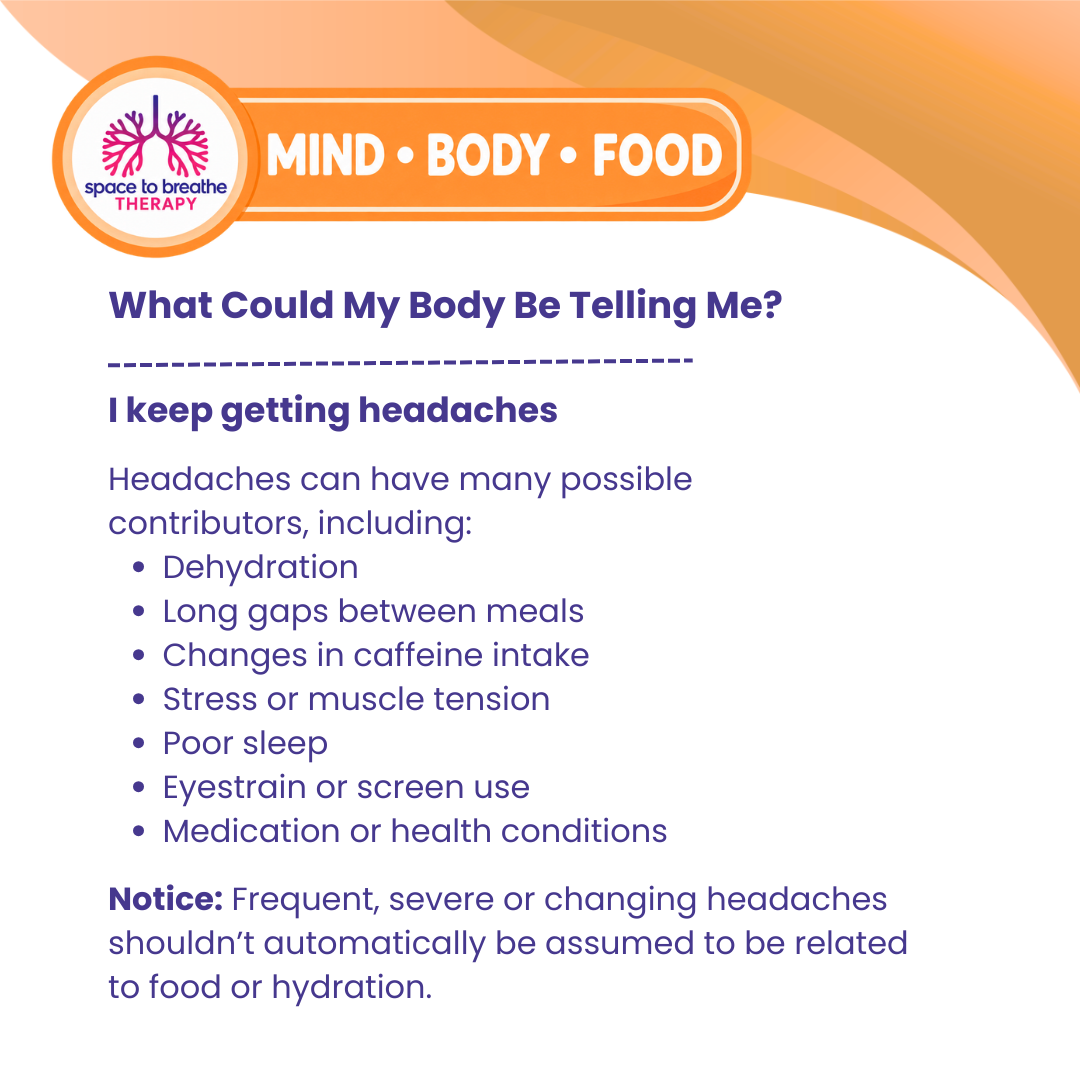
Headaches are common, but they can happen for many different reasons. Rather than immediately assuming a headache is caused by one particular thing, it can be helpful to look at what has been happening in your body, routine and environment.
Sometimes a headache is a useful signal that something needs attention.
Have I had enough to drink?
Dehydration can contribute to headaches for some people. If recognising thirst is difficult, you may not notice you need a drink until other signs begin to appear.
This can be particularly relevant for people with ADHD, autism or differences in interoception, where internal signals such as thirst can sometimes be missed while concentrating or hyperfocusing.
When did I last eat?
Long gaps between meals may contribute to headaches in some people, particularly when accompanied by hunger, tiredness, shakiness, irritability or difficulty concentrating.
If eating regularly is difficult because of ARFID, sensory needs, executive functioning or a busy routine, keeping an accessible safe food nearby may help.
Eating something manageable is more important than waiting for the "perfect" meal.
Has my caffeine intake changed?
If you regularly consume caffeine, suddenly reducing or stopping it can sometimes cause a withdrawal headache.
Equally, large amounts of caffeine may contribute to headaches in some individuals.
Looking at patterns can be more useful than automatically deciding caffeine needs to be completely avoided.
Am I carrying tension?
Stress can show up physically.
Without realising it, we may clench our jaw, tense our shoulders, tighten muscles around the neck or sit in one position for long periods.
Occasionally checking your jaw, shoulders and breathing can help you notice tension before it becomes uncomfortable.
What about screens and sensory overload?
Long periods using screens, eyestrain, bright lighting, noise or sensory overload can contribute to headaches for some people.
Try noticing whether headaches appear after long periods of screen use, demanding environments or intense concentration.
A short break, quieter environment or reducing sensory input may sometimes help.
How have I been sleeping?
Poor-quality or disrupted sleep can also be associated with headaches. Changes in routine, stress and insufficient sleep can all influence how we feel physically the following day.
Look for patterns, not blame
A simple headache diary can sometimes help. You might record:
When did it start? What had I eaten and drunk? How did I sleep? Was I stressed? Had I been using a screen? Was I somewhere particularly noisy or bright?
The aim isn't to obsessively monitor everything you do. It is simply to notice whether a pattern begins to emerge.
Frequent, severe, persistent or changing headaches shouldn't automatically be blamed on food, dehydration, stress or neurodivergence. They may need assessment by a healthcare professional, particularly if they are new or significantly different from your usual headaches.
Listening to your body isn't about assuming every symptom has a nutritional cause. It's about becoming curious about what your body may be communicating — and knowing when something needs further attention.
Space to Breathe Therapy