

Hunger doesn't always feel like a rumbling stomach. Our bodies can communicate the need for food in many different ways, and learning to recognise those signals can help us understand our individual needs.
For some people, hunger signals are obvious. For others — particularly people with ADHD, autism, ARFID, sensory differences, chronic stress or difficulties with interoception — noticing what is happening inside the body can be much harder.
What might hunger feel like?
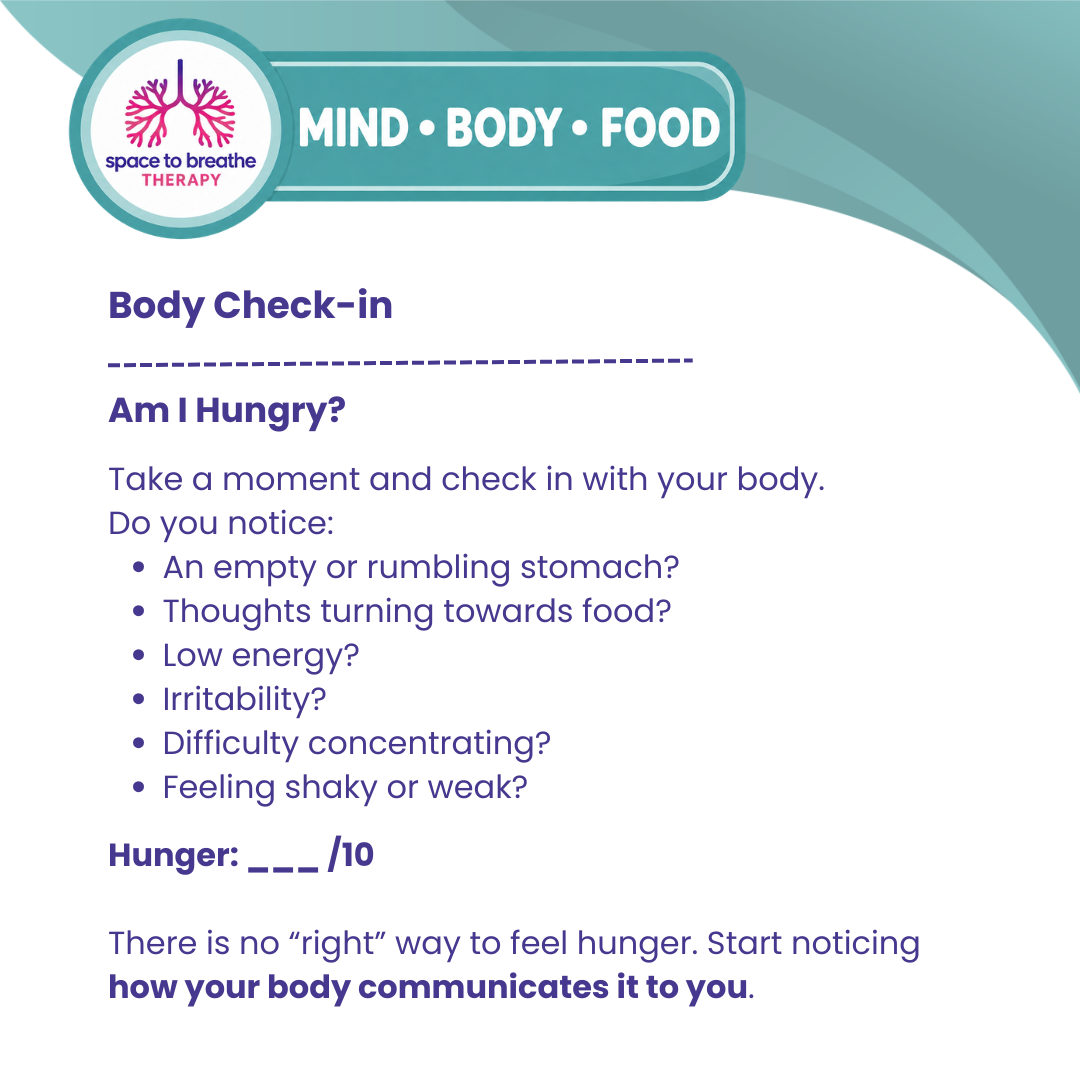
Physical hunger can sometimes show up as an empty or rumbling stomach, but you might also notice:
- Your thoughts beginning to turn towards food
- A drop in energy
- Irritability or becoming more easily overwhelmed
- Difficulty concentrating
- Feeling weak or shaky
- Headaches
- Feeling restless
- Finding everyday tasks suddenly more difficult
Sometimes we don't recognise these as hunger signals until we look back and notice a pattern.
What is interoception?
Interoception is our ability to notice and interpret signals coming from inside our body. These include hunger, thirst, needing the toilet, temperature, tiredness and changes in our heartbeat.
Some people have very strong internal signals, while others may not notice them until they become intense.
This means someone might genuinely go for several hours without realising they are hungry and then suddenly feel extremely hungry, shaky, overwhelmed or unable to decide what to eat.
You don't have to wait until you're hungry
If recognising hunger is difficult, eating doesn't have to depend entirely on receiving a clear signal from your body.
Routine can be a form of support. Regular meals or snacks, reminders, keeping accessible foods nearby or eating alongside another person can help when internal cues aren't reliable.
For someone with ARFID or restricted eating, the first priority may simply be eating something that feels safe and manageable rather than trying to create the nutritionally "perfect" meal.
Try a gentle body check-in
Pause occasionally and ask yourself:
What is my body telling me right now?
You might notice your stomach, energy, concentration, mood, thoughts about food or physical sensations. You could give your hunger a number from 0–10, without judging whether that number is right or wrong.
Over time, this can help you recognise your own patterns.
There is no single "correct" way to experience hunger. The goal isn't to become perfect at reading your body — it's to become a little more curious about how your body communicates with you.
Space to Breathe Therapy