





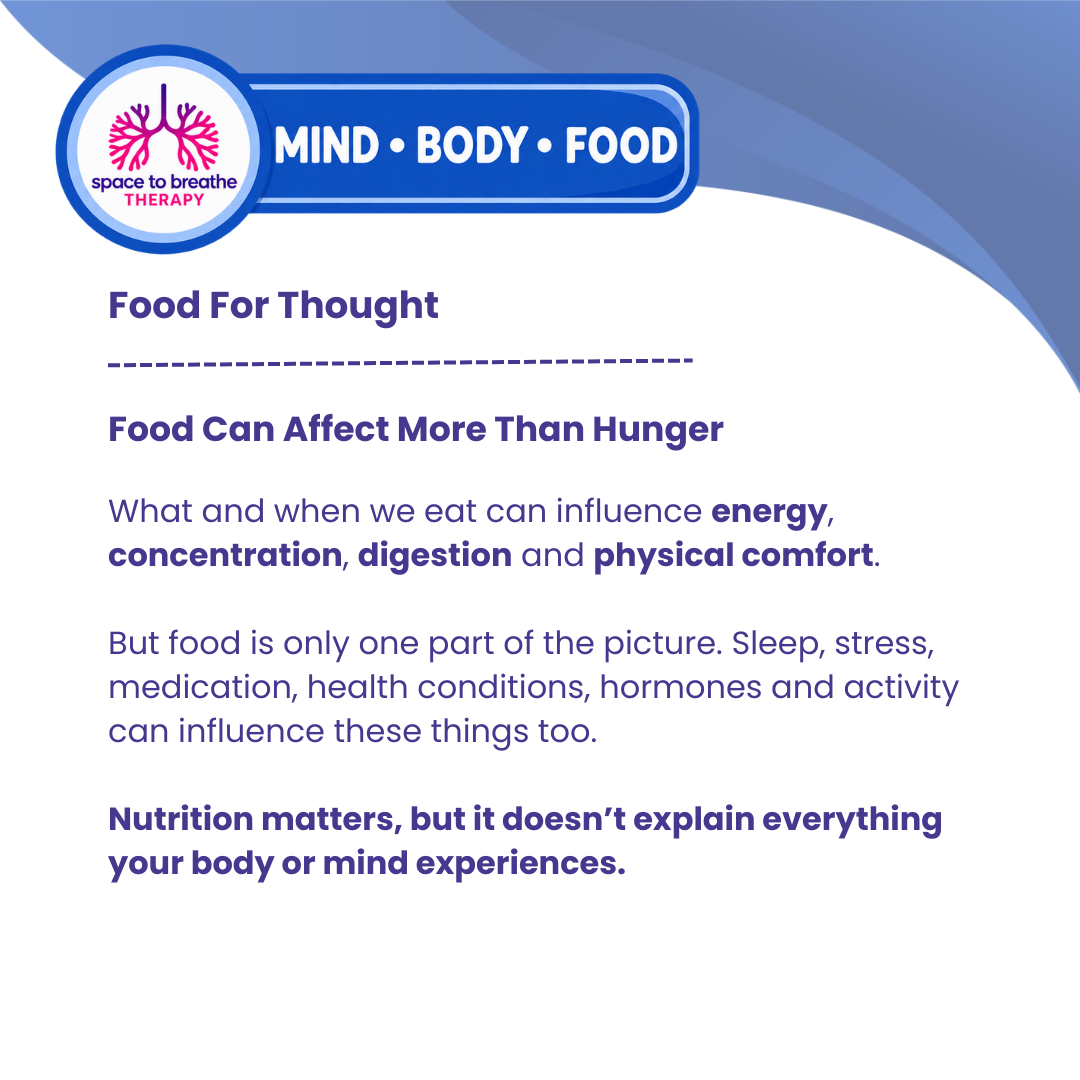
Food for Thought: Food Can Affect More Than Hunger
Food does much more than simply make hunger disappear. What, when and how much we eat can influence how we feel physically and mentally throughout the day.
Energy and concentration
Our brains and bodies need energy to function. Going for long periods without eating, or not getting enough overall, can sometimes contribute to tiredness, difficulty concentrating, irritability or feeling physically weak.
Eating may help — but food isn't the only possible explanation for these experiences.
Digestion and physical comfort
Food can also affect how our digestive system feels. We might notice:
- Fullness or satisfaction
- Bloating or gas
- Changes in bowel habits
- Heartburn or indigestion
- Feeling more or less comfortable after particular foods
- Changes when our usual eating pattern changes
One experience doesn't necessarily mean a particular food is a problem. Looking for patterns over time can be more useful than judging a single meal.
Food and mood
Eating regularly can support the energy our brain needs, but it's important not to oversimplify mental health.
Low mood, anxiety, brain fog, irritability or exhaustion aren't automatically caused by diet. Sleep, stress, hormones, medication, illness, neurodivergence, emotional wellbeing and what's happening in someone's life can all play a part.
Think bigger than the plate
If something feels different in your body, instead of immediately asking:
“What did I eat?”
you might also ask:
“How have I slept?”
“Am I stressed or overloaded?”
“Have I eaten enough?”
“Have I had enough to drink?”
“Has my routine changed?”
“Could something else be affecting me?”
Nutrition matters, but food is one part of a much bigger picture.
Understanding that bigger picture can help us respond to our bodies with curiosity rather than blame.
Space to Breathe Therapy




