





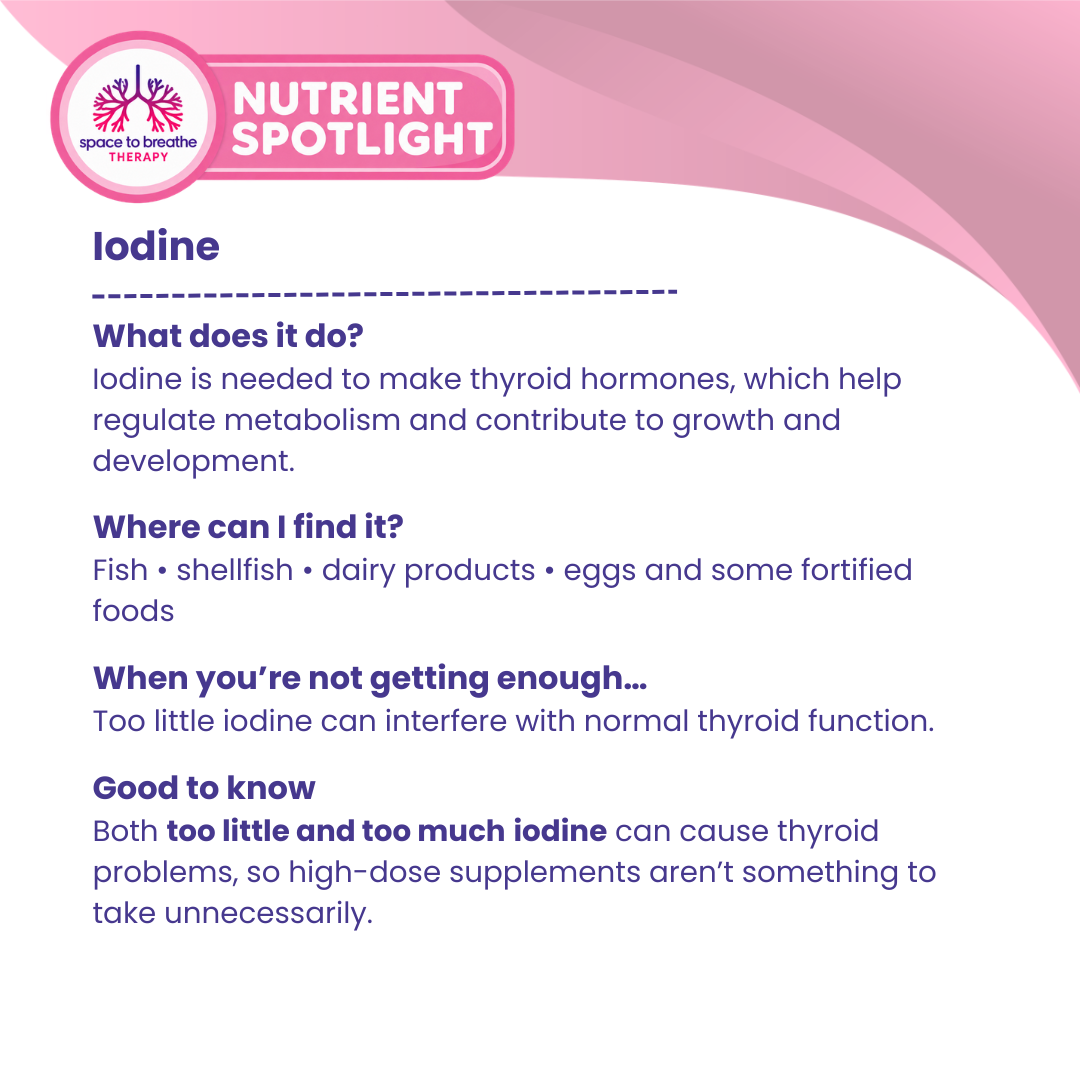
Iodine is a mineral that our bodies need in relatively small amounts, but it has a very important role in keeping the thyroid working normally.
The thyroid uses iodine to produce thyroid hormones, which help regulate metabolism — the processes the body uses to convert food into energy. These hormones are also important for growth, development and normal brain development, particularly during pregnancy and early life.
Where do we get iodine?
Sources of iodine can include fish, shellfish, dairy products, eggs and some fortified foods.
The amount of iodine in foods can vary, which means people who exclude several of these food groups may need to pay particular attention to their intake.
Some plant-based milk alternatives are fortified with iodine, but not all of them are, so checking the nutritional information on the packaging can be useful.
What happens if we don't get enough?
If iodine intake remains too low, the thyroid may not be able to produce enough thyroid hormone. Over time, iodine deficiency can contribute to thyroid problems, including an enlarged thyroid (goitre) and hypothyroidism.
However, symptoms such as tiredness, changes in weight, feeling cold or difficulty concentrating can have many different causes. They shouldn't automatically be assumed to mean someone is iodine deficient.
More isn't always better
Iodine is a good example of why supplements should not automatically be considered harmless.
Both too little and too much iodine can interfere with normal thyroid function. High-dose iodine or kelp supplements can provide much larger amounts than expected, so they shouldn't be taken unnecessarily.
When diets are restricted
People with ARFID, sensory differences, allergies, intolerances, vegan diets or a limited range of safe foods may have fewer regular sources of iodine.
The aim shouldn't be to force foods that aren't manageable. Looking at existing safe foods, suitable fortified alternatives and the overall diet can help identify whether additional support may be needed.
If there are concerns about iodine intake or thyroid function, particularly with a very restricted diet, advice from a GP or registered dietitian can help determine what is appropriate.
With micronutrients like iodine, getting the right amount matters — more is not necessarily better.
Space to Breathe Therapy