





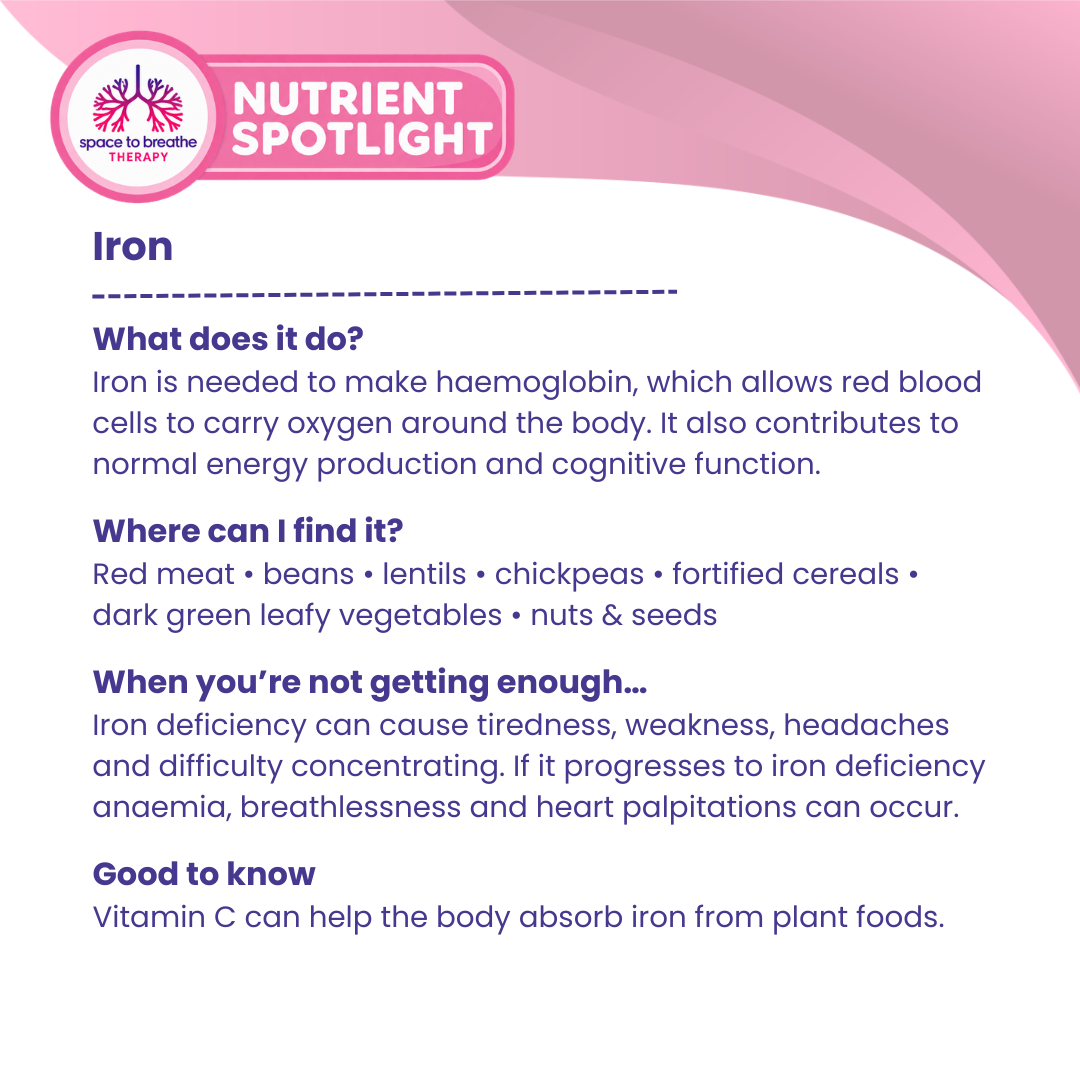
Iron is an essential mineral that helps transport oxygen around the body and supports normal energy levels and cognitive function.
One of iron's most important jobs is helping the body make haemoglobin, a protein found inside red blood cells. Haemoglobin carries oxygen from the lungs to our tissues and organs, where it is needed for normal functioning.
Where do we get iron?
Iron is found in both animal and plant foods, including red meat, beans, lentils, chickpeas, fortified breakfast cereals, dark green leafy vegetables, nuts and seeds.
There are two main forms of dietary iron. Haem iron, found in animal foods such as meat, is generally absorbed more easily. Non-haem iron, found predominantly in plant foods, is not absorbed quite as efficiently but can still make an important contribution to our overall intake.
Vitamin C can help
Eating a source of vitamin C alongside plant-based sources of iron can help the body absorb more of the iron from that meal.
This doesn't have to involve complicated meal planning. Fruit, vegetables or another tolerated vitamin-C-containing food alongside a meal can be enough.
What happens if we don't get enough?
Iron stores can gradually become depleted before someone develops iron-deficiency anaemia.
Symptoms may include persistent tiredness, weakness, headaches, reduced concentration and low energy. If iron deficiency progresses to anaemia, some people may also experience breathlessness, dizziness, a noticeable heartbeat or heart palpitations.
However, these symptoms can have many different causes, so they shouldn't automatically be assumed to mean someone needs an iron supplement.
Who may be more vulnerable?
Iron requirements and the risk of deficiency vary between individuals. People who experience heavy menstrual bleeding, pregnancy, gastrointestinal blood loss, restricted diets or difficulties absorbing nutrients may be at greater risk.
People following vegetarian or vegan diets can obtain iron from food, but may need to pay greater attention to regularly including suitable plant-based sources.
Iron and restricted eating
For someone with ARFID, sensory differences, allergies, intolerances or a very limited range of safe foods, simply being told to "eat more iron-rich foods" may not be realistic or helpful.
Instead, support can begin with the foods the person already feels able to eat. Fortified cereals, tolerated pulses, seeds or other familiar foods may provide opportunities to increase iron without removing safe foods or creating additional pressure.
Don't supplement without good reason
Iron supplements can be extremely useful when deficiency has been identified, but more iron isn't automatically better. Excessive iron can be harmful, and supplements commonly cause digestive side effects such as constipation, nausea or abdominal discomfort.
If iron deficiency is suspected, a GP can arrange appropriate blood tests and investigate why iron levels are low, rather than simply treating the symptom.
Good nutrition isn't about forcing a perfect diet. It's about understanding what the body needs and finding safe, realistic ways of meeting those needs.
Space to Breathe Therapy