





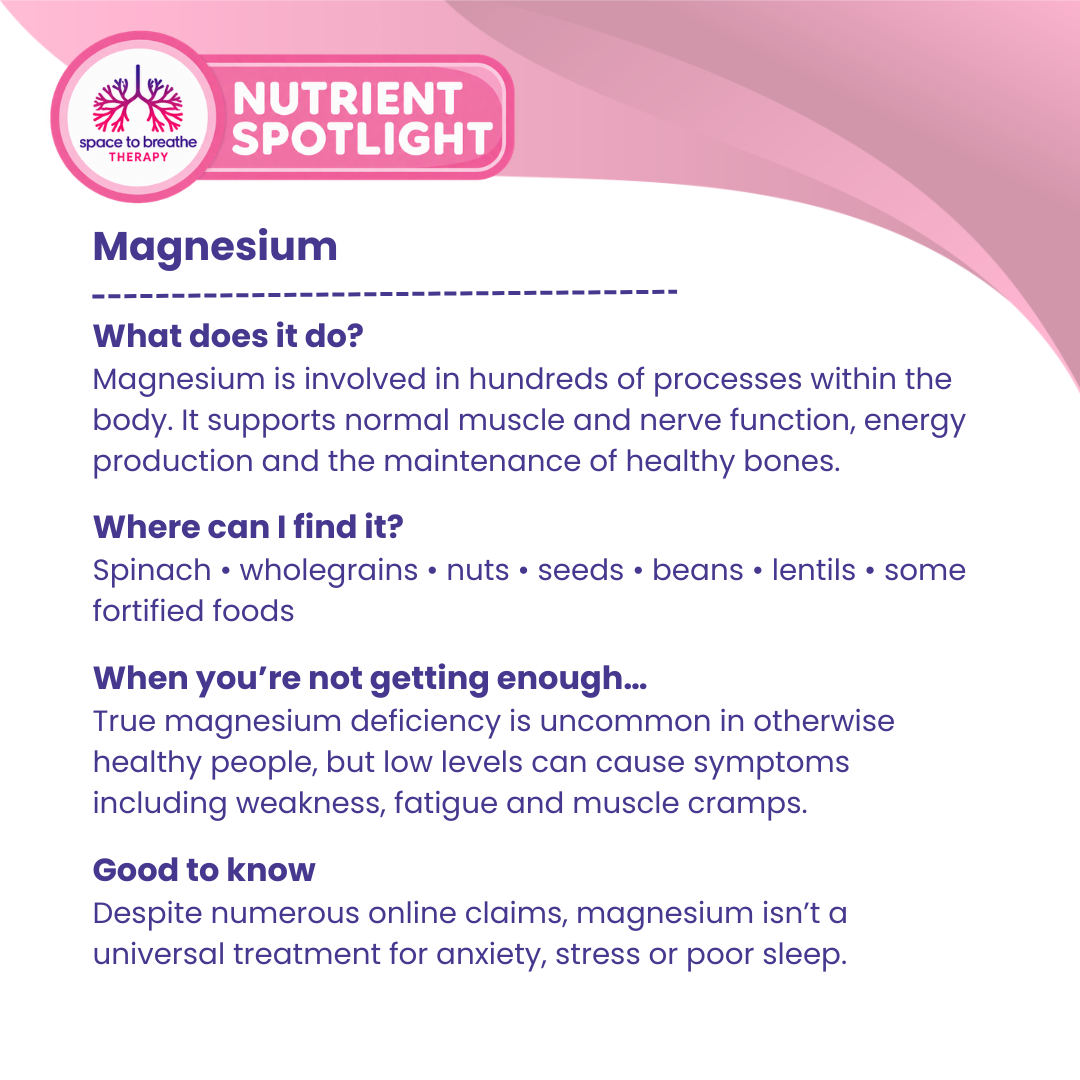
Magnesium is an essential mineral involved in hundreds of processes throughout the body. It contributes to normal muscle and nerve function, energy production, electrolyte balance and the maintenance of healthy bones and teeth.
Although magnesium is often promoted online as a solution for everything from stress to sleep, its role is much broader — and it is important to separate its genuine nutritional functions from exaggerated health claims.
What does magnesium do?
Magnesium helps our muscles and nerves function normally and is involved in the processes that allow the body to release energy from food.
It also works alongside nutrients such as calcium and vitamin D in supporting bone health and plays a role in many enzyme reactions occurring throughout the body every day.
Where can we get magnesium?
Magnesium is naturally present in many foods, including spinach and other leafy greens, wholegrains, nuts, seeds, beans and lentils. Some fortified foods can also provide magnesium.
Eating a varied diet will provide magnesium from several different sources rather than relying on one particular food.
What happens if we don't get enough?
True magnesium deficiency is uncommon in otherwise healthy people eating a varied diet.
However, prolonged low magnesium levels can cause symptoms including weakness, tiredness, muscle cramps and changes in normal muscle or nerve function.
These symptoms are not specific to magnesium deficiency and can have many other causes, so experiencing muscle cramps or fatigue doesn't automatically mean someone needs a magnesium supplement.
What about magnesium for sleep and anxiety?
Magnesium supplements have become increasingly popular for sleep, anxiety, stress and relaxation.
Magnesium is important for normal nervous-system function, but this doesn't mean that taking additional magnesium will automatically improve anxiety or sleep. Research into supplementation for these areas is still developing, and individual results can vary.
It is better to think of magnesium as an essential nutrient rather than a universal treatment.
Magnesium and restricted eating
People with ARFID, sensory differences, allergies, intolerances or a very restricted range of safe foods may have fewer regular sources of magnesium.
As with other nutrients, the aim doesn't need to be replacing familiar foods. Looking at what someone already eats and considering small, manageable additions can often be a more supportive approach.
Supplements can sometimes be appropriate, but taking more isn't necessarily better. Higher supplemental doses can cause diarrhoea and digestive upset, and some supplements can interact with medicines.
Nutrition is about supporting the body as a whole — not expecting one nutrient or supplement to fix everything.
Space to Breathe Therapy