




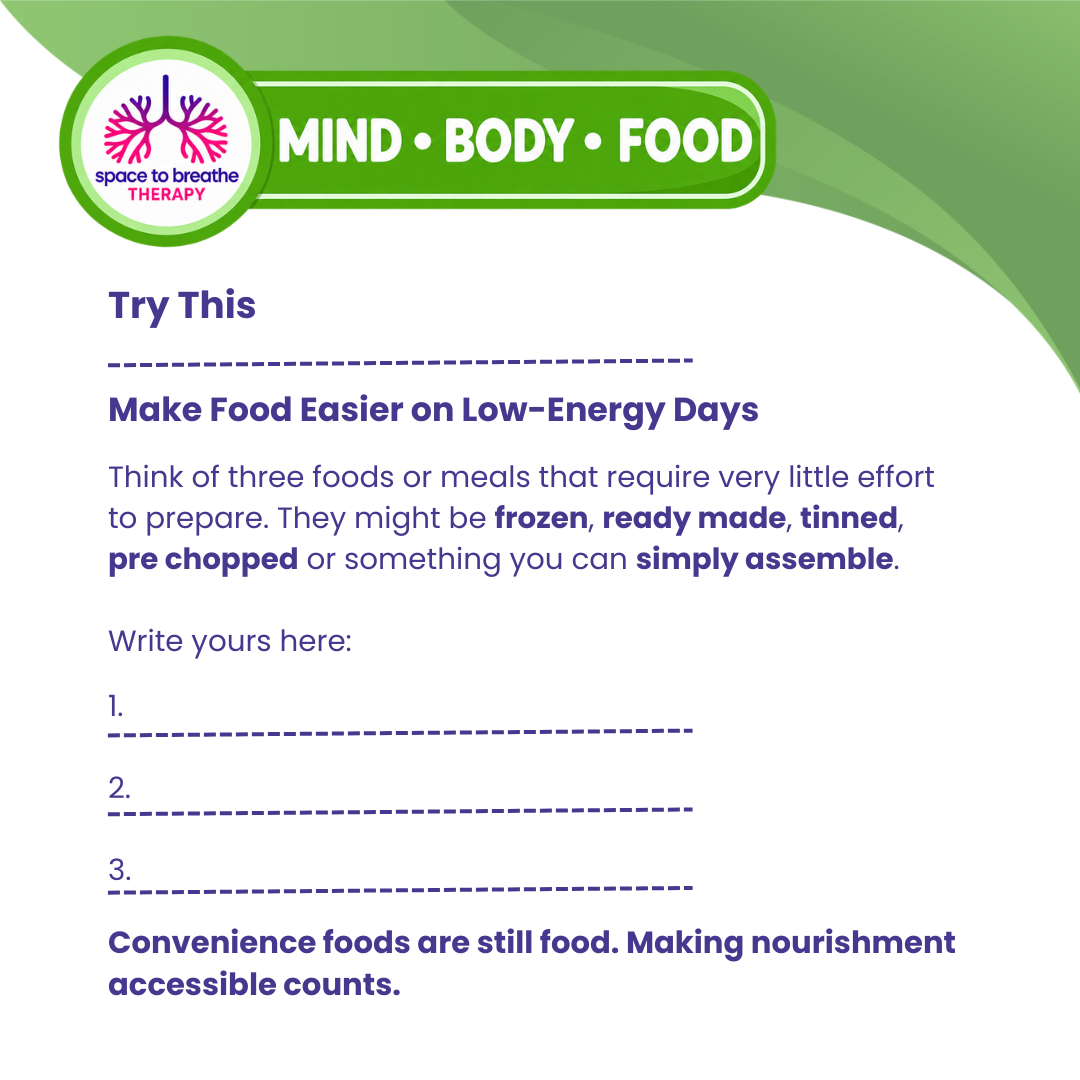
Try This
Make Food Easier on Low-Energy Days
Some days, preparing food can feel like another task that requires energy you simply don’t have.
Low energy, stress, low mood, executive functioning difficulties, chronic illness, sensory overload or simply having a demanding day can make planning, shopping, preparing and cooking food feel overwhelming.
On those days, the goal does not have to be:
“Cook a proper meal.”
The goal can simply be:
“How can I make eating easier today?”
Convenience Food Is Still Food
Frozen, ready-made, pre-chopped, tinned, microwaveable and packaged foods can all provide valuable nourishment.
Using convenience foods is not cheating, lazy or failing to look after yourself.
Sometimes making food accessible is exactly what looking after yourself looks like.
Think:
Less preparation • Fewer decisions • Less washing up • More chance of actually eating
Create Your Low-Energy Food List
Think of foods you can manage when cooking feels difficult.
1. No-Cook Foods
Foods you can open and eat or quickly assemble.
Examples might include yogurt, cereal, fruit, crackers, cheese, sandwiches, wraps, pre-cooked protein, dips or foods you already know feel safe and manageable.
My easy options:
2. Heat-and-Eat Foods
Think frozen meals, soup, microwave rice, baked potatoes, tinned foods or other foods that require very little preparation.
My easy options:
3. Snack-Style Meals
A meal does not have to look like a traditional meal.
You might put together several small foods you enjoy and eat them together.
My easy options:
Try the “Something Is Better Than Nothing” Approach
When energy is particularly low, simplify the decision.
Ask:
What could I eat within the next five minutes?
Then start there.
If you have more capacity afterwards, you can always add something else.
Build Rather Than Cook
Instead of thinking:
“What can I cook?”
try:
“What can I assemble?”
For example:
Crackers + cheese + fruit
Toast + eggs
Yogurt + cereal + fruit
Microwave rice + ready-cooked protein
Soup + bread
Cereal + milk or an alternative
A sandwich + a favourite side
The exact combination matters less than finding something accessible enough to actually eat.
Make Future You’s Life Easier
When you have more energy, consider preparing for the days when you won't.
You could:
- Keep a few favourite meals in the freezer.
- Stock foods with a longer shelf life.
- Buy pre-chopped ingredients.
- Keep easy snacks somewhere visible.
- Portion leftovers before freezing them.
- Keep familiar safe foods available.
- Create a short list of meals that require almost no decision-making.
This reduces the number of steps between realising you need food and actually eating it.
Think About Your Barriers
When eating feels difficult, ask:
What is making food hard right now?
Is it:
Energy?
Decision-making?
Preparation?
Sensory overload?
Appetite?
Washing up?
Shopping?
Remembering to eat?
Once you identify the barrier, you can look for a way to make that particular step easier.
Your Low-Energy Emergency Three
Choose three options that you would realistically eat even on a difficult day.
1. ______________________________
2. ______________________________
3. ______________________________
Keep these foods available whenever possible.
They do not have to be exciting, varied or perfect.
They simply need to be accessible to you.
Remember
Your nutritional needs do not disappear because your energy is low.
But the way you meet those needs can change from day to day.
Some days you might cook from scratch.
Some days you might microwave something.
Some days dinner might be a collection of snacks.
Some days eating your safest, easiest food may be the achievement.
Convenience foods are still food.
Fed is more important than perfect.
Making nourishment accessible counts.
Space to Breathe




