





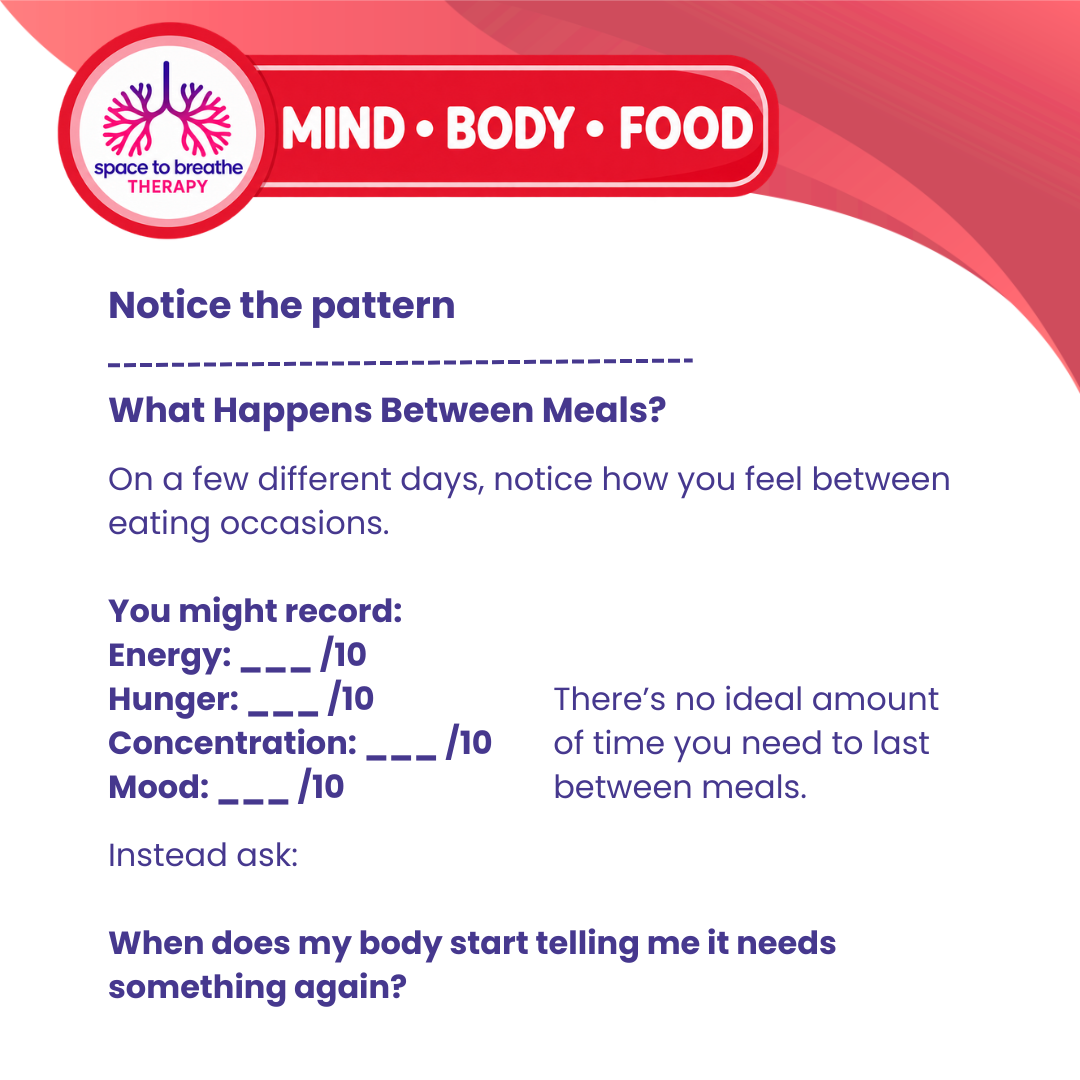
Notice the Pattern: What Happens Between Meals?
What happens between eating occasions can tell us just as much as what happens at mealtimes. Rather than following a rule about how many hours you “should” go without food, begin noticing your own body’s pattern.
For several days, record how you feel at different points between meals or snacks.
You could notice:
- Energy ___ /10
- Hunger ___ /10
- Concentration ___ /10
- Mood ___ /10
- Stress ___ /10
- Thirst ___ /10
- Physical comfort ___ /10
What signals appear first?
Hunger isn't always a rumbling stomach. Your earliest signal might be thinking about food, losing concentration, becoming irritable, feeling restless, getting a headache, feeling shaky, suddenly becoming tired or finding tasks more difficult.
For some people — particularly those who experience differences in interoception — these signals may be subtle, delayed or difficult to identify.
Notice the timing
Make a quick note:
Last ate: ______
First change I noticed: ______
Time: ______
What was I doing? ______
What did my body feel like? ______
What happened when I ate again? ______
You might discover that your concentration changes before your stomach feels hungry, or that your mood shifts before you consciously recognise needing food.
Other things matter too
How you feel between meals isn't necessarily caused by food alone. Sleep, hydration, stress, medication, illness, hormones, activity levels, sensory overload and emotional demands can all influence energy, appetite and concentration.
That's why we're looking for repeated patterns, not trying to explain one difficult afternoon from one meal.
The question isn't:
“How long should I be able to go without eating?”
Instead ask:
“When does my body begin telling me it needs something, and what do those signals look like for me?”
Over time, recognising your earlier signals may make it easier to respond to your body's needs before they become urgent or overwhelming.
Space to Breathe Therapy




