





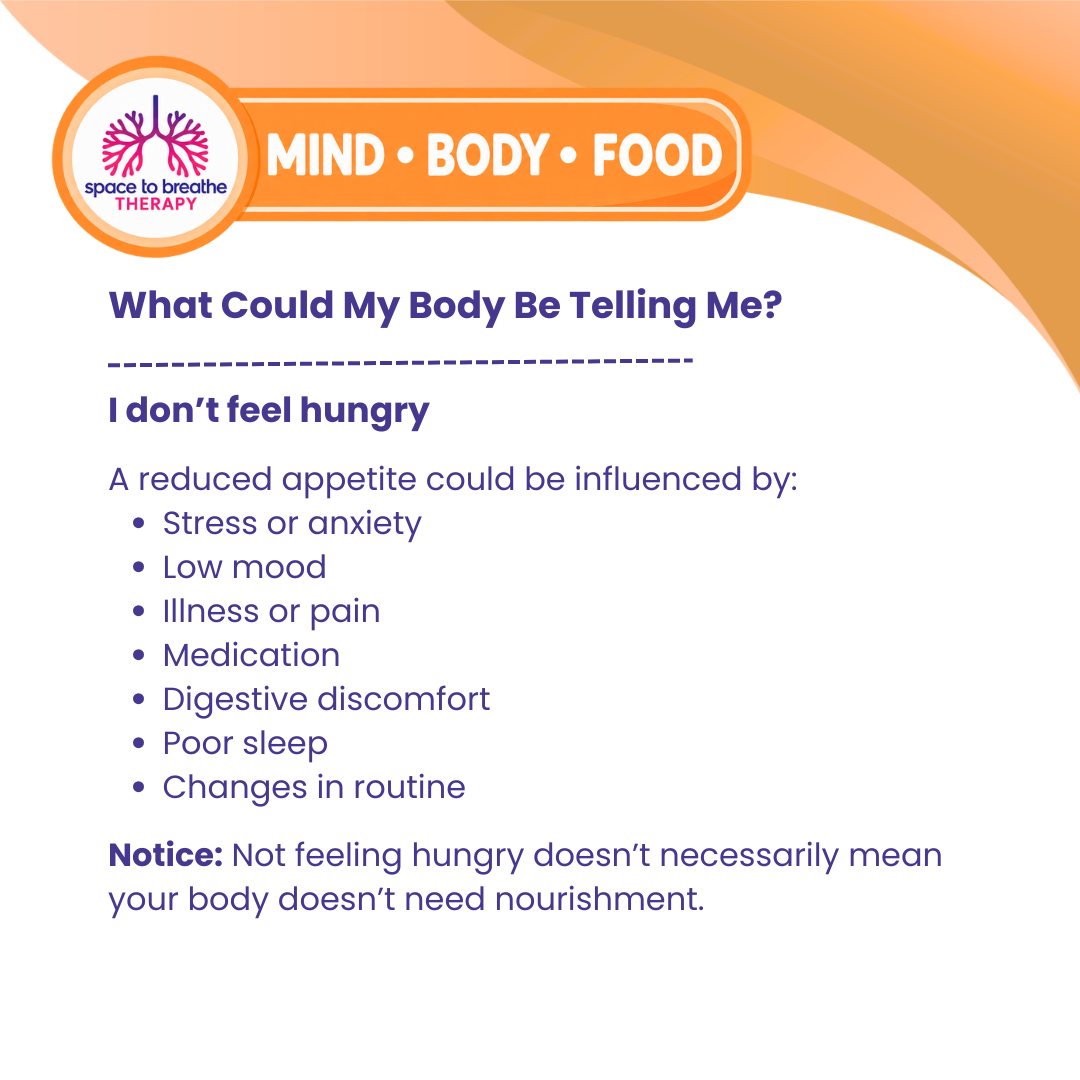
Not feeling hungry doesn’t necessarily mean your body doesn’t need food. Appetite and physical hunger are not always the same thing, and there are many reasons why our usual hunger signals can become quieter or harder to recognise.
For some people, particularly those with ADHD, autism, ARFID or differences in interoception, waiting until they feel hungry may mean they unintentionally go for long periods without eating.
Why might my appetite disappear?
Appetite can be influenced by many things, including stress, anxiety, low mood, illness, pain, medication, digestive discomfort, poor sleep and changes in routine.
During periods of stress or anxiety, the body's stress response can temporarily reduce appetite. You might know that you need to eat but feel as though your stomach simply isn't interested.
Changes in routine can have a similar effect. If normal meal times disappear, it can become surprisingly easy to miss meals altogether.
Hunger isn't always a stomach feeling
We often imagine hunger as an empty or rumbling stomach, but your body may communicate its need for food differently.
You might notice:
- Your energy suddenly dropping
- Difficulty concentrating
- Irritability or feeling more emotional
- Headaches
- Feeling shaky or weak
- Becoming overwhelmed more easily
- Thinking about food without actually feeling hungry
Learning your own signals can be more useful than waiting for the "classic" feeling of hunger.
ADHD, autism and interoception
Some neurodivergent people experience differences in interoception — the ability to notice and interpret signals from inside the body.
Hyperfocus can also mean someone becomes so absorbed in an activity that they don't notice hunger until several hours have passed.
This isn't someone deliberately ignoring their body. The signal may simply not be strong enough to interrupt what they are doing.
When appetite is low, make eating easier
You don't have to wait for hunger before giving your body nourishment.
If a full meal feels overwhelming, something small, familiar and manageable is still valuable. Safe foods, snacks, drinks containing energy or eating alongside another person may feel more achievable.
For someone with ARFID, this is especially important. A safe food that can actually be eaten is more useful than a nutritionally "perfect" meal that feels impossible.
Regular reminders or a loose eating routine can also provide an external prompt when internal hunger signals aren't reliable.
Notice changes
If you've always had a small appetite or difficulty recognising hunger, understanding your personal pattern can be helpful.
But if your appetite suddenly changes, remains significantly reduced, leads to unintentional weight loss or makes it difficult to eat enough, speak to a healthcare professional.
You don't have to earn food by becoming hungry enough. Your body still deserves nourishment, even on the days when its hunger signals are quiet.
Space to Breathe Therapy