





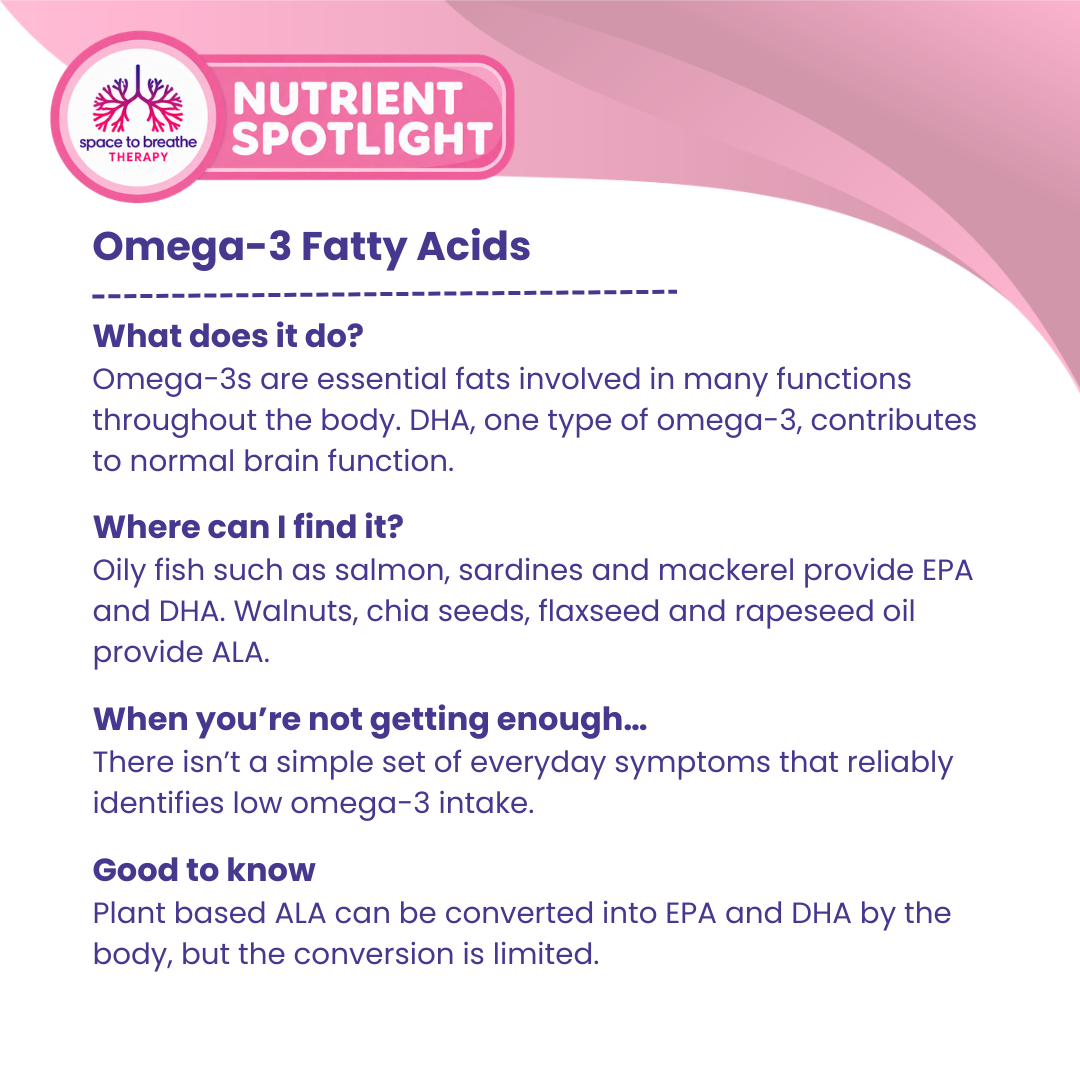
Omega-3 fatty acids are essential fats that play important roles throughout the body. We need to obtain them through our diet because the body cannot make enough of them on its own.
The three main omega-3 fatty acids we commonly talk about are ALA, EPA and DHA. DHA contributes to normal brain function, while EPA and DHA are also important components of cell membranes and have recognised roles in heart health.
Where do we get omega-3?
Some of the richest sources of EPA and DHA are oily fish, including salmon, sardines, mackerel, herring and trout.
Plant foods such as walnuts, chia seeds, flaxseed and rapeseed oil provide ALA, another form of omega-3.
The body can convert some ALA into EPA and DHA, but this conversion is limited. This is why people who don't eat fish may need to think more carefully about how they obtain different forms of omega-3. Algae-derived omega-3 can also provide DHA and, in some products, EPA.
Omega-3 and the brain
The brain contains a large amount of fat, and DHA is an important structural component of brain tissue.
Omega-3 is sometimes heavily promoted for mood, ADHD, memory and concentration, but it is important not to overstate what it can do. Omega-3 is an important nutrient, but it should not be presented as a treatment or cure for neurodevelopmental or mental health conditions.
Nutrition works as part of a much bigger picture that includes sleep, movement, relationships, environment, stress, health and individual circumstances.
What happens if we're not getting enough?
Unlike some nutrient deficiencies, there isn't a simple collection of everyday symptoms that can reliably tell someone they are low in omega-3.
Rather than trying to diagnose a deficiency from symptoms, it can be more useful to look at the overall pattern and variety of foods being eaten.
For people with ARFID, sensory differences, allergies, intolerances or restricted diets, fish may simply not be an accessible food. Support should therefore focus on finding realistic alternatives rather than creating anxiety or pressure around eating.
Good nutrition isn't about forcing foods that feel impossible. It's about finding accessible ways to give the body what it needs.
Space to Breathe Therapy