




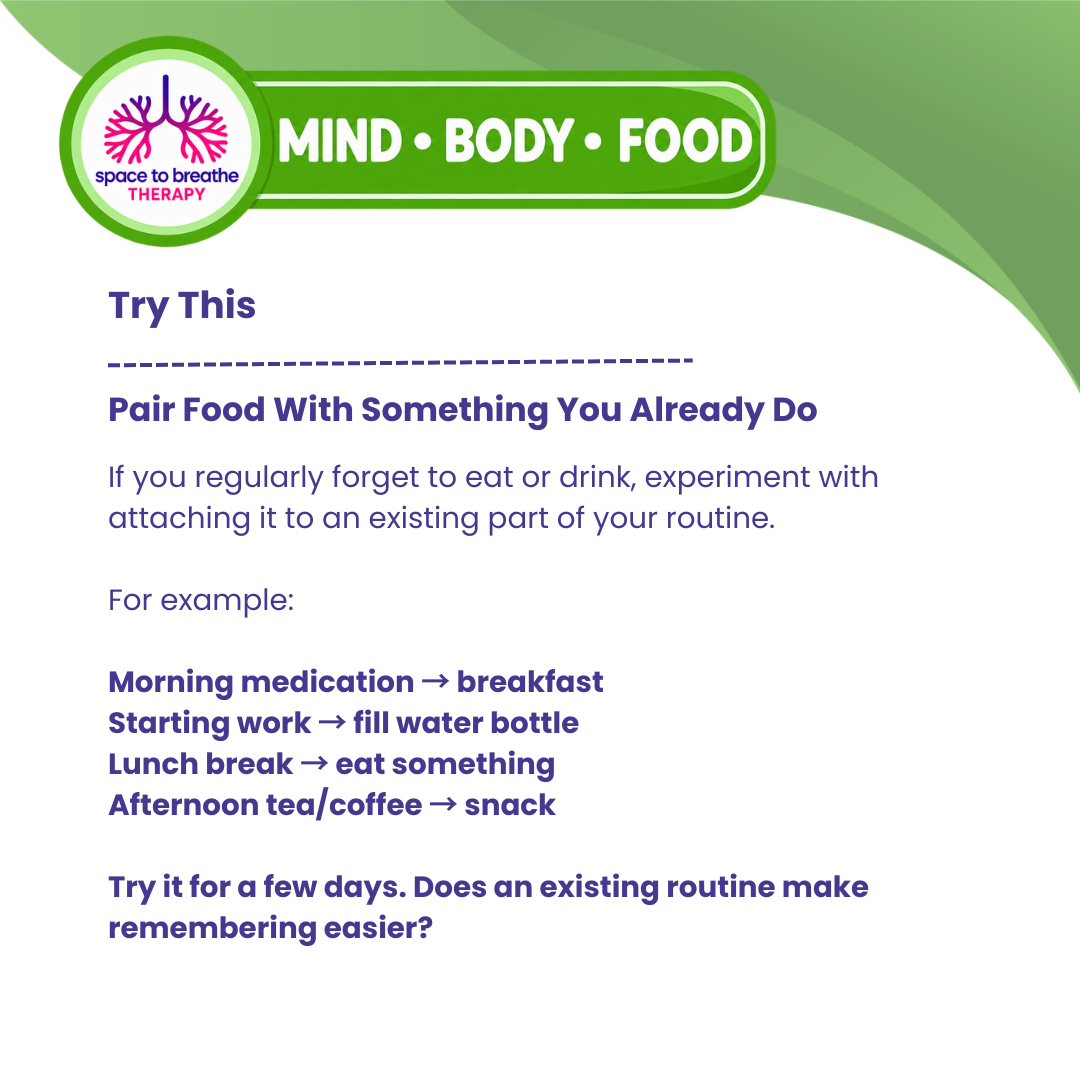
Try This
Pair Food With Something You Already Do
Remembering to eat and drink can be surprisingly difficult. Hunger and thirst do not always arrive as clear signals, and when you are busy, hyperfocused, stressed, tired or absorbed in something, it can be easy for hours to pass without noticing what your body needs.
Rather than relying on memory or waiting until you feel very hungry, try connecting food and drink to things that already happen naturally in your day.
This is sometimes called habit stacking — using an established routine as a prompt for another action.
Why Can We Forget to Eat?
There can be many reasons, including:
- ADHD and hyperfocus
- Autism and differences in recognising internal body signals
- Executive functioning difficulties
- A busy or unpredictable routine
- Stress or anxiety
- Low mood
- Low appetite
- Sensory difficulties around food
- Fatigue
- Difficulty switching away from a task
- Simply losing track of time
For some people, “I'll eat when I'm hungry” isn't always a reliable strategy.
Find Your Existing Anchors
Think about things you already do most days without needing much prompting.
These become your anchors.
For example:
Wake up → Have a drink
Morning medication → Breakfast
Brush teeth → Fill water bottle
Start work → Put a drink nearby
Morning break → Have a snack
Lunch break → Eat something
Finish a meeting → Check whether you need food or water
Afternoon tea or coffee → Add a snack
Finish work → Think about your evening meal
Evening routine → Prepare something for tomorrow
The routine does the reminding for you.
Make the Next Step Easy
Remembering is only part of the challenge.
If the food requires several decisions and lots of preparation, you may still put it off.
Try reducing the number of steps involved.
Keep snacks where you can see and reach them.
Fill your water bottle before starting work.
Keep easy foods available.
Prepare something earlier if you know later in the day is more difficult.
Use ready-made, frozen or pre-prepared foods when they help.
Accessibility matters more than making everything from scratch.
Look for Your “Danger Zones”
Are there particular times when you regularly realise:
“I haven't eaten for hours”?
Maybe it happens while working, studying, caring for somebody, gaming, travelling or completing a project.
Identify those periods and intentionally place an anchor before or during them.
For example:
Starting a long task → Bring a drink and snack with you.
Don't Wait Until You're Running on Empty
By the time hunger becomes intense, you may feel:
- Shaky
- Irritable
- Headachy
- Exhausted
- Unable to concentrate
- Overwhelmed
- Nauseous
- Unsure what you want to eat
For some people, reaching this point can actually make choosing and preparing food harder.
Regular opportunities to eat can help prevent everything becoming an emergency decision.
Create Your Own Food Anchors
Choose three things that already happen reliably in your day.
1. When I __________________________
I will ______________________________
2. When I __________________________
I will ______________________________
3. When I __________________________
I will ______________________________
Keep them realistic.
The aim is not to create another complicated routine to maintain.
If You Miss the Anchor, You Haven't Failed
Maybe the phone rang.
A meeting ran over.
You became hyperfocused.
Your routine changed.
You forgot.
Simply use the next available anchor.
You do not need to abandon the whole day because one part of the routine didn't happen.
Try It for a Week
Notice whether attaching food and drink to existing routines makes remembering easier.
Ask yourself:
Which anchor worked best?
Which one did I keep forgetting?
Did I have more consistent energy?
Was I less likely to suddenly become extremely hungry?
Do I need food to be more visible or accessible?
Then adjust the system around how you actually function, rather than how you think you should function.
Remember
You don't always need a better memory — sometimes you need a better prompt.
See the cue • Check your body • Eat or drink • Carry on
Space to Breathe




