





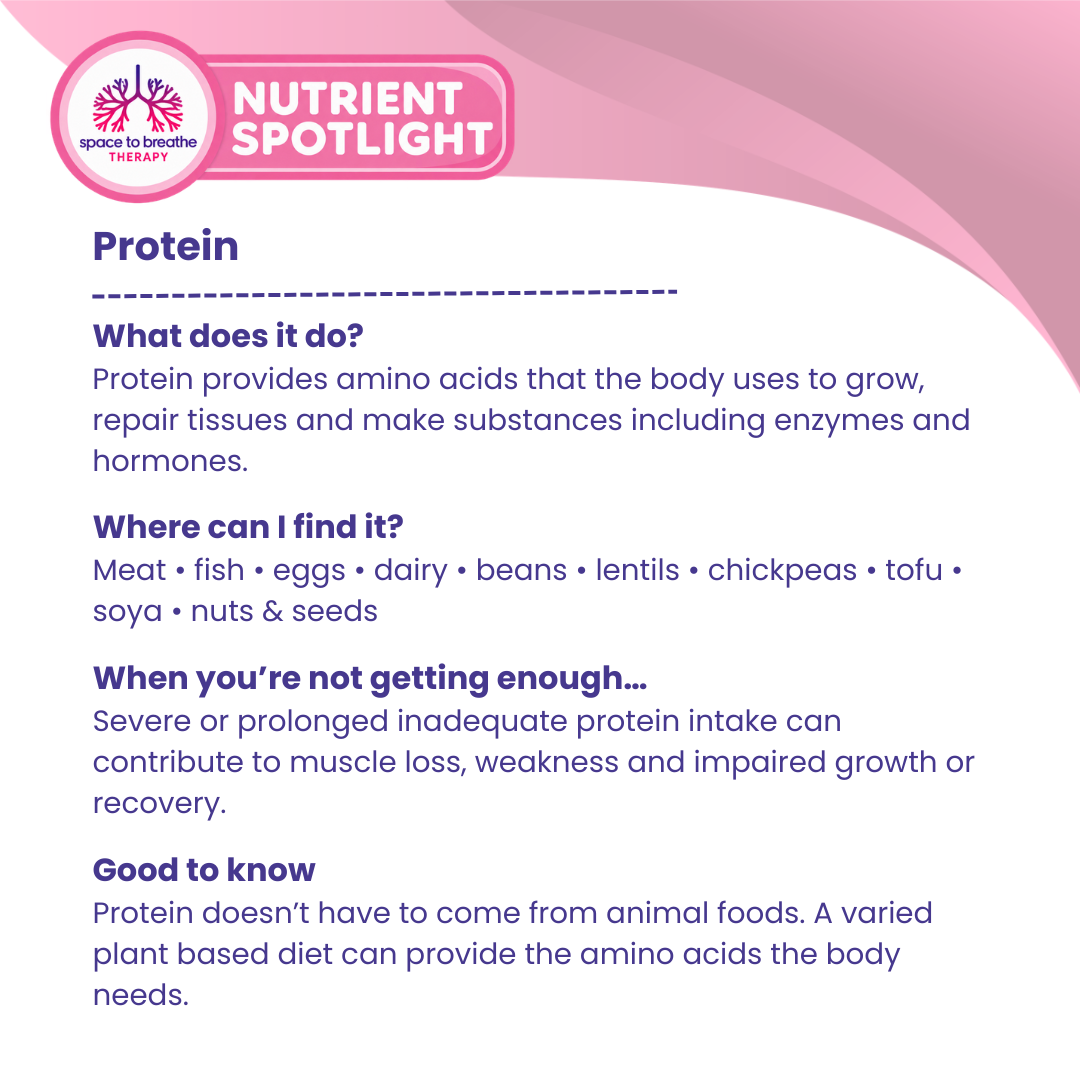
Protein is an essential nutrient that our bodies need every day. It provides amino acids — often described as the building blocks the body uses to grow, maintain and repair itself.
Protein is involved in far more than building muscle. The body also uses amino acids to produce enzymes, hormones and other important substances, as well as supporting the maintenance of skin, organs and other tissues.
Where do we get protein?
Protein can come from both animal and plant foods. Sources include meat, fish, eggs, dairy products, beans, lentils, chickpeas, tofu, soya, nuts and seeds.
Different foods contain different amounts and combinations of amino acids. Eating a varied diet can help provide the range the body needs.
Importantly, protein does not have to come from animal products. A well-planned and varied plant-based diet can also provide adequate protein and essential amino acids.
What happens if we don't get enough?
Severe or prolonged inadequate protein intake can contribute to loss of muscle mass, weakness and reduced strength. It can also affect growth and recovery because the body needs protein to build and repair tissues.
Protein needs aren't identical for everyone. Requirements can be influenced by age, body size, activity levels, pregnancy, illness and recovery.
Protein and restricted eating
For people with ARFID, sensory differences, food intolerances or a limited range of safe foods, increasing protein does not have to mean completely changing the way they eat.
Sometimes it can be more manageable to add to an existing safe meal — perhaps an egg, yogurt, cheese, seeds, beans or another tolerated protein source — rather than removing familiar foods or introducing an entirely new meal.
The best source of protein is not necessarily the one that looks perfect on paper. It is one that is nutritionally useful, accessible and realistically manageable for the individual.
Nutrition is not about perfection. Small, sustainable additions can help build a more nourishing diet without creating unnecessary pressure around food.
Space to Breathe Therapy