

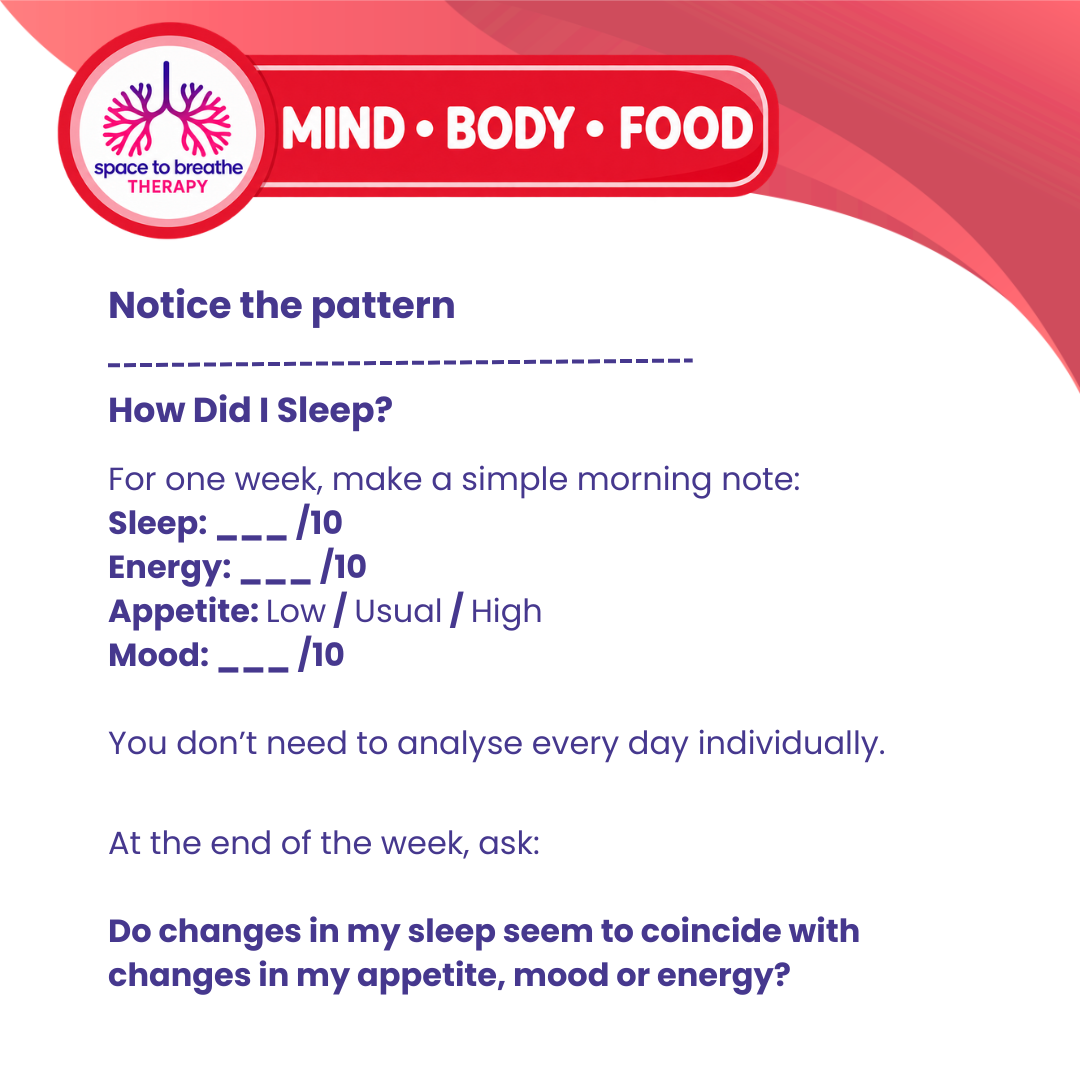
Notice the Pattern: How Did I Sleep?
Sleep doesn't just affect whether we feel tired the next day. It can influence energy, concentration, appetite, mood, stress tolerance and the choices that feel manageable around food.
Rather than judging a night as “good” or “bad”, try noticing what happens in your body after different amounts or qualities of sleep.
What might you notice after less sleep?
You may experience:
- Lower energy or motivation
- Brain fog or difficulty concentrating
- Feeling hungrier than usual
- Less interest in food
- Stronger cravings or preference for familiar foods
- Irritability or emotional sensitivity
- Feeling overwhelmed more easily
- Less energy for shopping, cooking or preparing meals
- Greater reliance on quick or convenient foods
- Changes in digestion
- Increased caffeine use
None of these responses means you've done anything wrong. Sleep and appetite are closely connected with many of the systems involved in regulating energy, stress and eating behaviour.
Try a seven-day check-in
Each morning record:
Sleep quality: ___ /10
Approximate sleep: ______ hours
Morning energy: ___ /10
Appetite: Low / Usual / High
Mood: ___ /10
Stress: ___ /10
Later in the day you could add:
Afternoon energy: ___ /10
Appetite later today: Low / Usual / High
Anything else I noticed: __________________
Don't analyse each day
One difficult night's sleep followed by a hungry day doesn't necessarily mean one caused the other.
Instead, collect information for a week and then look back.
Ask yourself:
Do lower-sleep days seem to coincide with changes in my hunger, cravings, energy or mood?
Do I find preparing food more difficult when I'm tired?
Do my sensory needs or tolerance for certain foods change?
Do I rely more on familiar or convenient foods after poor sleep?
Does my appetite become stronger, weaker or simply different?
You might discover a pattern — or you might not. Both are useful information.
Remember the bigger picture
Sleep is only one part of the picture. Stress, mental health, medication, hormones, physical health, activity, food intake, hydration and daily demands can all influence how you feel.
The aim isn't to achieve “perfect sleep” or “perfect eating”.
It's to become more familiar with your own patterns, so you can recognise when your body might benefit from extra nourishment, rest, hydration, reduced demands or support.
Notice first. Understand second. Then decide whether anything needs to change.
Space to Breathe Therapy