





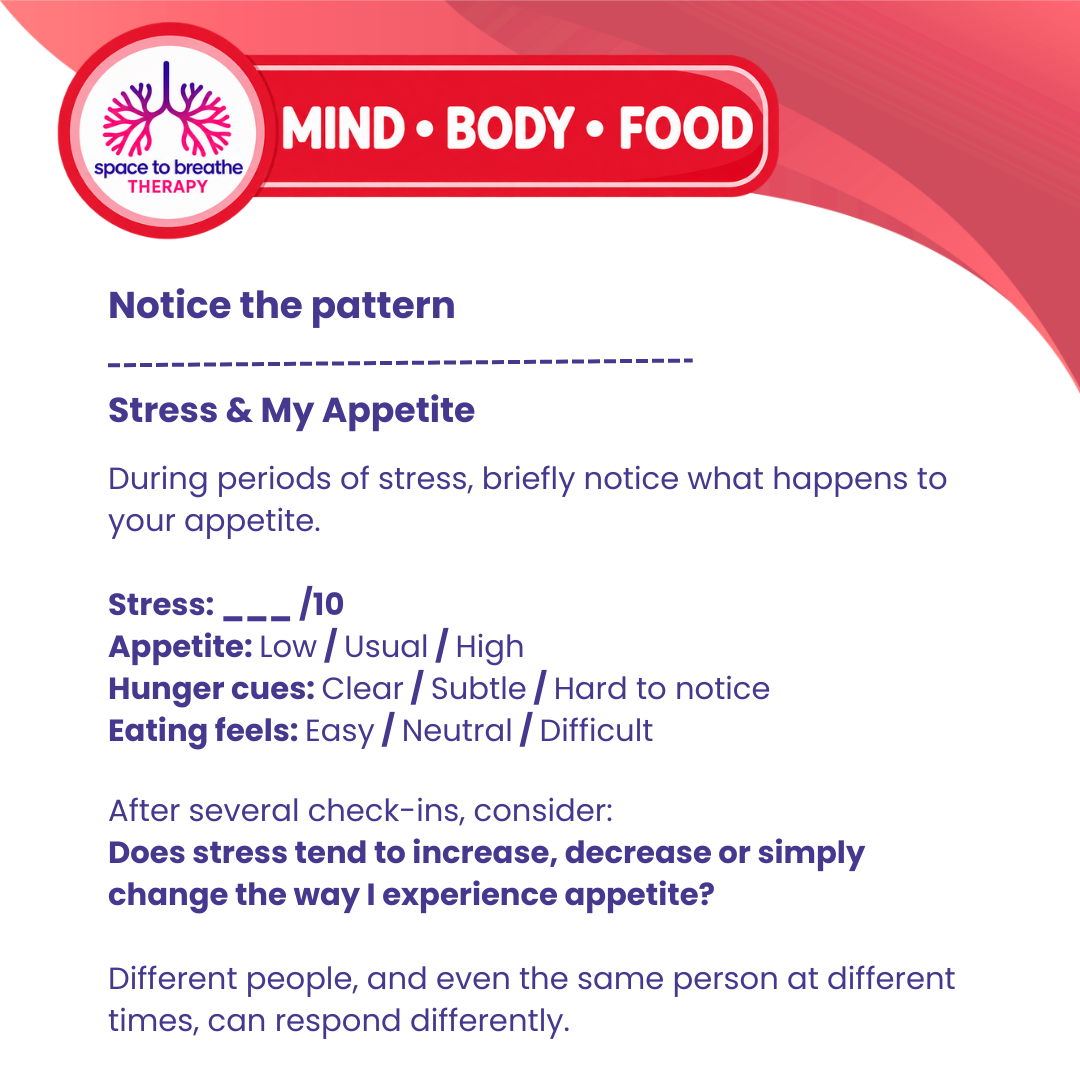
Notice the Pattern: Stress & My Appetite
Stress doesn't affect everyone's appetite in the same way. It can make hunger feel stronger, quieter, delayed or much harder to recognise. Your response may even change depending on the situation.
During stressful periods, take a quick check-in:
Stress: ___ /10
Appetite: Low / Usual / High
Hunger cues: Clear / Subtle / Hard to notice
Energy: ___ /10
Tension: ___ /10
Eating feels: Easy / Neutral / Difficult
What happens in my body?
Notice whether stress brings physical sensations such as:
- Tight or unsettled stomach
- Nausea or “butterflies”
- Dry mouth
- Muscle tension
- Faster breathing
- Feeling restless or unable to sit and eat
- Feeling tired or drained
- Wanting particular familiar or comforting foods
- Losing awareness of hunger altogether
What happens to eating?
Ask yourself whether stress changes how, when or what you eat.
You might delay meals because you're busy or overwhelmed, find preparing food more difficult, eat more quickly, graze without noticing, want familiar foods, or find that eating feels physically uncomfortable.
None of these observations needs to be labelled good or bad. You're gathering information.
Look at what kind of stress is happening
Appetite may respond differently to work pressure, conflict, sensory overload, anxiety, emotional upset, changes in routine, uncertainty or physical exhaustion.
Make a quick note:
What was happening? __________
What did I notice first? __________
What helped? __________
Look for your pattern
After several check-ins, ask:
Does stress usually increase my appetite, reduce it, delay my hunger signals, change the foods I want — or simply make eating harder to manage?
You may also notice that once the stressful situation passes, hunger suddenly becomes much stronger.
There is no single “correct” stress response. Understanding your pattern can help you recognise what your body needs when life becomes more demanding.
Space to Breathe Therapy