





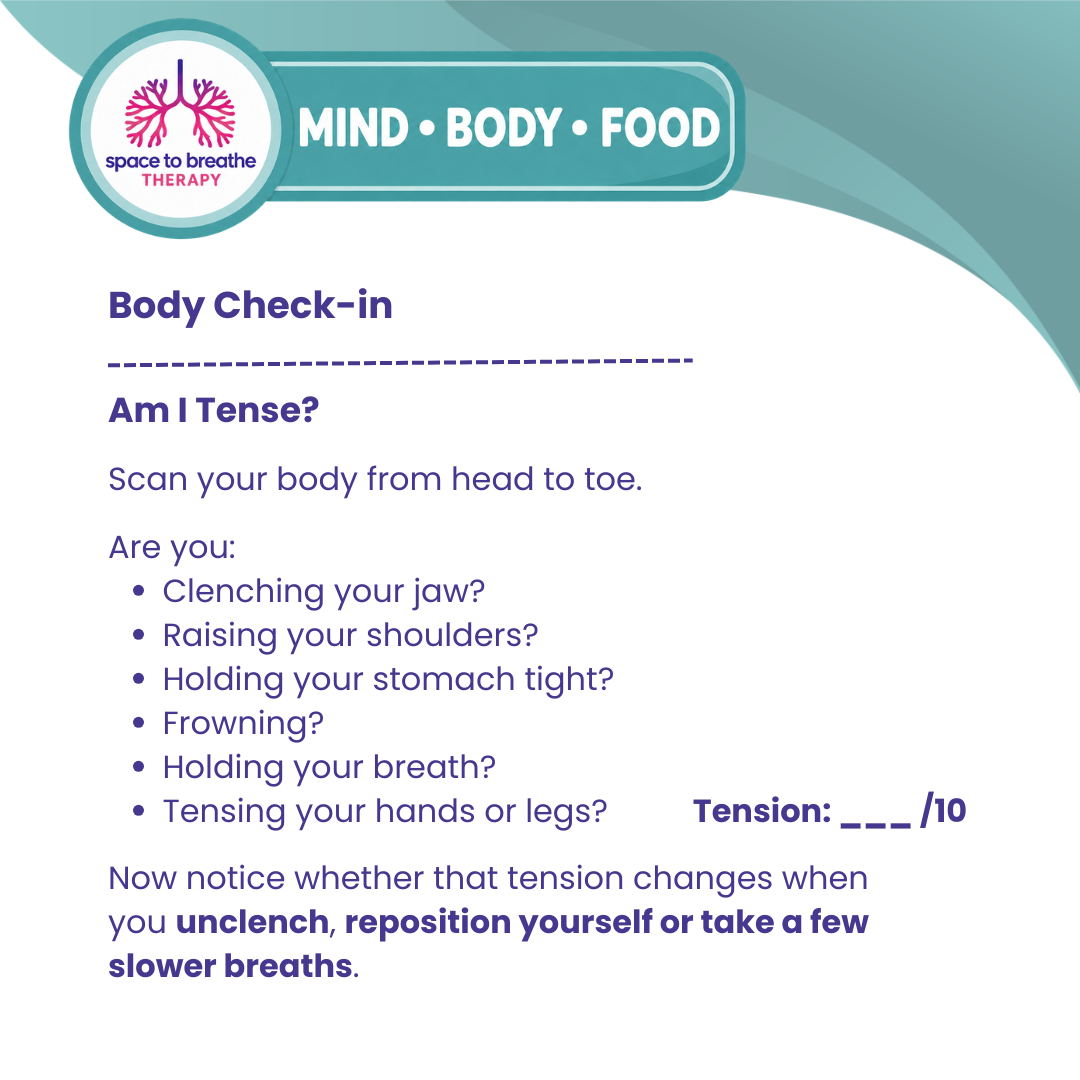
Body Check-In: Am I Tense?
We can carry tension in our bodies without consciously realising we're doing it.
You may be concentrating, working, driving, scrolling or dealing with a stressful situation and suddenly notice your jaw is clenched, your shoulders are raised or you've been holding your breath.
A quick body check-in can help you notice that tension before it becomes uncomfortable or exhausting.
Start at the top and work down
Take a few seconds to scan your body without trying to change anything.
Notice your face and jaw. Are your teeth pressed together? Is your tongue tense? Are you frowning or squinting?
Move down to your neck and shoulders. Are your shoulders lifted towards your ears? Does your neck feel stiff?
Then notice your chest and breathing. Are you breathing freely, or have your breaths become shallow or restricted?
Check your stomach, hands and legs too. You might be holding your stomach tight, gripping your hands, curling your toes or tensing your thighs without noticing.
Why do we hold tension?
Muscle tension can happen for many reasons. Stress and anxiety are common contributors, but so are concentration, sensory overload, pain, posture, fatigue and simply staying in one position for too long.
For some neurodivergent people, the effort involved in masking, concentrating, managing sensory input or navigating demanding environments can also show up physically in the body.
You don't need to know exactly why you're tense before responding to it.
Give it a number
Try rating the tension you notice:
Tension: ___ /10
There isn't a number you should have.
The rating simply gives you a starting point. You can check again in a few minutes and notice whether anything has changed.
Experiment rather than force yourself to relax
Instead of telling yourself “I need to relax,” try making one small adjustment.
Unclench your jaw.
Let your shoulders drop.
Change your sitting position.
Stretch your hands.
Stand up if you've been sitting for a long time.
Or take a few comfortable, slower breaths without forcing them to be particularly deep.
Then notice:
Did anything change?
Even a small reduction in tension is useful information.
Sometimes tension is communicating a need
If your body repeatedly becomes tense in particular situations, become curious about the pattern.
Perhaps you're overstimulated.
Maybe you've been concentrating for too long.
You might need movement, quiet, a different position, warmth, rest or simply fewer demands for a while.
The goal isn't to keep your body relaxed all the time. Tension is a normal physical response.
It's about becoming familiar enough with your body to notice when it has been holding on for longer than it needs to.
You don't have to wait until your body hurts before checking in with it. Sometimes simply noticing where you're holding tension is the first step towards giving your body what it needs.
Space to Breathe Therapy




