





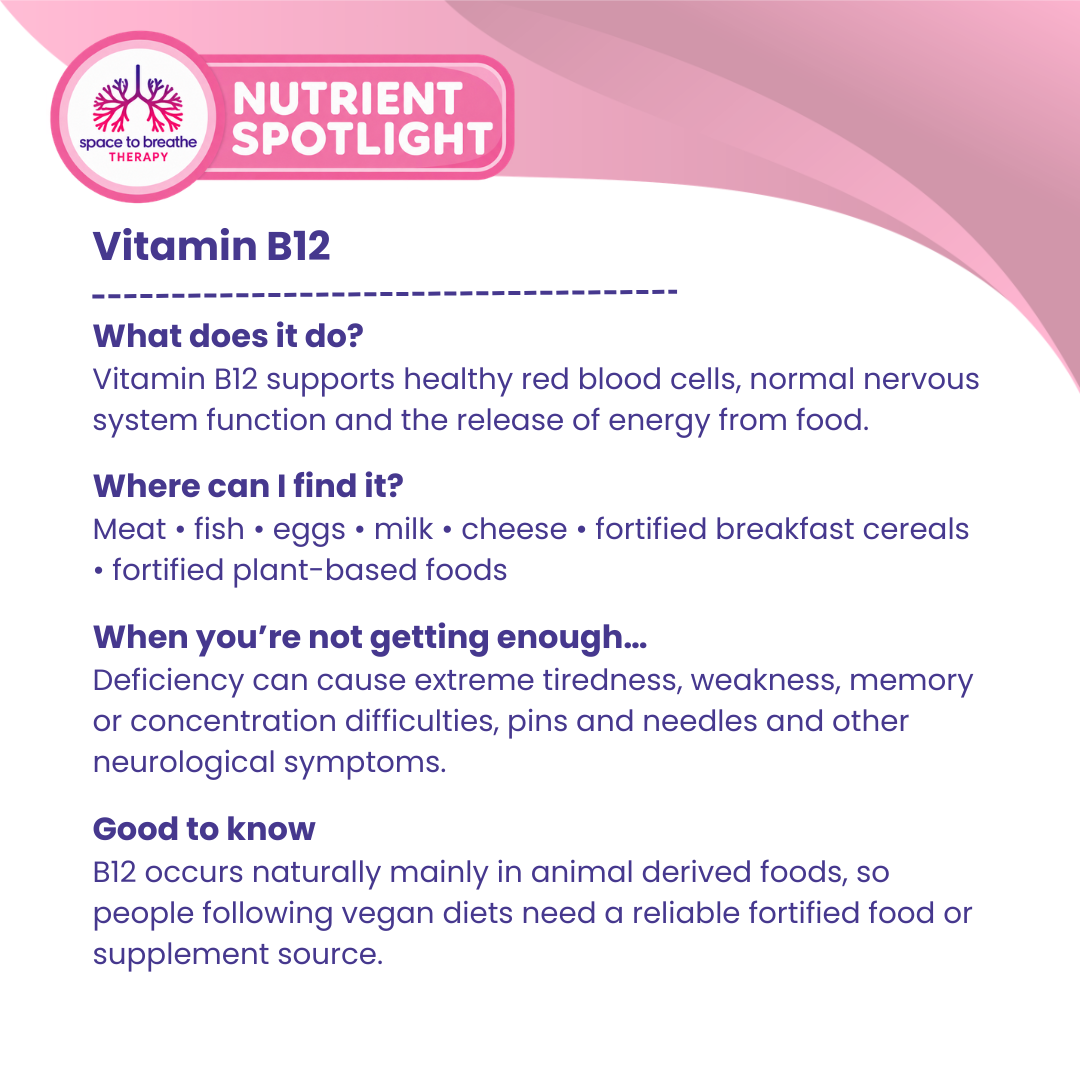
Vitamin B12 is an essential vitamin that plays an important role in keeping our blood cells and nervous system healthy. It is also involved in releasing energy from the food we eat and in making DNA.
Our bodies can store vitamin B12, sometimes for several years, which means a deficiency can develop gradually rather than becoming noticeable straight away.
What does vitamin B12 do?
Vitamin B12 works alongside other nutrients, including folate, to help the body produce healthy red blood cells.
It is also particularly important for the brain and nervous system, helping maintain the protective covering around nerves and supporting normal neurological function.
Where do we get vitamin B12?
Vitamin B12 occurs naturally mainly in animal-derived foods, including meat, fish, eggs, milk and cheese.
It can also be added to foods such as fortified breakfast cereals, plant-based milk alternatives, nutritional yeast and other fortified products.
People following a vegan diet need a reliable source of B12 through appropriately fortified foods or supplementation because unfortified plant foods don't naturally provide dependable amounts.
What happens if we don't get enough?
Vitamin B12 deficiency can cause extreme tiredness, weakness, reduced energy and problems with memory or concentration.
Because B12 is important for the nervous system, deficiency can also cause neurological symptoms such as pins and needles, numbness, problems with balance or coordination and changes in vision.
Some neurological complications can become permanent if a significant deficiency remains untreated, which is why persistent symptoms should be medically assessed rather than simply treated with supplements without investigation.
Why might someone become deficient?
A deficiency isn't always caused by not eating enough B12. Some people consume adequate amounts but have difficulty absorbing the vitamin from food.
This can occur with conditions affecting the stomach or intestines, after certain types of gastrointestinal surgery, with pernicious anaemia or as a result of some medications.
B12 and restricted eating
People with ARFID, sensory differences, allergies, intolerances or a restricted range of safe foods may have fewer reliable sources of vitamin B12, particularly when animal-derived foods are avoided.
Rather than forcing foods that aren't manageable, support can involve looking at existing safe foods and identifying fortified alternatives or appropriate supplementation when necessary.
If deficiency is suspected, a GP can arrange blood tests and determine whether dietary changes, tablets, another form of supplementation or B12 injections are appropriate.
Nutrition isn't simply about what we eat — our bodies also need to be able to absorb and use the nutrients we provide.
Space to Breathe Therapy