





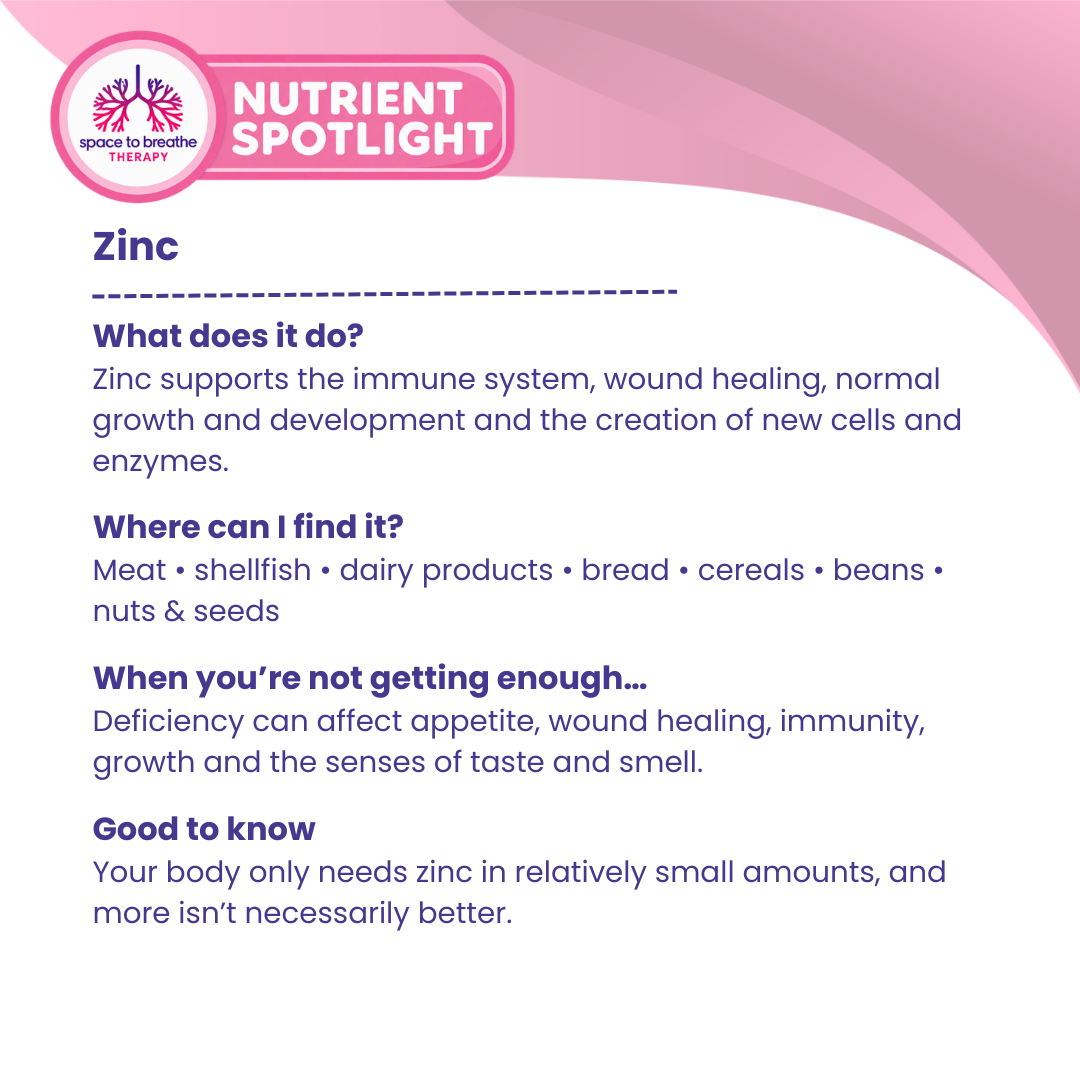
Zinc is an essential mineral that the body only needs in relatively small amounts, but it is involved in many important processes.
It helps support the immune system, wound healing, normal growth and development, and is needed for the creation of new cells, DNA and many enzymes throughout the body.
Why is zinc important?
Our bodies don't store large amounts of zinc, so we need to obtain it regularly through our diet.
Zinc plays a role in maintaining a healthy immune response and helping damaged tissues repair. It is also involved in our senses of taste and smell, which can make it particularly relevant when thinking about appetite and our relationship with food.
Where can we get zinc?
Zinc can be found in both animal and plant foods, including meat, shellfish, dairy products, bread, fortified cereals, beans, nuts and seeds.
The body generally absorbs zinc more easily from animal foods. Plant foods can still provide useful amounts, although compounds called phytates found naturally in some plant foods can reduce how much zinc is absorbed.
This doesn't mean plant sources aren't valuable — variety across the diet can help.
What happens if we don't get enough?
Zinc deficiency can affect several areas of health. Depending on the severity and duration, it may contribute to reduced appetite, slower wound healing, changes in taste or smell, impaired immune function and problems with normal growth and development.
However, these symptoms can have many different causes, so they shouldn't automatically be assumed to mean someone has a zinc deficiency.
More zinc isn't necessarily better
Because zinc is important for immunity, supplements are sometimes promoted as something everyone should take. But high amounts of zinc taken over time can cause problems, including interfering with the body's ability to absorb copper.
Supplements should therefore not be used in high doses simply because zinc is considered beneficial.
Zinc and restricted diets
People with ARFID, sensory differences, allergies, intolerances, vegetarian or vegan diets, or a very limited range of safe foods may have fewer sources of zinc available to them.
Rather than focusing on restriction or forcing unfamiliar foods, it can be more helpful to look at the foods someone already manages and consider small, realistic additions where possible.
If someone's diet is particularly restricted or there are concerns about nutritional deficiency, a GP or registered dietitian can help assess whether further investigation or supplementation is appropriate.
With micronutrients, the aim isn't to get as much as possible — it's to get enough to support the body safely.
Space to Breathe Therapy